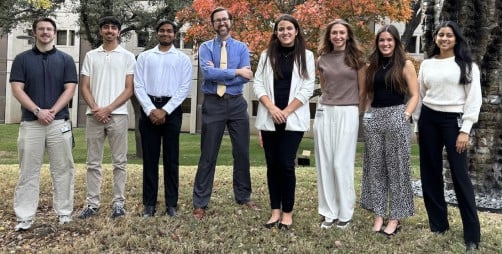
Researchers at UT Southwestern Medical Center have developed a groundbreaking presurgical vaccine strategy that could significantly reduce the risk of infections in patients undergoing hip, knee, and other joint replacement surgeries. This innovative approach, led by Dr. Alexander Tatara, an Assistant Professor of Internal Medicine and Biomedical Engineering, focuses on stimulating the immune system to prevent complications associated with orthopedic devices.
The study, published in the Proceedings of the National Academy of Sciences (PNAS), details the creation of an injectable scaffold designed to serve as an immunotherapy against bacterial infections affecting bones and joints. Notably, the vaccine targets infections caused by methicillin-resistant Staphylococcus aureus (MRSA), a particularly challenging pathogen and the leading cause of orthopedic device infections.
Each year, orthopedic surgeons in the United States perform over a million knee and hip replacements, with approximately 2% to 3% of these devices becoming infected. “These infections occur when bacteria adhere to the surface of the joint replacement, forming a resistant biofilm,” said Dr. Tatara. The biofilm complicates treatment, as it is not easily penetrated by antibiotics and artificial joints lack blood flow to supply immune cells.
This novel scaffold vaccination approach could bolster the body’s natural immune defenses prior to surgery, potentially preventing the formation of biofilms. “Orthopedic hardware infections often necessitate multiple surgeries and extensive antibiotic courses, which can lead to prolonged recovery and serious health complications,” Dr. Tatara explained. “If we can transition this technology from the lab to clinical practice, we can better protect patients who require orthopedic implants.”
The scaffolds are constructed from biocompatible materials, such as cryogels and silica rods, which are infused with bacterial antigens to attract and activate immune cells. This localized delivery of antigens fosters a more robust immune response compared to traditional liquid vaccines that disperse quickly. “With the increasing challenge of antibiotic resistance, non-antibiotic treatments are crucial,” Dr. Tatara noted. “The scaffold vaccine functions like a temporary construction platform, enabling the immune system to recognize and respond to pathogens such as Staphylococcus aureus. It can provide heightened immune protection before surgery, especially for high-risk patients.”
Dr. Tatara, who joined UT Southwestern in 2024 from Harvard University, is now spearheading a new research program focused on biomaterials and immunotherapies, a field known as immunoengineering. Although the experiments for this study were initially conducted with colleagues at Harvard’s Wyss Institute for Biologically Inspired Engineering, Dr. Tatara made substantial contributions to data analysis after relocating to UT Southwestern. He continues to advance this research in his lab while collaborating with experts in Biomedical Engineering, Orthopaedic Surgery, and other disciplines.
“We are devising innovative methods to understand why medical devices are particularly prone to infection and developing strategies to safeguard our patients,” Dr. Tatara said. “Collaborative efforts like this highlight our institution’s strengths and integrate our clinical and research missions to enhance patient care.”
This research received funding from the National Institutes of Health (NIH) and other prestigious organizations, underscoring the significance of this work in the medical community. As the landscape of orthopedic surgery evolves, this new scaffold-based vaccination strategy may represent a pivotal advancement in preventing device-related infections, ultimately improving outcomes for countless patients worldwide.