A new push to relocate the space shuttle Discovery to Houston has gained significant momentum with the support of Jared Isaacman, President Donald Trump’s nominee for NASA administrator. U.S. Senator John Cornyn (R-Texas) announced this development following a meeting with Isaacman on December 1, 2025, where they discussed the future of America’s space exploration efforts.
Cornyn, who has been a key advocate for the Discovery plan alongside Senator Ted Cruz (R-Texas), stated that during their conversation, they addressed the importance of maintaining America’s competitive edge in space against countries like China. They emphasized the necessity of returning humans to the moon to secure critical resources for national security and the role of the Lyndon B. Johnson Space Center (JSC) in Houston as the center for human spaceflight innovation.
Isaacman, a billionaire entrepreneur known for founding the payment-processing company Shift4 and for his role as a private astronaut on missions with SpaceX, has pledged to support legislation aimed at bringing Discovery to Space City. According to Cornyn, Isaacman committed to backing the provisions of the One Big Beautiful Bill Act, which became law and includes a directive to move Discovery from Virginia to Houston.
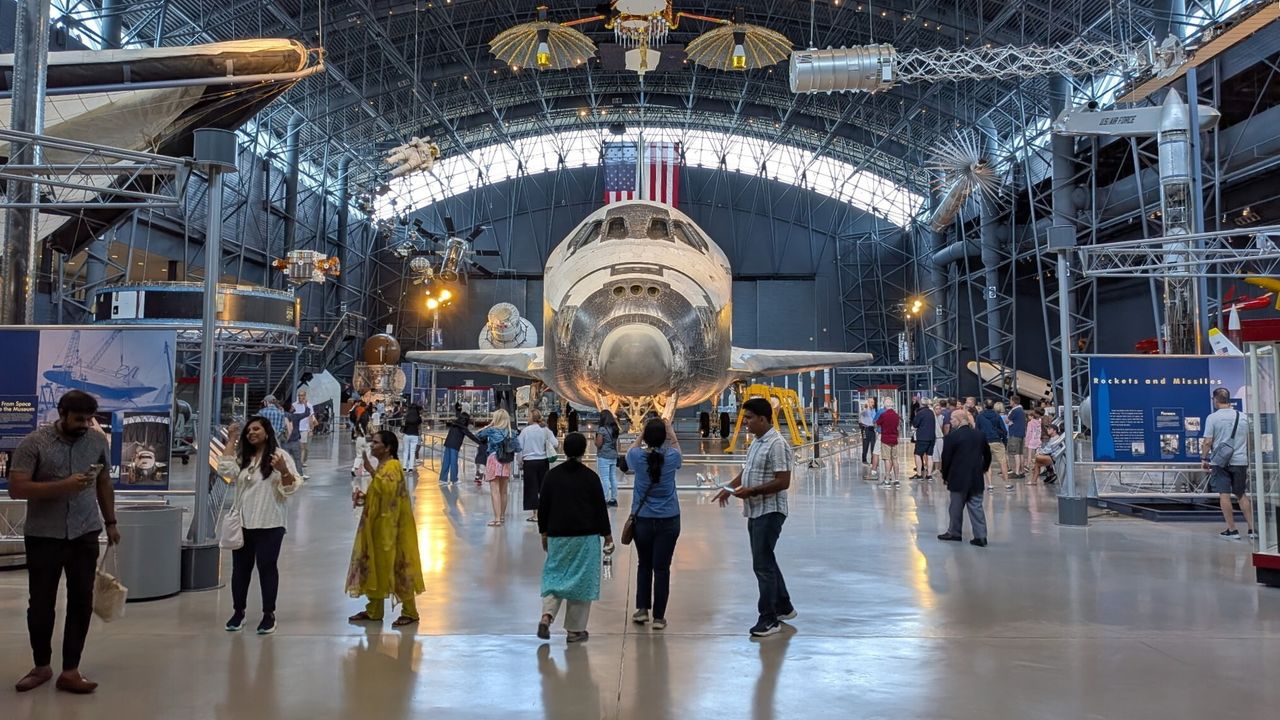
Discovery, which flew 39 missions for NASA between 1984 and 2011, is recognized as the busiest shuttle in the program’s history. After the shuttle program was retired, the surviving shuttles were distributed to various museums to honor the United States’ space exploration legacy. Discovery is currently on display at the Smithsonian Air and Space Museum’s Steven F. Udvar-Hazy Center in Virginia.
The push to relocate Discovery has sparked significant debate. The Smithsonian asserts ownership over the shuttle, raising concerns about the legality of the proposed move. Officials from the museum have also expressed worries that the relocation process, which would involve transporting a vehicle measuring 122 feet (37.2 meters) long with a wingspan of 78 feet (23.8 meters), may require disassembly that could compromise its historical integrity. Cornyn’s recent statements have emphasized that Discovery would be moved “in one piece” to address these concerns.
Senators Cornyn and Cruz introduced the “Bring the Space Shuttle Home Act” earlier, which sought to ensure Discovery’s move to Houston. Although this bill did not advance out of committee, its provisions were integrated into the larger legislative package that was signed into law by President Trump on July 4, 2025. This bill allocates $85 million to facilitate the move and establish a new display facility for the shuttle.
As discussions continue, Isaacman is expected to play a pivotal role in navigating the political landscape surrounding the shuttle’s relocation. The U.S. Senate’s Committee on Commerce, Science, and Transportation will hold a confirmation hearing for him on December 3, 2025. This hearing follows his initial nomination in January, which was withdrawn just before anticipated confirmation in late May, only for him to be renominated later in the year.
The future of Discovery’s relocation remains uncertain, with the Smithsonian’s position complicating the process. Critics argue that the financial estimates for transporting Discovery could exceed the allocated budget, potentially costing between $120 million and $150 million. As the situation unfolds, the implications for both the shuttle’s legacy and NASA’s ongoing initiatives in space exploration will be closely monitored.