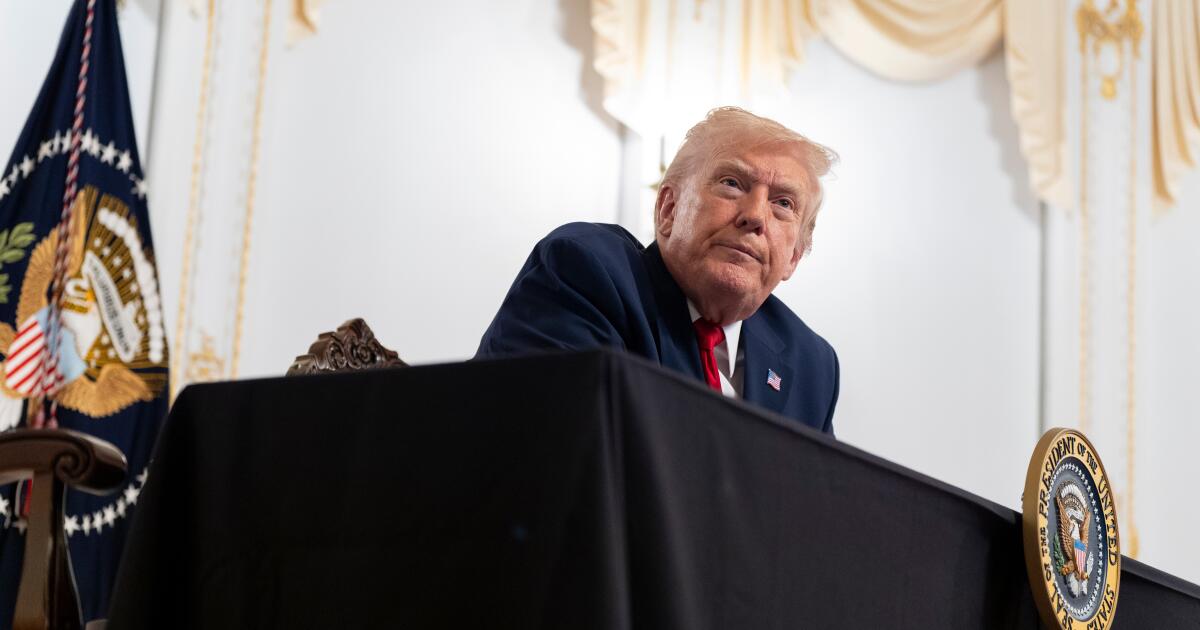
The latest public opinion data reveals a significant decline in support for President Donald Trump, as economic concerns take center stage in voters’ minds. Following substantial election losses and a tightly contested special congressional race in Tennessee, Trump faced reporters on Tuesday, dismissing the prevailing narrative around the economy as “fake.” He asserted that Americans are more employed and spending than ever before, attributing the term “affordability” to a “Democrat scam.” This statement contrasts sharply with the findings of recent polls indicating widespread dissatisfaction with both the economy and Trump’s handling of it.
A Fox News poll conducted prior to Thanksgiving revealed that 76% of Americans rated the economy negatively. Subsequent surveys have shown Trump at his lowest approval ratings during his second term, surpassing even the lows experienced by previous presidents at similar points in their administrations. According to Gallup, only 36% of Americans approve of Trump’s performance, while 60% disapprove. Furthermore, an Economist/YouGov poll indicated that just 32% of Americans support Trump’s strategies regarding the affordability crisis.
Voter Sentiment Shifts Amid Economic Struggles
Analysts point out that Trump’s earlier promise to address price reductions has not materialized, leading to a growing sense of disillusionment among key voter demographics, especially young adults aged 18 to 29, Hispanics, moderates, and independents. Bill Galston, chair of the governance studies program at the Brookings Institution, noted, “Not only do they not see prices coming down, but they don’t believe he is focused on those problems.” This demographic shift has led to a notable decline in support among these groups, which had previously favored Trump in the last election cycle.
Trump’s approval rating among Republican voters has also dipped to 84%, the lowest level of his second term, while his support among independents has fallen to 25%. Despite these declines, he still retains substantial backing from Republican voters, who continue to largely approve of his overall performance in office, even if they disagree with some of his economic policies.
Implications for Future Elections
The downward trend in Trump’s approval ratings began in the spring, influenced by revelations concerning his connections to financier Jeffrey Epstein and his escalating focus on foreign affairs. This has raised concerns about the potential repercussions for the Republican Party in upcoming elections. Whit Ayres, a veteran Republican pollster, emphasized that the president’s approval ratings are deeply intertwined with the party’s electoral performance. “Attitudes about Republican candidates are so closely tied to Trump — he has so thoroughly taken over the party — that there’s not a lot of room to differentiate,” he stated.
The current political landscape poses challenges for Trump as he prepares for the midterm elections. Typically, when a president’s approval rating is below 50%, their party faces significant losses in the House of Representatives. Trump’s situation is particularly precarious as dissatisfaction among independents and moderates continues to grow, driven primarily by economic issues.
As the Republican Party navigates this turbulent environment, scrutiny will intensify on their ability to address pressing affordability concerns, especially with the impending expiration of expanded tax credits for the Affordable Care Act. This development could significantly impact healthcare premiums at the start of the new year, further complicating the party’s position.
Trump seems cognizant of the shifting political landscape and recently claimed he received “the highest poll numbers of my political career,” despite acknowledging a drop in his ratings. His ability to recover from challenging polling environments has been demonstrated in the past, yet the unique circumstances of his inability to seek another term may force Republican lawmakers and voters to reassess the future direction of the party.
As the political climate evolves, the implications of Trump’s declining support could resonate beyond his presidency, potentially shaping the Republican Party’s identity and strategies in the years to come.