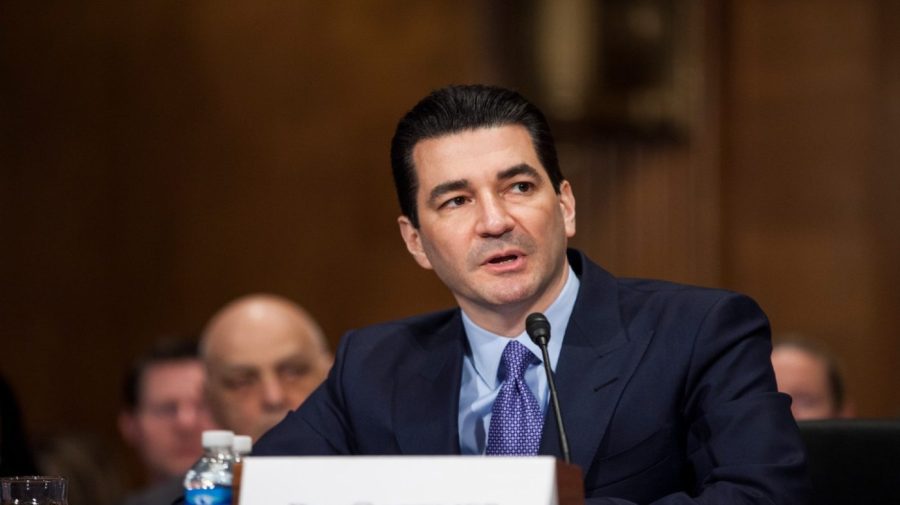
Former Commissioner of the Food and Drug Administration, Scott Gottlieb, publicly refuted claims made by President Donald Trump regarding the transmission of hepatitis B during a recent appearance on CBS News. Gottlieb stated that Trump’s assertion that the disease is “mostly” transmitted through sexual contact or contaminated needles is “simply not true.”
During the interview, hosted by Margaret Brennan, Gottlieb emphasized the complexities surrounding hepatitis B transmission. He clarified that while sexual activity and needle sharing are indeed modes of transmission, they do not encompass the entirety of how the virus spreads. “That’s the problem,” he remarked, underscoring the need for accurate information regarding public health issues.
Gottlieb’s comments come in the context of ongoing discussions about hepatitis B, a viral infection that affects the liver. According to the World Health Organization, the virus can also be transmitted from mother to child during childbirth, through open cuts or sores, and via sharing personal items that may contain blood.
The former FDA commissioner urged the public to consider the broader implications of misinformation about hepatitis B. “It’s crucial that we communicate the full spectrum of transmission routes,” he stressed, highlighting the importance of education in preventing the spread of the virus.
As the nation grapples with various health challenges, including the ongoing impact of the COVID-19 pandemic, accurate information becomes increasingly vital. Public health officials and experts are working diligently to combat misinformation and promote awareness about diseases that continue to pose risks to communities across the United States and beyond.
In a time where health-related claims can quickly circulate through social media and other platforms, Gottlieb’s intervention serves as a reminder of the critical role that credible voices play in shaping public understanding. His call for clarity and precision in communication aligns with the broader efforts of health organizations worldwide to provide fact-based information that can help protect individuals and communities.
As discussions about hepatitis B and its transmission continue, it remains essential for officials to provide accurate guidance. Misinformation can not only lead to confusion but also hinder efforts to manage and prevent viral infections effectively.