The Kyushu Grand Sumo Tournament commenced in Fukuoka on November 9 and continued until November 23, marking the last significant sumo competition of the year. This prestigious event featured five stablemasters, dressed in formal black crested kimono and traditional wide-legged hakama, serving as ringside judges, adhering to the Japan Sumo Association’s dress code. This code demands that judges don formal attire when officiating at the dohyo, reflecting the aesthetic values deeply rooted in the tradition of grand sumo.
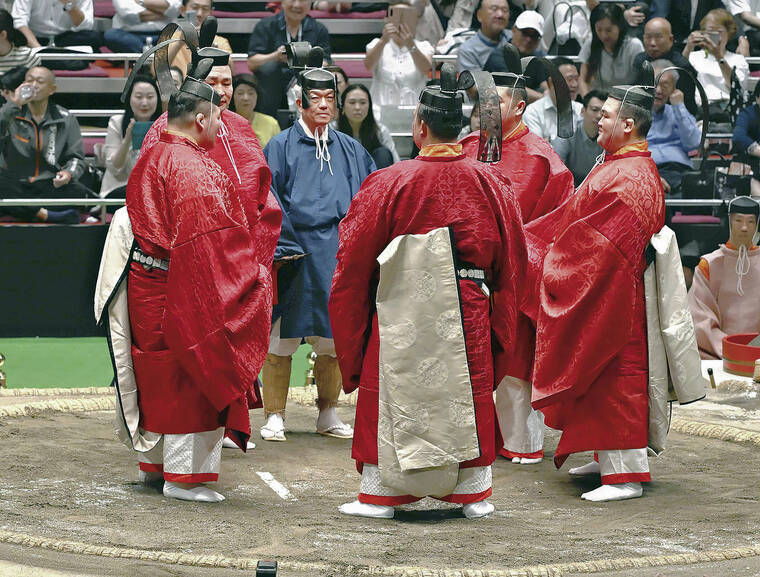
Earlier in October, during the Centennial Tournament held at Tokyo’s Ryogoku Kokugikan, the judges wore strikingly elaborate outfits. This special event celebrated sumo’s 100th anniversary and included a reenactment of the “Sumai no Sechie” ceremony, a historic court ritual from the Nara (710-794) and Heian (794-late 12th century) periods. This ceremony, which originally featured sumo bouts presented to the emperor, transported spectators back a millennium, highlighting the profound ties between Japanese history and the sport of sumo.
Recreating Historical Ceremonies
At the Centennial Tournament, the five judges, all stablemasters who had previously held the ranks of yokozuna (the highest rank) or ozeki (the second-highest rank), donned bright red court attire and traditional eboshi caps. Among them was stablemaster Nishonoseki, formerly known as yokozuna Kisenosato. The sight of these former wrestlers dressed as idei—judges from ancient sumo matches—elicited gasps and cheers from the audience.
The costumes, reminiscent of those seen in illustrated Heian scrolls, were a rarity, typically reserved for actors in historical dramas. The event was vibrant, featuring a staged scene in which the five judges convened on the dohyo for a referee conference to resolve a disputed call. After completing his role, stablemaster Otowayama, who previously held the title of yokozuna Kakuryu, expressed his excitement, stating, “It was a new experience, as we don’t usually get to wear this kind of attire.”
A Celebration of Tradition
The Japan Sumo Association commemorates its 100th anniversary this month, marking a century of rich history in the sport. The grand tournament serves as a testament to the enduring traditions that define sumo wrestling, blending competitive spirit with deep cultural significance. As the last major event of the year, it not only showcases the athletic prowess of the wrestlers but also reinforces the historical and ceremonial aspects of this age-old sport.
The Kyushu Grand Sumo Tournament has become more than just a competition; it is a celebration of Japan’s cultural heritage, drawing spectators who appreciate the artistry and discipline that sumo embodies. As the tournament unfolds, it encapsulates the essence of grand sumo, where past and present converge in a display of strength, skill, and tradition.