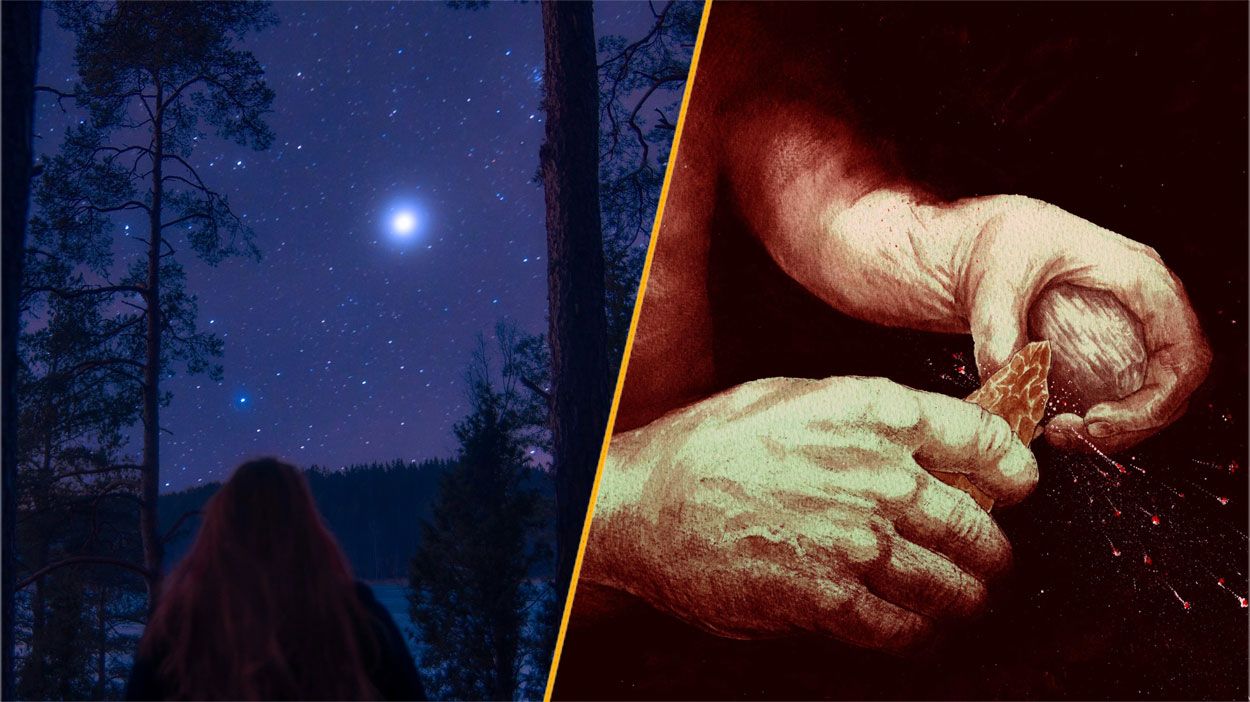
Recent scientific discoveries have shed new light on both human evolution and animal behavior. A study reveals that Neanderthals were likely able to control fire as far back as 400,000 years ago, significantly earlier than previous estimates. In another fascinating finding, orcas off the coast of British Columbia have been observed hunting cooperatively with Pacific white-sided dolphins, suggesting a unique form of collaboration among marine mammals.
Neanderthals and Fire: A Major Breakthrough
The ability to control fire is a pivotal moment in human history. A new study conducted in Suffolk, England indicates that Neanderthals might have been using fire much earlier than previously thought. Researchers discovered pyrite, a mineral known as fool’s gold, alongside flint at an archaeological site dated to over 400,000 years ago. This suggests that Neanderthals intentionally transported the mineral to create sparks for fire. The findings challenge long-held beliefs regarding the timeline of fire control among early humans and contribute significantly to ongoing debates among paleoanthropologists.
Marine Mammals: Unusual Collaboration
In a separate study, researchers reported that orcas have been spotted working alongside dolphins while hunting for salmon off the coast of British Columbia. This behavior is particularly intriguing as it contrasts with typical predator-prey dynamics observed in other regions, where orcas are known to hunt dolphins. The study’s authors claim this is the first documented instance of cooperative hunting and sharing between these two species. Yet, some experts caution that this behavior may not indicate true cooperation but rather kleptoparasitism, where one species benefits from the catch of another without contributing to the hunt.
The implications of these findings extend beyond simple animal behavior. They open discussions about the complexity of social interactions in the animal kingdom, highlighting that cooperation might be more common than previously recognized.
Cosmic Discoveries and Historical Speculations
In the realm of astronomy, a binary star system known as V Sagittae is expected to become a spectacular sight in the coming century, potentially shining with the brightness of thousands of suns as it approaches a supernova phase. This event will be visible to skywatchers both day and night. Additionally, researchers have detected a mysterious X-ray signal believed to be linked to a star being consumed by two black holes.
On a more historical note, speculation surrounding the ancient figures of Mark Antony and Cleopatra VII has resurfaced. The discussion revolves around the question: What if they had triumphed over Octavian? The implications of such a victory could have dramatically altered the course of history.
Meanwhile, ongoing excavations at Hadrian’s Wall in Britain are uncovering new insights about life at the Roman Empire’s northern frontier. Discoveries at the fort of Vindolanda suggest a vibrant community that thrived on the edge of the empire, challenging previous notions of Roman military outposts as isolated and inhospitable.
Looking Ahead
As researchers continue to probe the depths of human history and the behaviors of animals, these findings promise to reshape our understanding of both our past and the natural world. The study of Neanderthals and the cooperative behaviors of marine mammals highlight the complexities of existence, signaling that our planet’s history and its inhabitants are intertwined in ways that are still being uncovered.
For those interested in further exploration of these topics, recent reports and studies provide a wealth of insights into the dynamics of our world, from ancient civilizations to the vastness of space.