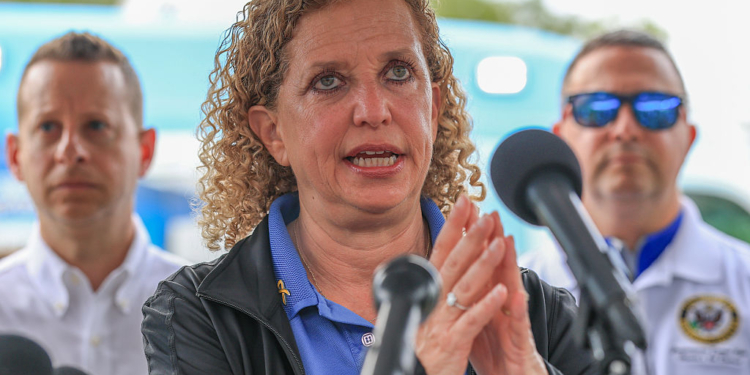
BREAKING: Rep. Debbie Wasserman Schultz has ignited a firestorm of debate, asserting that President Donald Trump poses a greater threat to American values than radical Islamic jihad. The shocking statement was made during a live interview on NewsNation on the evening of October 10, 2023, and has since drawn widespread attention.
During her appearance with host Leland Vittert, Wasserman Schultz was asked to assess the threats of Islamophobia versus jihad in light of a recent antisemitic attack in Australia. Instead of addressing the question directly, she pivoted to criticize Trump, emphasizing, “We have a president who has completely undermined our democracy.” Vittert, taken aback, pressed her for clarification, to which she firmly responded, “Yeah, I’m going there.”
Wasserman Schultz’s remarks come in the wake of a tragic incident in Sydney, where a gunman killed 16 people during a Hanukkah celebration at Bondi Beach, further heightening global concerns over rising antisemitism.
In the interview, the congresswoman acknowledged the escalating threat posed by antisemitism, particularly among Islamic extremists, but insisted that the issue is broader. She highlighted a disturbing rise in antisemitism among “many young White men” and argued that Trump’s actions have contributed to this worsening climate. Notably, she referenced Trump’s controversial dinner with White nationalist Nick Fuentes in 2022, calling for the president to take responsibility and restore funding to protect religious institutions.
The White House responded vigorously to Wasserman Schultz’s claims, labeling them as political hysteria. A spokesperson stated, “Only someone suffering from a severe case of Trump Derangement Syndrome would make such an outlandish comment,” reinforcing that condemning radical Islamic terrorism should be a universal stance.
This tense exchange underscores the ongoing and divisive debate in the United States regarding national security and the definition of threats in today’s political landscape. As the country reels from both domestic and international tragedies, the urgency to confront these issues has never been more pressing.
With the political divide continuing to deepen, Wasserman Schultz’s remarks have sparked a nationwide conversation about leadership, values, and the responsibility of public figures in addressing hate and violence.
As this story develops, it remains crucial to monitor how political figures respond to the ongoing threats facing communities across the globe. The implications of these discussions could shape the future of American political discourse.
Stay tuned for more updates as the situation evolves.