Scientists are poised to deepen our understanding of the interstellar medium (ISM) and its potential role in the origins of life. A recent study led by Izaskun Jimenez-Serra from the Center of Astrobiology in Spain highlights the capability of a large-area, single-dish telescope to detect prebiotic molecules within the ISM. This initiative aims to explore whether essential building blocks of life, such as amino acids and sugars, can form in space and be delivered to planets, including Earth.
The interstellar medium is often perceived as a vast, empty expanse; however, it is actually rich with atoms, dust particles, and molecules. These components are critical in the ongoing investigation of how life might have arisen on Earth. The telescope’s advanced sensitivity and multi-band instruments will allow researchers to map chemical complexity throughout our galaxy and in others.
Exploring Chemical Complexity in Space
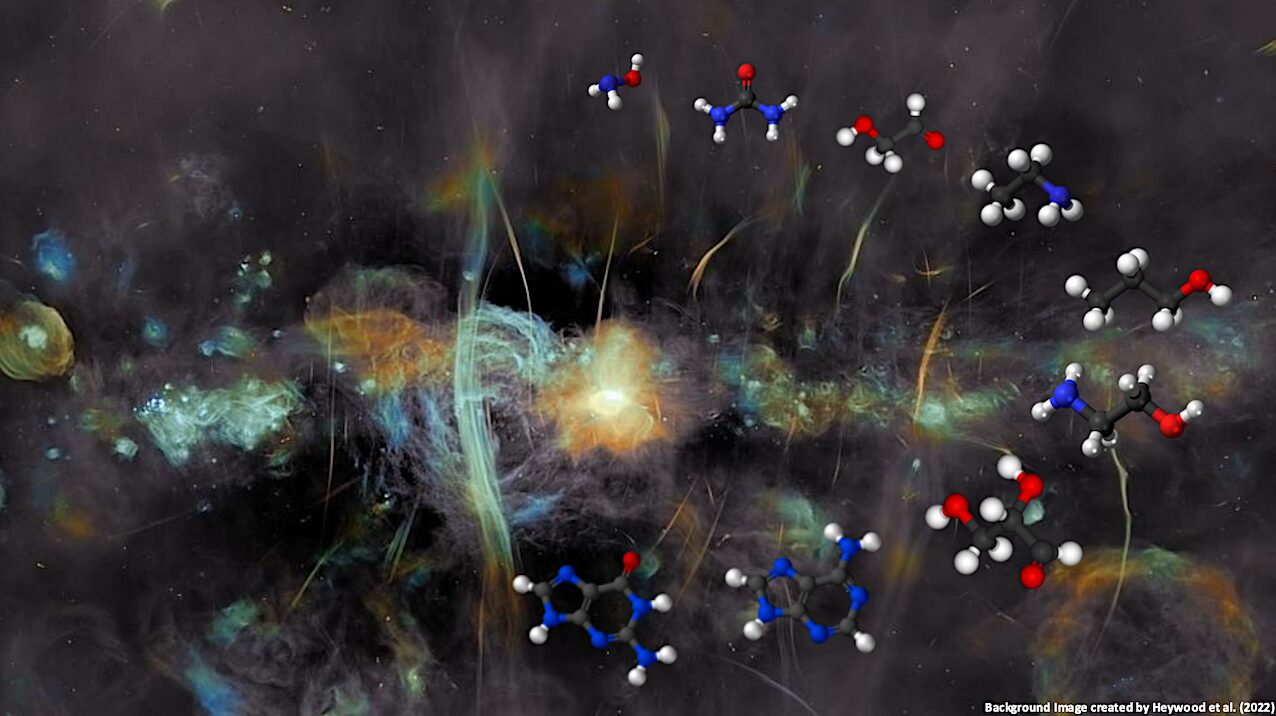
The research focuses on the detection of prebiotic molecules in the Galactic Center cloud G+0.693. Among the compounds identified are precursors of ribonucleotides, amino acids, sugars, proto-proteins, and proto-lipids. This groundbreaking work could provide insights into the formation of life-essential molecules in environments beyond our planet.
According to the study, published on December 16, 2025, the telescope’s findings will contribute significantly to our understanding of astrochemistry. The team aims to address fundamental questions regarding the origins of life by determining the chemical processes that occur in space. By observing these phenomena, scientists hope to establish a connection between interstellar chemistry and biological processes on Earth.
Strong evidence from the study indicates that various prebiotic molecules, including glycolamide, carbonic acid, and ethylamine, have been detected in the ISM. These findings align with previous research suggesting that the building blocks of life may have been delivered to early Earth by comets and meteorites.
The Future of Astrobiology
The implications of this research extend beyond our planet, raising questions about the potential for life elsewhere in the universe. The upcoming observations will not only enhance our understanding of the ISM but also provide a framework for studying other galaxies. The team, which includes researchers from various institutions such as the European Southern Observatory (ESO) and the University of Tokyo, is optimistic about the future of astrobiology.
The research will be instrumental in expanding our knowledge of astrochemistry and the conditions necessary for life to flourish. As scientists continue to unravel the mysteries of the cosmos, the findings from this study could reshape our understanding of life’s origins and the vast potential for biological existence beyond Earth.
The ongoing collaboration among international researchers underscores the importance of collective efforts in advancing our knowledge of life in the universe. As new data becomes available, the scientific community anticipates further revelations about the intricate chemistry of the interstellar medium and its implications for life as we know it.