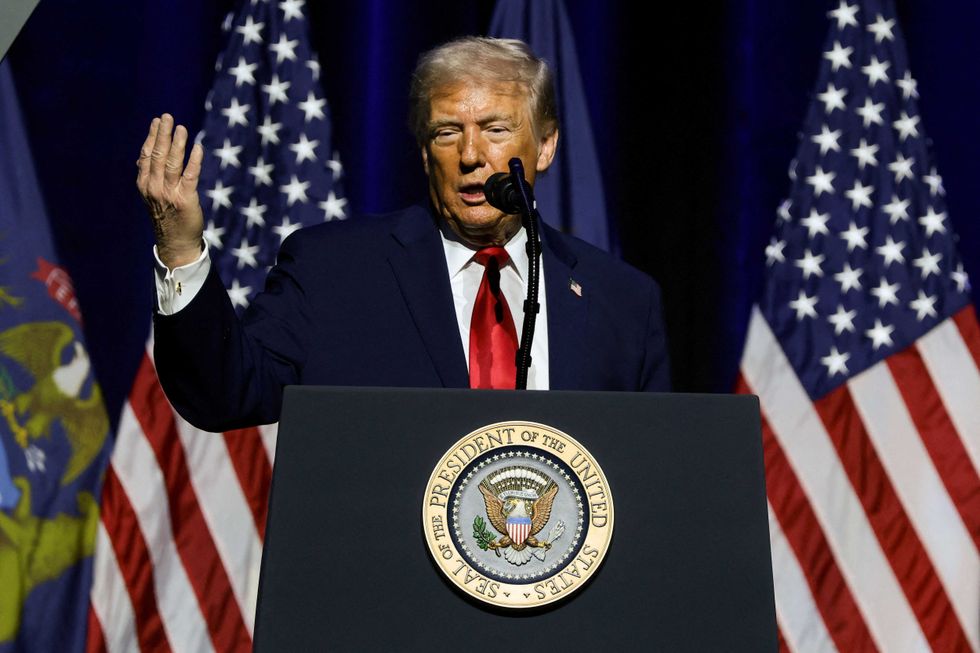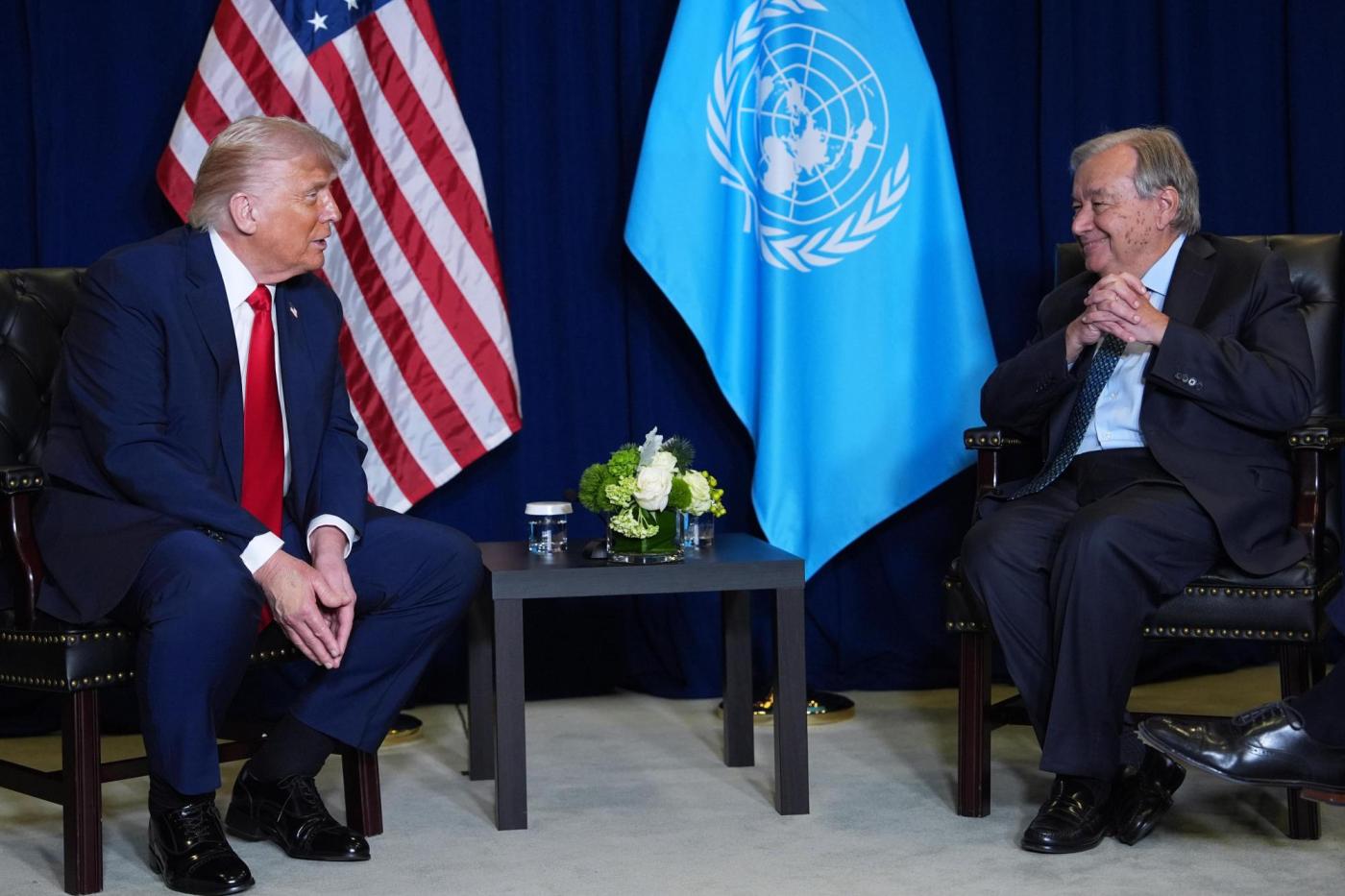
President Donald Trump has introduced a new National Security Strategy (NSS) that emphasizes a pragmatic, realist approach to military and foreign policy. Released on December 4, 2023, the document marks a significant shift from the previous strategies, particularly that of Joe Biden, whose NSS emphasized strengthening alliances such as NATO. Trump’s framework asserts that the United States will prioritize its own interests, stating bluntly, “In everything we do, we are putting America first.”
The NSS articulates a clear departure from the previous U.S. policy of global dominance, suggesting that such an approach has compromised the nation’s foundational values and contributed to an estimated $8 trillion expenditure on post-9/11 wars. Instead, Trump’s strategy acknowledges a transition to a “multipolar” world where the U.S. shares power with China and Russia. The document argues that allies, described as “wealthy, sophisticated nations,” must take greater responsibility for their own regions and enhance their contributions to collective defense.
Shifting focus away from Europe, the strategy prioritizes the Indo-Pacific region, highlighting its growing economic significance. According to the NSS, this area now accounts for nearly half of the global economy, emphasizing the necessity for the U.S. to remain competitive. The document cites Trump’s trade agreements from an October 2025 visit to the region as evidence of this competitive spirit.
While the NSS praises the achievements regarding trade, it does not address the challenges faced during negotiations, such as Trump’s threat of 100% tariffs on China, which led to retaliatory measures from Beijing, including withholding essential rare-earth minerals.
In terms of European relations, Trump’s strategy identifies resolving the ongoing Ukraine War as a core American interest, underscoring the urgency to stabilize European economies that have seen their global GDP share decline from 25% in 1990 to 14% today. The document’s tough language regarding “civilizational erasure” in Europe may be controversial among European leaders, but it reflects a stark recognition of the challenges ahead.
A notable omission in the NSS is any reference to the New START Treaty, which limits nuclear arsenals and is set to expire on February 5, 2026. While Trump suggests a shift towards testing new nuclear capabilities, this raises concerns about the potential for a renewed arms race, which would divert resources from other critical areas.
On Middle Eastern policy, Trump asserts that his administration’s military actions, including the Operation Midnight Hammer in June 2025, have significantly weakened Iran’s nuclear ambitions. The NSS also highlights diplomatic efforts that have led to a ceasefire in Gaza and the release of hostages, framing these as steps toward lasting peace in the region. Nevertheless, the document remains cautious about the prospects for enduring stability.
Trump’s approach to Latin America reflects a more aggressive posture, particularly concerning Venezuela. The NSS echoes the principles of the historic Monroe Doctrine, asserting the U.S. must maintain preeminence in the Western Hemisphere to secure its own safety and prosperity. It suggests that this security is contingent on reducing outside influences, particularly from nations like China, which may invest in key infrastructure.
This stance raises questions about how the U.S. plans to manage foreign investments while maintaining security interests, especially regarding Brazil, a growing economic power and a member of the BRICS group alongside China, Russia, India, and South Africa.
To navigate these complex geopolitical waters, a modern interpretation of Franklin Roosevelt’s Good Neighbor policy may be necessary. This approach would focus on fostering regional stability and collaborative relationships as the foundation for broader global peace, rather than an adversarial posture that could escalate tensions.
In summary, Trump’s National Security Strategy reflects a clear pivot in U.S. foreign policy, advocating for a realistic and self-interested approach to international relations. As the world continues to evolve, the implications of this strategy will require careful monitoring and adaptation to ensure a stable global landscape.