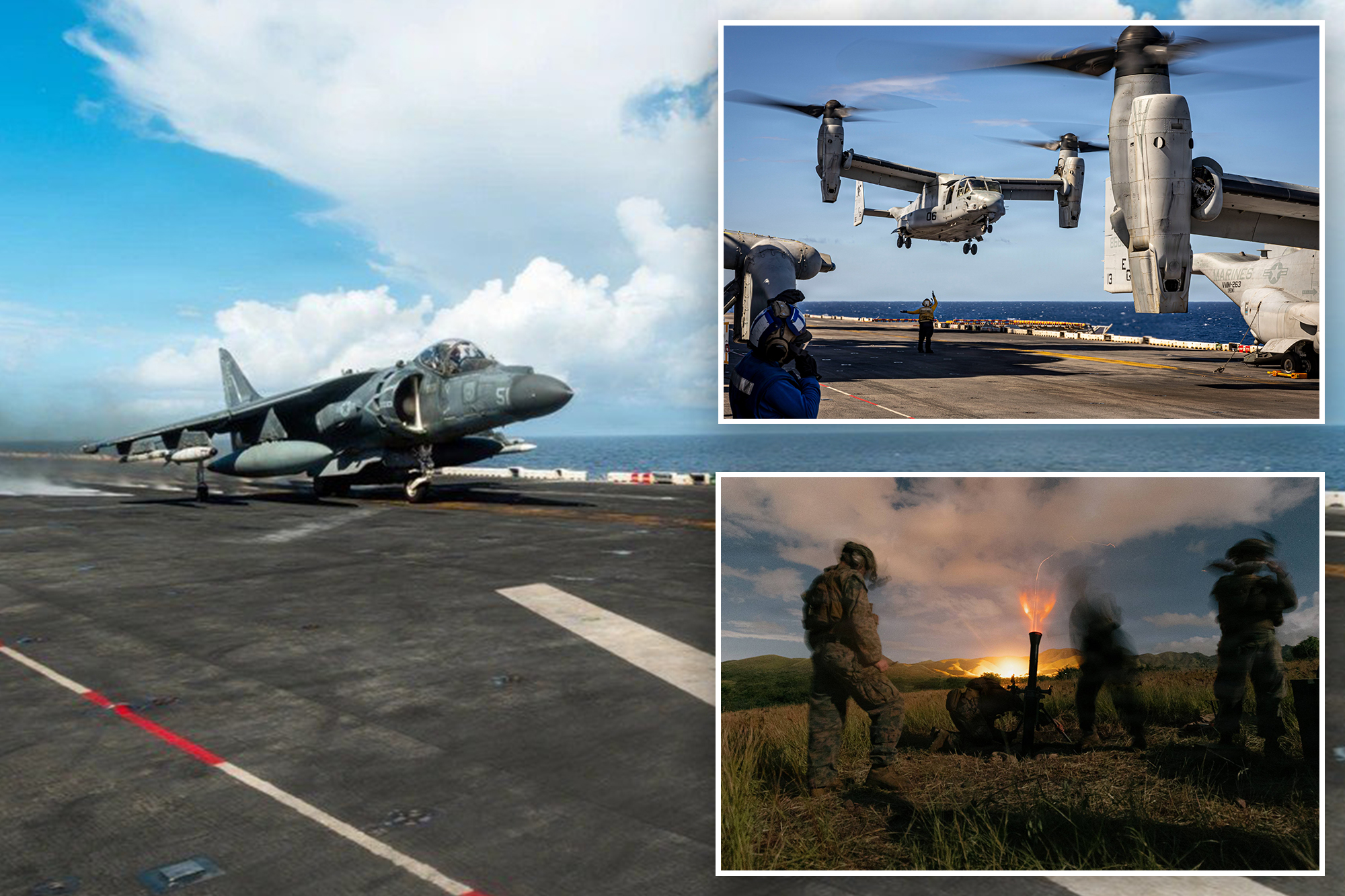
US Southern Command has showcased the capabilities of approximately 2,200 Marines training in the Caribbean, coinciding with increasing pressure on Venezuelan leader Nicolás Maduro. On December 16, the command released images of troops engaging in live-fire drills and operating advanced drone technology in Puerto Rico. These maneuvers are part of the 22nd Marine Expeditionary Force, indicating a significant military presence in a region where tensions with Venezuela are escalating.
Military Readiness and Strategic Messaging
The Marines were captured in action firing mortar systems during exercises that focused on reconnaissance and the selection of positions. Additionally, training included operations aboard the USS Iwo Jima, an amphibious assault ship conducting flight operations in the Caribbean Sea. According to military analysts, including former senior intelligence officer Alex Plitsas, the images serve as a demonstration of the US military’s readiness and capabilities while also sending a signal to adversaries.
“It’s meant to demonstrate capability and capacity, and in some cases, it can also be signaling to adversaries,” said Plitsas.
Despite this show of strength, Plitsas cautioned that the current force is insufficient for a ground invasion of Venezuela. He estimates that around 100,000 troops would be necessary to successfully invade and stabilize the country following an overthrow of Maduro’s regime. The intention behind the military presence appears to be pressuring Maduro to resign voluntarily, rather than pursuing direct military action.
Political Context and Ongoing Operations
The military display follows a statement from Marco Rubio, US Secretary of State, who recently described Maduro’s regime as the most significant threat to American security in the Western Hemisphere. At a year-end press conference, Rubio reiterated the US’s goal of ousting Maduro, labeling the regime as “illegitimate” and a facilitator of terrorism by allowing groups like Hezbollah and Colombian rebel factions ELN and FARC to operate freely from Venezuelan territory.
As part of its broader strategy to undermine Maduro’s financial resources, the US Coast Guard is pursuing an oil tanker accused of participating in illicit oil shipments linked to the regime. The vessel, believed to be sailing under a false flag, has been tracked in international waters and is subject to a US judicial seizure order. If successfully apprehended, this would mark the third tanker seized by US military assets in less than two weeks, reflecting an aggressive approach to choke off revenue streams for Maduro.
The White House continues to defend these military actions as essential measures against what it describes as a “shadow fleet” contributing to the regime’s violations of international sanctions and energy regulations.
As the situation continues to develop, the US military’s presence in the Caribbean underscores the escalating tensions surrounding Venezuela, emphasizing the need for a robust response to perceived threats in the region.