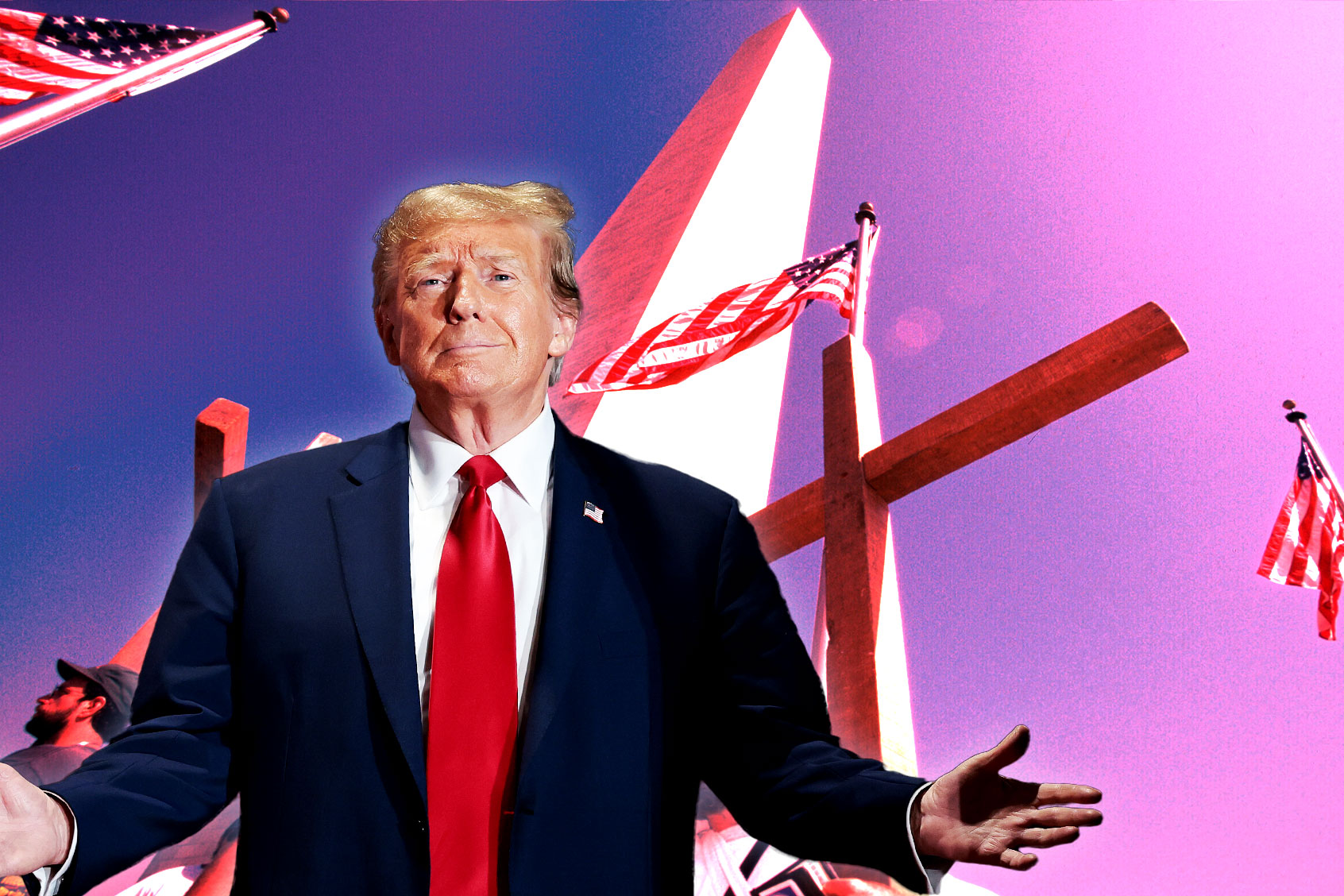
Donald Trump’s administration is facing significant tensions within its religious support base as controversial policies and executive actions challenge the unity of his MAGA coalition. In just the first year of his second term, Trump issued an unprecedented **225 executive orders**, surpassing the total from his initial four years in office. Many of these orders reflect a clear intention to intertwine governance with Christian ideology, raising concerns among various Christian denominations.
On **February 6, 2025**, Trump established a task force aimed at “eradicating Christian bias” from government operations. The following day, he created the White House Faith Office, which is designed to enforce religious liberty protections and bolster faith-based initiatives. In **May 2025**, he announced the formation of the Religious Liberty Commission with the goal of reviving religious influence in American society. Trump has frequently cited divine support, stating, “I was saved by God to make America great again,” particularly after an assassination attempt in **July 2024** in Butler, Pennsylvania.
Vice President **JD Vance** shares this religious rhetoric, recently declaring at the Turning Point USA conference that “by the grace of God we will always be a Christian nation.” This statement, notably devoid of the traditional “Judeo-Christian” reference, has drawn criticism from some quarters of the Christian community, including the **Catholic Church** to which Vance belongs. His comments sparked concern, especially given the church’s teachings on compassion and care for immigrants.
Pope **Leo XIV**, aware of the political landscape, has openly criticized the administration’s immigration policies, particularly the treatment of Somali-Americans. In a heated Cabinet meeting, Vance reportedly reacted strongly to Trump’s remarks on immigration, which echoed xenophobic sentiments. The **U.S. Conference of Catholic Bishops** issued a statement opposing mass deportations, emphasizing the need for humane treatment of all individuals, regardless of immigration status.
The Episcopal Church has also been vocal against the administration’s approach to immigration. Since Trump’s first immigration executive orders, the church has called for mercy and compassion, particularly for families facing separation due to enforcement actions. Most recently, it ended a long-standing refugee resettlement partnership with the government, citing a commitment to racial justice after the administration’s decision to prioritize the resettlement of white Afrikaners from South Africa.
As for evangelical churches, traditionally aligned with the Republican Party, there are signs of division. The **Southern Baptist Convention** previously approved a resolution advocating for comprehensive support for asylum seekers and legal pathways for immigrants. However, recent conventions have seen a notable silence on immigration, suggesting that local congregations are divided. While some pastors express concern for their immigrant members, others are reluctant to address the issue for fear of alienating their conservative base.
This evolving landscape highlights a fracture within Trump’s coalition, where the intersection of politics and faith becomes increasingly contentious. Some evangelicals may find themselves at odds with their own beliefs as they navigate the pressures of political alignment. The reluctance of the Southern Baptist leadership to engage with immigration issues reflects an underlying tension that challenges the future of their congregations.
As the demographic landscape shifts, with Latino communities growing rapidly among American evangelicals, this hostility towards immigration may prove shortsighted. The Southern Baptists’ failure to address these concerns could alienate a significant portion of their constituency.
The broader implications of these religious divisions illustrate a critical schism in American society: the gap between those who advocate for compassion and justice and those who prioritize political loyalty over humanitarian values. This growing rift within the MAGA coalition reveals that the struggle for the heart of American Christianity is far from settled, posing questions about the future of both faith and politics in the nation.