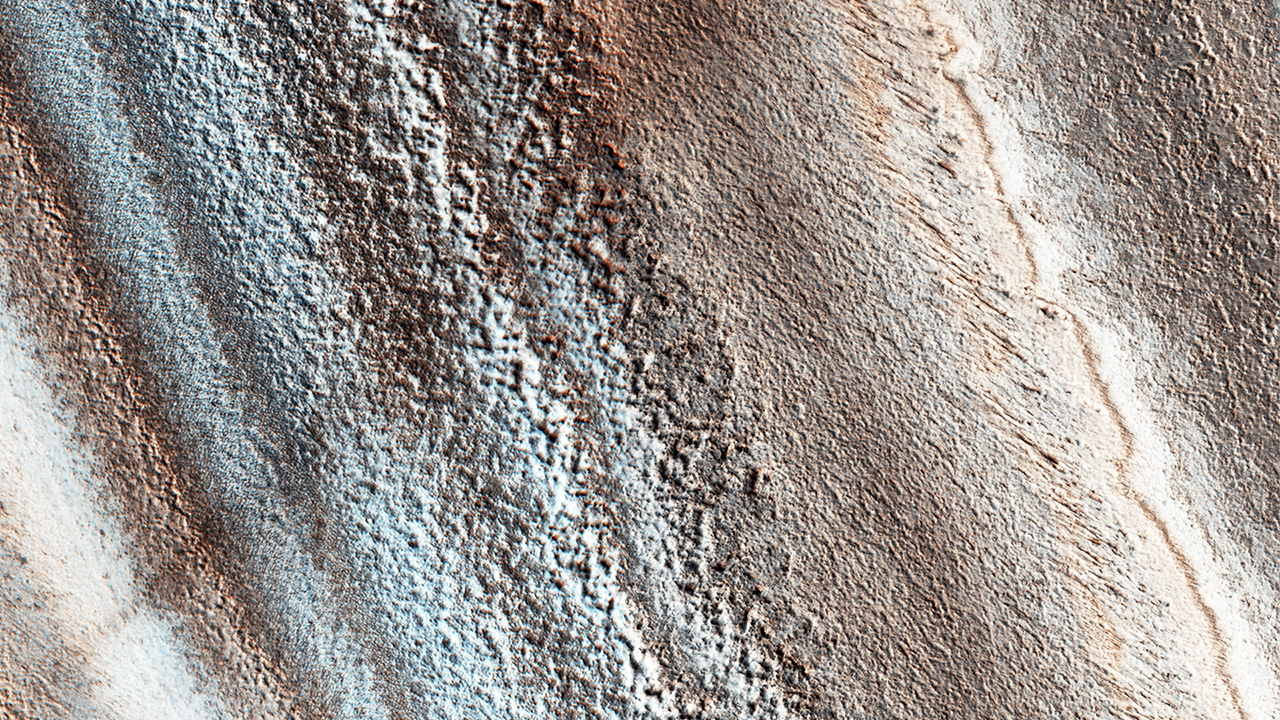
Recent observations have revealed a distinctive feature on Mars, located at the planet’s north pole. This straight-line streak intersects numerous geological layers, indicating notable changes in their characteristics. Researchers are examining the implications of this feature, which may shed light on the complex processes that shape Mars’ surface.
The streak appears to affect the brightness of the layered deposits, suggesting a significant alteration in their properties. According to data from the High-Resolution Imaging Science Experiment (HiRISE), this effect is primarily superficial. Wind processes have removed frost or deposited dust unevenly across the streak. As a result, one side of the line appears different from the other.
At the full HiRISE scale, the texture remains consistent when crossing this line, indicating that the underlying layers are not fundamentally altered. Nevertheless, the overall impact is striking. Some layers that are brighter on one side of the streak appear darker on the opposite side. This phenomenon likely results from the local slope and the interaction of roughness with wind patterns.
Understanding the Impact of Wind on Martian Layers
The study of these changes offers a glimpse into the dynamic environment of Mars. The winds play a crucial role in shaping the planet’s surface features, and this streak exemplifies how they can influence the visibility and characteristics of geological formations.
Researchers face challenges in differentiating the properties of these layers based solely on their brightness in this environment. The complexity of the wind’s effects complicates the interpretation of data collected from Mars’ surface. The findings underscore the need for further exploration and analysis, especially in the context of astrobiology and astrogeology.
Understanding these processes is essential for future missions aimed at exploring Mars. As scientists continue to analyze the data from the HiRISE, they hope to gain deeper insights into the planet’s history and potential for past life. The unique features observed at the north pole may offer vital clues about the conditions that have shaped Mars over millions of years.
In summary, this intriguing streak not only highlights the aesthetic diversity of Mars’ surface but also poses significant questions about the interactions between wind, geology, and the planet’s atmospheric conditions. The ongoing research will continue to enhance our understanding of this fascinating celestial body.