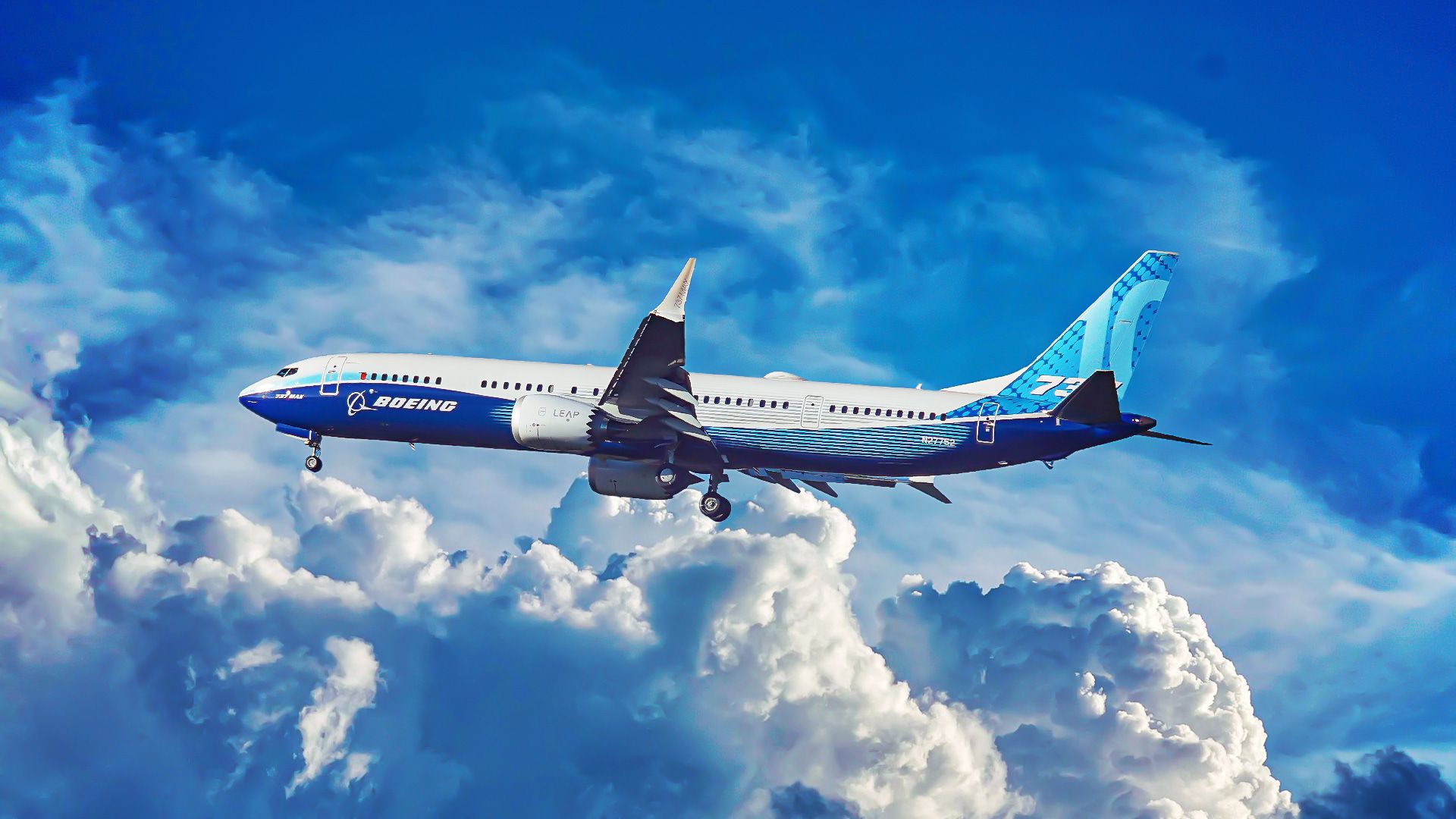
The debate surrounding the profitability of the Boeing 737 MAX 10 continues as the aircraft remains on the cusp of entering commercial service. Positioned by Boeing as potentially the most profitable large single-aisle aircraft, the MAX 10 aims to attract airlines facing mounting pressures from fuel prices, labor costs, and slot availability. Yet, with the aircraft still awaiting certification, its profitability remains theoretical, hinging on factors beyond mere design.
The claim of unmatched profitability is rooted in Boeing’s projections, which suggest that the MAX 10 will deliver the lowest seat-mile costs among its competitors. However, these figures are based on performance modeling rather than actual operational data. Until the MAX 10 operates at scale, its profitability cannot be accurately compared to established aircraft like the Airbus A321neo, which has already proven its effectiveness in various business models.
Understanding Profitability in Aviation
Boeing faces historical skepticism regarding its profitability claims. Previous aircraft models, such as the Boeing 737-900ER and the A321ceo, were marketed as cost leaders, yet their actual performance varied widely depending on airline usage. This pattern suggests that profitability metrics often do not translate seamlessly into real-world operations.
The MAX 10’s primary advantage lies in its seating capacity. With the potential to accommodate around 220 to 230 passengers in high-density configurations, airlines can distribute fixed costs such as fuel and maintenance over more seats. For airlines already utilizing the 737 MAX family, this increases operational efficiency due to fleet commonality, reducing training and maintenance costs.
Aircraft Typical High-Density Seating | Advertised Range | Core Strength | Primary Limitation
— | — | — | —
Boeing 737 MAX 10 | 220–230 seats | 3,100 NM | Very low cost per seat on dense routes | Shorter range limits network flexibility
Airbus A321neo | 220–240 seats | 3,500 NM | Strong balance of capacity and range | Higher acquisition cost
Airbus A321LR | 180–220 seats | 4,000 NM | Long-range narrowbody capability | Lower seat density
Airbus A321XLR | 160–200 seats | 4,700 NM | Transcontinental & thin long-haul routes | Higher structural weight
Despite these advantages, the MAX 10’s range limitations compared to the A321neo family may restrict its operational flexibility. Airlines have noted that while the MAX 10 can significantly reduce unit costs on high-density short-haul routes, its inability to operate longer missions may hinder profitability in more diverse network situations.
Market Conditions and Aircraft Deployment
Airlines that have placed orders for the MAX 10, such as United Airlines, view it as a tool for cost reduction rather than as a guaranteed profit generator. The focus has shifted towards improving controllable costs in high-demand environments rather than achieving absolute profit figures. This cautious approach reflects how airlines assess new aircraft, emphasizing operational economics over theoretical models.
Industry analysts echo this sentiment, acknowledging Boeing’s cost assumptions as plausible for airlines operating dense networks. Yet, they caution that ongoing certification delays diminish the financial appeal of the MAX 10. Each postponement not only delays potential revenue but also allows competitors, particularly Airbus, to strengthen their market positions.
The Airbus A321neo has already captured significant market share, benefiting from its flexibility and proven performance across various routes. This operational history has led airlines to trust its long-term profitability, with the aircraft being deployed on both domestic and longer-haul missions. Variants like the A321LR and A321XLR further enhance its versatility, enabling higher profitability despite slightly elevated operating costs.
In contrast, the MAX 10’s profitability hinges on timely certification and deployment. Delays in entering service could force airlines to reassess their fleet strategies, potentially leading to cancellations or shifts to alternative aircraft.
Boeing’s narrative of the MAX 10 as a cost-effective solution for high-density routes is compelling, but the aircraft must demonstrate its capabilities in practice. The relationship between certification timing and market demand is critical; an aircraft that arrives late may miss optimal deployment conditions.
As airlines navigate these uncertainties, the profitability of the MAX 10 will ultimately depend on its real-world performance rather than marketing claims. If it successfully enters service and is deployed effectively, it could carve out a significant niche among narrowbody aircraft. However, until then, the title of the most profitable large single-aisle aircraft remains contested, with the A321neo holding a strong lead in the market.
For now, the aviation industry watches closely as Boeing works towards certifying the MAX 10, hoping it will live up to its ambitious promises. As competition intensifies and market conditions fluctuate, the success of the MAX 10 will be defined by its ability to adapt to real-world challenges and opportunities.