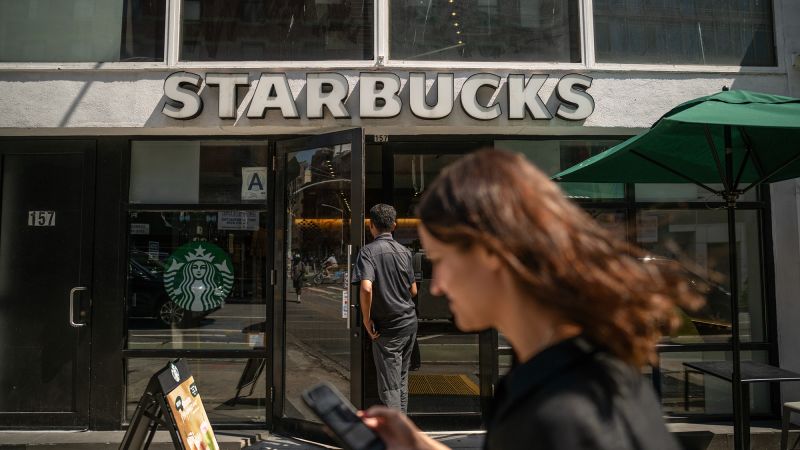
Starbucks has announced a significant change in its business strategy, moving away from its aggressive urban expansion model. The coffee giant will close approximately 400 stores across the United States, particularly in major metropolitan areas like New York City and Los Angeles. This decision comes as the company grapples with increasing competition and shifting consumer behavior following the COVID-19 pandemic.
The closures represent part of a broader $1 billion restructuring plan aimed at repositioning Starbucks in the marketplace. According to a spokesperson, the company reviewed its over 18,000 locations in the U.S. and Canada, focusing on underperforming stores that failed to meet brand standards. In New York City alone, Starbucks has shut down 42 locations, accounting for about 12% of its stores in the region.
Adapting to Changing Market Dynamics
Starbucks’ strategy of saturating urban areas to capture morning commuters has faltered amid a surge of competition from independent coffee shops and other beverage outlets. This shift has been particularly evident in cities like New York, where the company recently lost its dominance in the market to Dunkin’, as reported by the Center for an Urban Future. The trend is echoed in other cities, with Starbucks also closing more than 20 locations in Los Angeles, 15 in Chicago, and several others in San Francisco and Minneapolis.
The impact of remote work has also played a critical role in Starbucks’ decision-making. Major cities such as New York and San Francisco experienced population declines after the pandemic, shrinking their customer bases. Catherine Yeh, director of market analytics at CoStar Group, noted that the company has closed locations in downtown office buildings that once thrived on daily foot traffic from office workers.
Addressing Operational Challenges
Under the leadership of CEO Brian Niccol, who took the helm last year after a tenure at Chipotle, Starbucks is attempting to redefine itself as a “third place” between home and work. The company plans to revitalize its image by remodeling stores and introducing refreshed designs in 2026. Niccol’s approach aims to create elevated experiences that resonate with modern consumers.
Despite these efforts, Starbucks faces ongoing challenges in balancing the needs of different customer segments. Some patrons seek a quick coffee-to-go experience, while others prefer to linger in a comfortable setting. According to Sharon Zackfia, an analyst at William Blair, satisfying these competing demands has proven difficult. As a result, Starbucks shares have dropped approximately 6% over the past year, indicating investor concerns about the company’s recovery trajectory.
In response to public safety issues, Starbucks has also revised its policies regarding store access. The company has ended its previous practice of allowing anyone to use its restrooms or lounge without making a purchase. Former CEO Howard Schultz highlighted the mental health crisis as a contributing factor to safety concerns within stores.
As Starbucks navigates these complex challenges, it is evident that the company’s journey is far from over. The closures mark a significant shift in strategy, emphasizing the need for adaptation in a rapidly evolving market landscape.