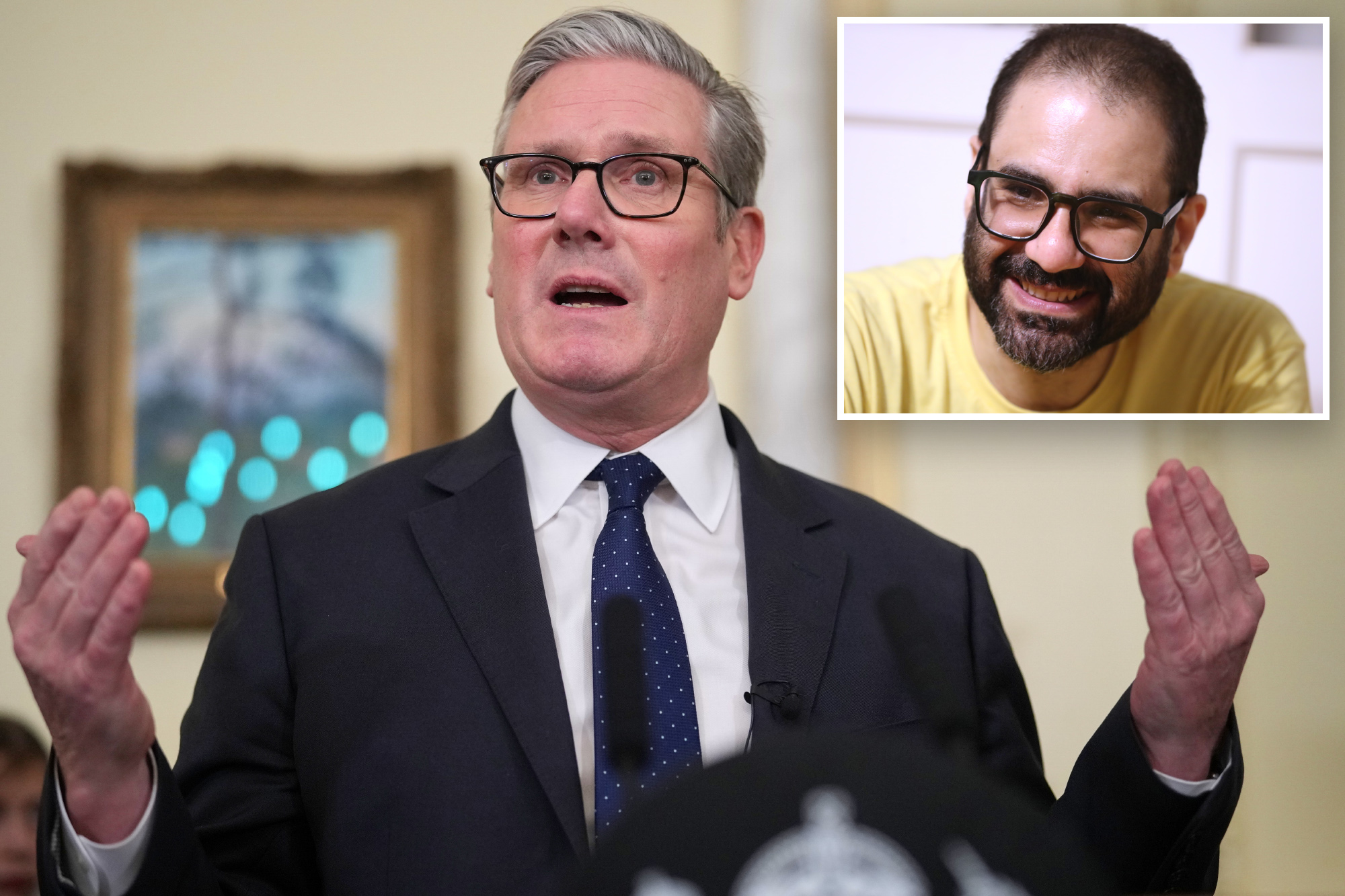
U.K. Prime Minister Keir Starmer is under fire for his warm welcome of Alaa Abd el-Fattah, a recently released Egyptian prisoner with a controversial online history. Abd el-Fattah, who holds dual British-Egyptian nationality, was incarcerated in Egypt for most of the past 14 years. Following a pardon from the Egyptian president in September 2023, he returned to the U.K. after a travel ban was lifted.
Starmer expressed his joy at Abd el-Fattah’s return, stating he was “delighted” to see the activist reunited with his family. However, this sentiment has sparked significant criticism, particularly from members of the opposition Conservative Party.
Political Fallout and Criticism
Robert Jenrick, the Shadow Secretary of State for Justice, has voiced concerns regarding Starmer’s endorsement of Abd el-Fattah. He questioned whether the Prime Minister was aware of the activist’s past social media posts, which allegedly included violent language against Jews and support for attacking police. Jenrick called upon Starmer to publicly condemn these statements and to retract his support for Abd el-Fattah, emphasizing that while arbitrary imprisonment is unacceptable, the Prime Minister should not endorse someone whose rhetoric borders on racism.
The criticism has extended beyond Jenrick. Conservative leader Kemi Badenoch and Nigel Farage, leader of Reform UK, have both advocated for Abd el-Fattah’s British citizenship to be revoked and for him to be deported.
The U.K. government later clarified that Starmer was not aware of Abd el-Fattah’s “abhorrent” online posts at the time of his welcoming statement. The Foreign, Commonwealth and Development Office reaffirmed that while advocating for Abd el-Fattah’s release has been a priority for both major political parties, it does not equate to an endorsement of his past statements. The Office condemned the historic tweets, calling them “abhorrent.”
Abd el-Fattah’s Response and Background
In the wake of the backlash, Abd el-Fattah issued an “unequivocal apology,” characterizing his previous remarks as expressions of anger during tumultuous times, particularly regarding police brutality in Egypt. He has maintained that his comments were made in a private context amidst an Israeli offensive in Gaza, suggesting that they have been misinterpreted.
Abd el-Fattah’s family has long argued that his imprisonment was politically motivated due to his vocal opposition to the regime of Egyptian President Abdel-Fattah el-Sissi. His mother, Laila Soueif, embarked on a 10-month hunger strike urging the U.K. government to take action for her son’s release, highlighting the emotional toll of the situation.
As Abd el-Fattah arrived at London’s Heathrow Airport, criticism of his past social media activity intensified, raising broader questions about the implications of endorsing individuals linked to inflammatory remarks. The situation underscores the complex intersection of politics, activism, and public sentiment in the U.K.
This latest controversy reflects ongoing tensions regarding free speech, political dissent, and the responsibilities of public officials in navigating such sensitive issues. The response from both government officials and the public will likely continue to evolve as discussions surrounding Abd el-Fattah’s return unfold.