The United States has announced a commitment of $2 billion in humanitarian aid to the United Nations, marking a significant reduction in its traditional foreign assistance. This pledge reflects the ongoing efforts of the Trump administration to curtail foreign aid while demanding extensive reforms in U.N. operations. The announcement was made on March 15, 2024, in Geneva, where U.S. officials emphasized the need for U.N. agencies to “adapt, shrink or die” in response to new financial realities.
The $2 billion commitment is a fraction of the U.S. contributions in previous years, which have reached up to $17 billion annually, according to U.N. data. Of that amount, only $8-$10 billion has typically been classified as voluntary contributions. This new pledge will establish an umbrella fund intended to streamline aid distribution to various U.N. agencies and priorities, aligning with the administration’s demand for substantial changes within the global body.
U.S. officials expressed optimism that this aid will help maintain America’s status as the largest humanitarian donor worldwide. Yet, critics have voiced concerns that the significant cutbacks in aid could exacerbate global humanitarian crises, leading to increased hunger, displacement, and disease. The current year has already seen a crisis in aid, with U.N. organizations such as the International Organization for Migration (IOM) and the World Food Program (WFP) facing severe funding shortfalls.
Impacts on Humanitarian Aid and Operations
The announced funding is part of a preliminary agreement with the U.N. Office for the Coordination of Humanitarian Affairs (OCHA), overseen by Tom Fletcher. This agreement aims to create a more efficient aid delivery system by consolidating leadership and reducing bureaucratic overhead. U.S. Ambassador to the United Nations Michael Waltz stated that the initiative is designed to deliver more aid while utilizing fewer taxpayer dollars, aligning assistance with U.S. foreign policy objectives.
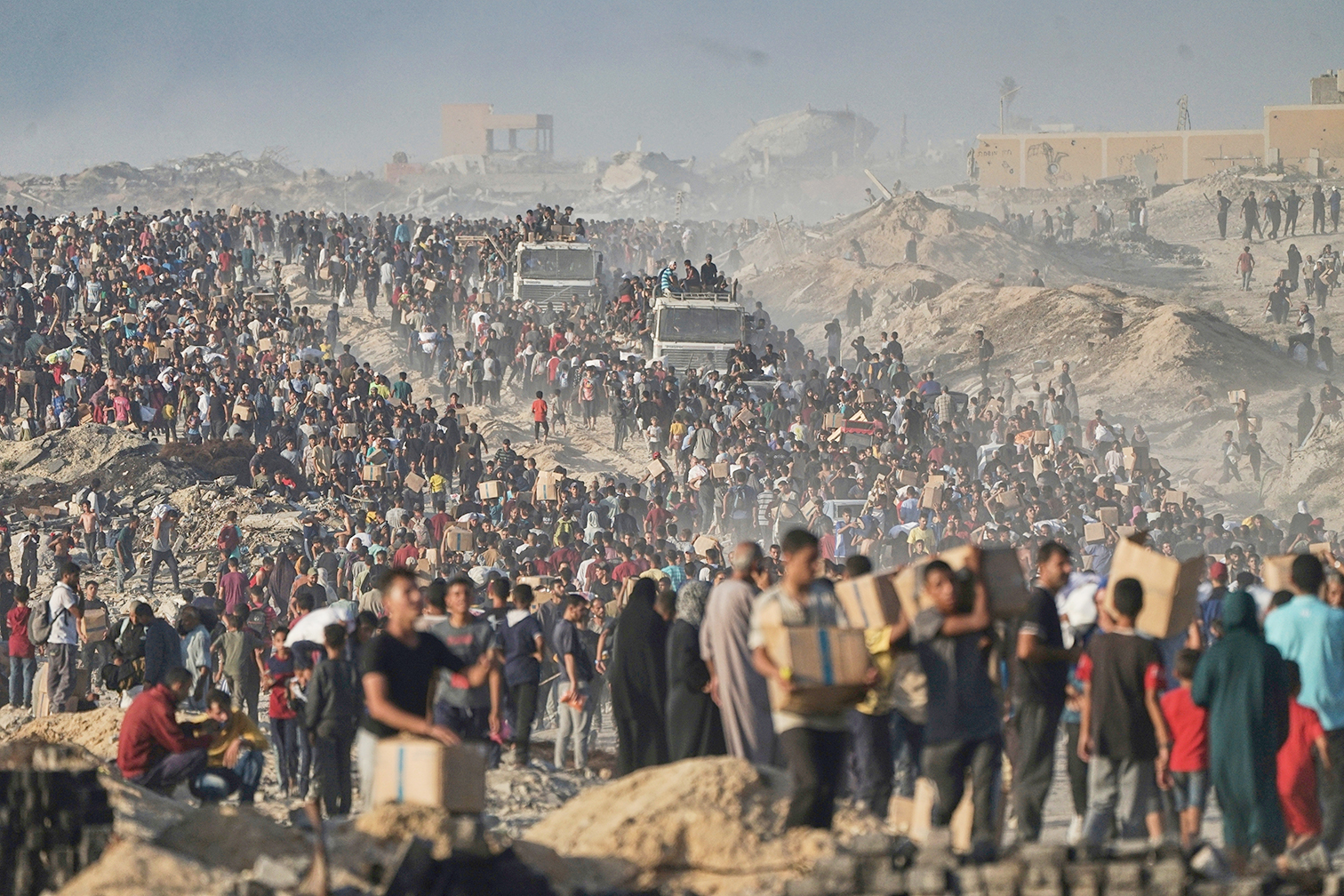
As the U.S. scales back its contributions, global humanitarian needs have intensified. Regions such as Sudan and Gaza are experiencing famine, while climate-related disasters continue to displace populations worldwide. The cuts in U.S. funding will have significant repercussions for vital U.N. agencies, including the UNHCR, which are already grappling with reduced budgets compared to previous years.
Despite these challenges, Fletcher has indicated that his office’s reform efforts are crucial for improving the accountability and effectiveness of humanitarian spending. The administration aims to ensure that funding is directed toward specific crises and countries that are most in need, with an initial focus on 17 countries, including Bangladesh, Congo, Haiti, Syria, and Ukraine. Notably, Afghanistan and the Palestinian territories are excluded from the initial funding targets.
Reforms and Future Implications
The reform project is rooted in President Trump’s long-standing belief that the U.N. has failed to meet its original mission of saving lives while aligning with U.S. interests. The administration has criticized the organization for what it perceives as wasteful spending and excessive ideological influence.
In a statement, Fletcher remarked, “At a moment of immense global strain, the United States is demonstrating that it is a humanitarian superpower, offering hope to people who have lost everything.” This perspective underscores the administration’s commitment to remaining a leading provider of humanitarian assistance, even while implementing significant changes to how aid is delivered.
The agreement stipulates that U.N. agencies must consolidate their functions to minimize duplication and enhance efficiency. The State Department has emphasized that these reforms are essential for the future sustainability of humanitarian efforts, stating, “Individual U.N. agencies will need to adapt, shrink, or die.”
With U.S. aid evolving in this direction, the implications for global humanitarian response will be profound. The effectiveness of this new funding model, alongside the anticipated reforms, will be closely monitored as the world grapples with unprecedented humanitarian challenges.