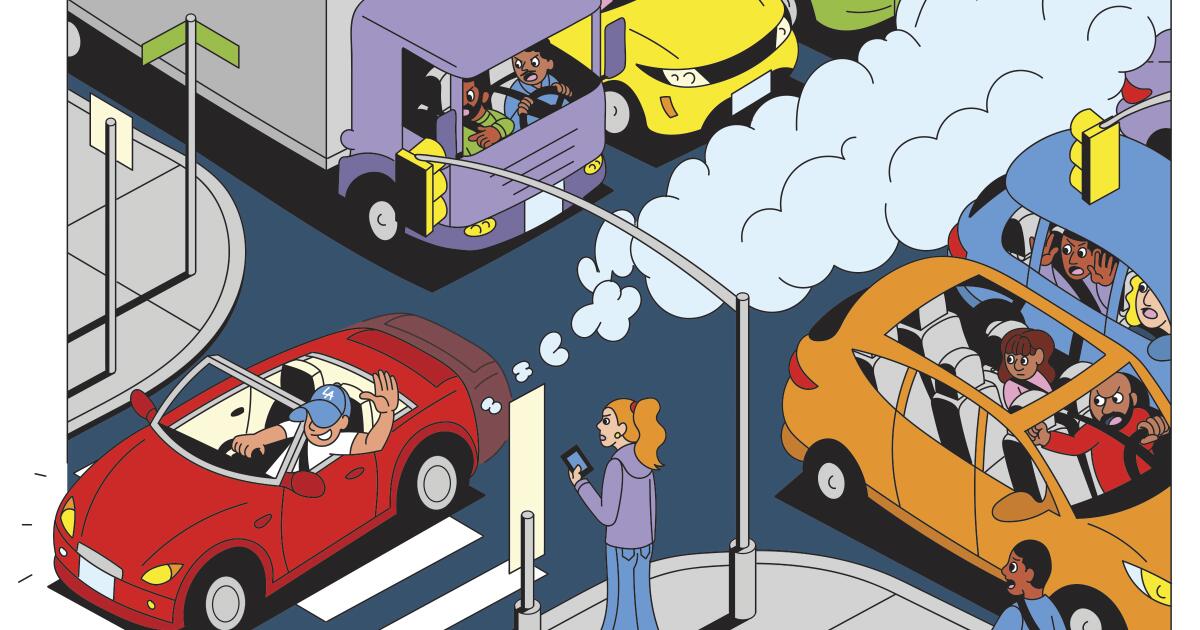
Residents of California are voicing their frustrations regarding the driving habits prevalent on the state’s roads. A recent article titled “The seven most frustrating offenses California drivers commit every day” published on December 23 highlights these issues, prompting readers to share their own observations and experiences.
Many contributors expressed concern over the decline in driving etiquette. According to Eric Wilks from Los Angeles, the common practices of impatience and a lack of consideration now overshadow basic driving rules. He emphasized that the failure to adhere to the “red means stop” rule should have topped the list of infractions. Wilks noted that in his neighborhood, where children and pets are often present, drivers frequently disregard four-way stops, increasing the risk of accidents. He remarked, “It surprises me that more people aren’t injured or killed by that level of recklessness.”
Another reader, Martin A. Brower from Corona del Mar, pointed to a critical issue he believes was overlooked. He argued that the behavior of accelerating through yellow lights has become alarmingly common. Brower stated that many drivers misinterpret the yellow light as a signal to speed up, leading to dangerous situations at intersections, particularly when cross-traffic begins moving as soon as their light turns green. He identified this habit as a significant contributor to automobile accidents.
Driving behaviors at traffic signals also drew criticism. B.J. Merholz from Los Angeles highlighted drivers in left turn lanes who remain stationary behind the crosswalk after the light has changed. This practice not only frustrates the vehicles behind but also obstructs traffic flow when the light turns red, preventing others from making their turns.
In a similar vein, Mary Motheral from San Diego pointed out drivers who hesitate to exercise their right of way, leaving others uncertain about when to proceed. The lack of assertiveness on the road can lead to confusion and further delays, adding to the overall frustration of commuters.
Other readers chimed in with additional grievances. Dave Suess from Redondo Beach suggested adding “Speed limit is an upper limit, not a lower limit” to the list. He noted that some drivers misinterpret speed limits, often driving significantly below the posted speeds, which can create hazards on the road.
Moreover, Meg Quinn Coulter from Los Angeles addressed the issue of high-beam headlights. She pointed out that many vehicles equipped with automatic dimmers fail to account for the blinding effect of elevated headlights on larger vehicles like SUVs and pickups. Coulter also criticized the frequent practice of drivers stopping too far behind the vehicle in front, which not only blocks intersections but can also prevent the activation of automatic low-beam systems, further blinding other drivers.
As these sentiments reflect a growing concern among California residents about road safety, it becomes increasingly clear that addressing these driving habits is essential for the well-being of all road users. The collective frustrations highlight a need for greater awareness and adherence to driving rules, ultimately fostering a safer driving culture in the state.