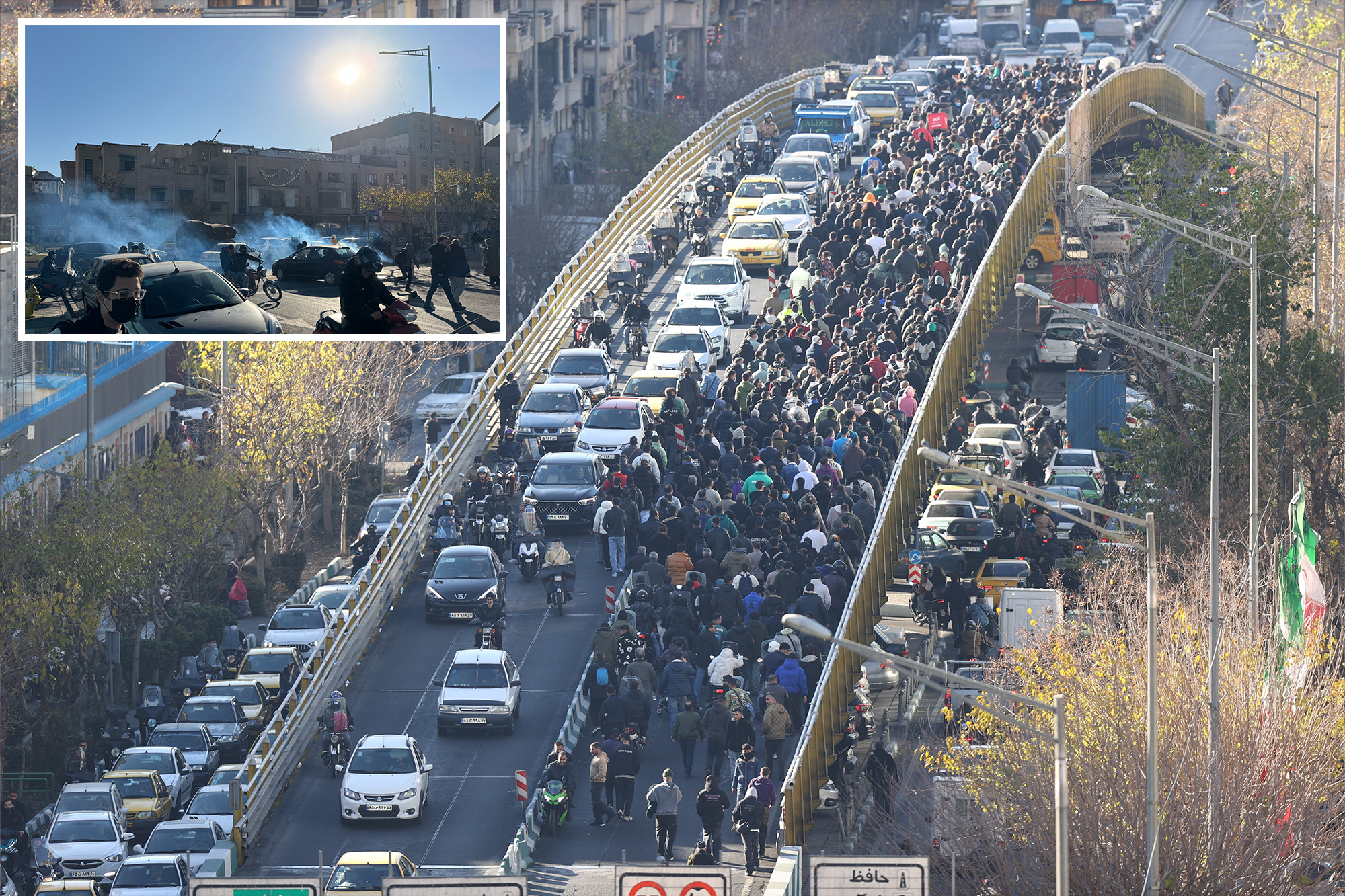
Protests have erupted across Iran as citizens voice their outrage over a severe cost of living crisis. The Iranian rial has hit an alarming low, with $1 now valued at 1.4 million Iranian rials, intensifying public frustration. Demonstrations began earlier this week and have swiftly spread to rural areas, where the economic situation is particularly dire.
The protests are widely seen as a response to the government’s mismanagement of the economy, which has left many struggling to afford basic necessities. President Masoud Pezeshkian has indicated a willingness to negotiate with protesters, yet he admitted the government’s capacity to address the economic turmoil is limited. The situation has escalated with citizens and shopkeepers in Tehran expressing their anger, as they blame lawmakers for the current crisis.
Inflation has reached 48.6%, and prominent local goods have seen staggering price increases. For instance, a kilogram of Tarom Hashemi rice now costs up to 4 million rials, which is approximately $3.56 per pound. This represents a staggering increase of 230% from the previous year. One shopper in Karaj lamented, “[Ayatollah] Ali Khamenei has spent over four decades chasing war, missiles and chanting, ‘Death to this or that.’ Now we can’t even afford rice,” highlighting the deep frustration felt by many.
The unrest further intensified following a spike in gasoline prices, a resource many Iranians consider a birthright. The government’s attempt to quell public anger through new subsidies has not been enough to stabilize the situation. Protests have primarily centered around vital bazaars, where citizens purchase their daily goods. As a result, businesses, universities, and government offices have closed, leading to chants of “Death to the dictator,” a direct critique of Khamenei’s leadership.
Although protests in Tehran have diminished, they have gained traction in other regions and turned violent. Recent clashes have resulted in fatalities, with officials confirming the deaths of three individuals during confrontations with security forces. According to the state-run IRNA news agency, a 21-year-old volunteer officer from the Revolutionary Guard’s Basij force was killed amid the unrest, which authorities attributed to the actions of demonstrators. Saeed Pourali, a deputy governor in Iran’s Lorestan province, stated, “The protests that have occurred are due to economic pressures, inflation and currency fluctuations, and are an expression of livelihood concerns.”
In a contrasting response to the protests, Pezeshkian attributed the unrest to foreign interference rather than domestic economic failures. “Right now, the enemy has placed most of its hopes on knocking us down through economic pressure,” he claimed during a business forum in Tehran. He further asserted that external forces cannot conquer a determined nation.
The Washington-based Abdorrahman Boroumand Center for Human Rights in Iran has reported on the fatalities, identifying two protesters killed in a demonstration in the city of Lordegan. As the crisis deepens, the Iranian government faces an urgent need to address the economic challenges that have ignited widespread discontent among its citizens.