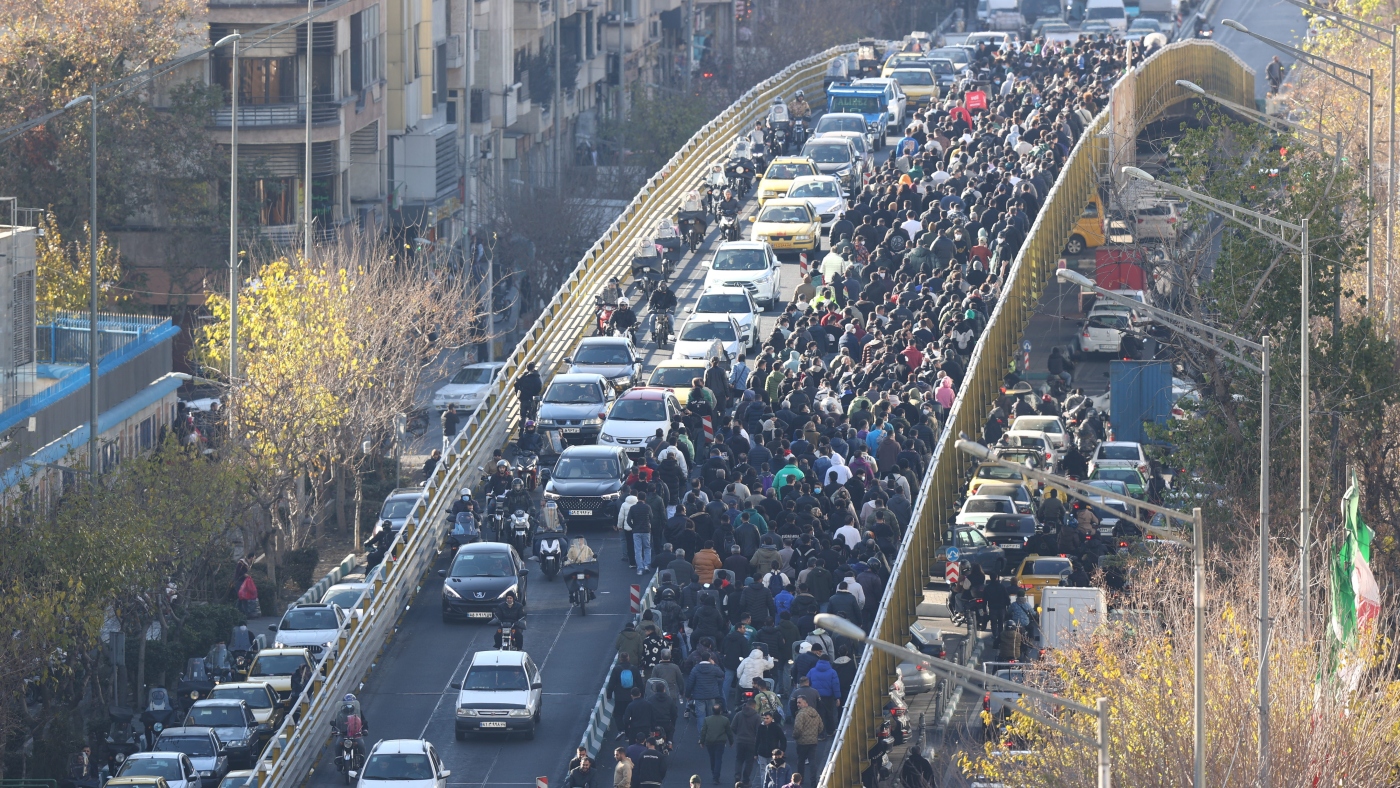
Demonstrations across Iran, ignited by escalating economic troubles, have intensified, resulting in at least six fatalities among both security forces and protesters. The unrest, which began in urban centers, has now expanded into rural areas, with violence reported in cities predominantly inhabited by the Lur ethnic group. Authorities indicated that one person was killed on Wednesday and five on Thursday, marking a critical moment in a wave of protests reminiscent of those following the death of Mahsa Amini in police custody in 2022.
The most significant violence occurred in Azna, located approximately 300 kilometers (185 miles) southwest of Tehran. Eyewitness accounts and online videos purportedly showed chaos in the streets, with demonstrators chanting “Shameless! Shameless!” and fires burning in the background. The semiofficial Fars news agency reported three deaths in Azna, while state-run media were noticeably restrained in their coverage of the events.
In Lordegan, another city that has witnessed unrest, footage showed protesters amid the sound of gunfire. Fars, citing an unnamed official, stated that two demonstrators were killed during Thursday’s protests. The Washington-based Abdorrahman Boroumand Center for Human Rights in Iran corroborated these reports, identifying the deceased as protesters.
A separate protest led to the death of a 21-year-old member of the paramilitary Revolutionary Guard’s Basij force. The state-run IRNA news agency confirmed the Guard member’s death, attributing it to clashes with demonstrators. Local officials have suggested that the protests stem from “economic pressures, inflation and currency fluctuations,” emphasizing the need for the government to respond to citizens’ demands without allowing them to be exploited by outside influences.
The protests have escalated in the city of Kouhdasht, located over 400 kilometers (250 miles) southwest of Tehran, where local prosecutor Kazem Nazari announced the arrest of 20 individuals following unrest. This demonstrates the Iranian government’s increasing concern over the demonstrations, although it has sought to downplay the severity of the situation.
The Iranian economy is facing dire challenges, with the national currency, the rial, experiencing a rapid depreciation. Currently, $1 costs approximately 1.4 million rials, exacerbating public discontent. Iranian President Masoud Pezeshkian has expressed a desire to negotiate with protesters but admitted the government’s limited ability to influence economic conditions.
In a bid to alleviate tensions, the Iranian government declared Wednesday a public holiday across much of the country, possibly to encourage citizens to leave urban areas for a long weekend. This was part of a strategy to prevent further escalation of protests linked to economic grievances and frustrations with the ruling theocracy.
The recent demonstrations have not only highlighted economic issues but also included chants against the Iranian leadership. Iran’s leaders remain under pressure following various geopolitical challenges, including a recent conflict involving Israel and military actions directed at Iranian nuclear facilities.
While the government faces increasing scrutiny and unrest, the protests serve as a stark reminder of the ongoing struggles faced by ordinary Iranians in a country grappling with deep-rooted economic issues. The situation remains fluid, with many watching closely to see how the Iranian authorities will respond in the coming days.