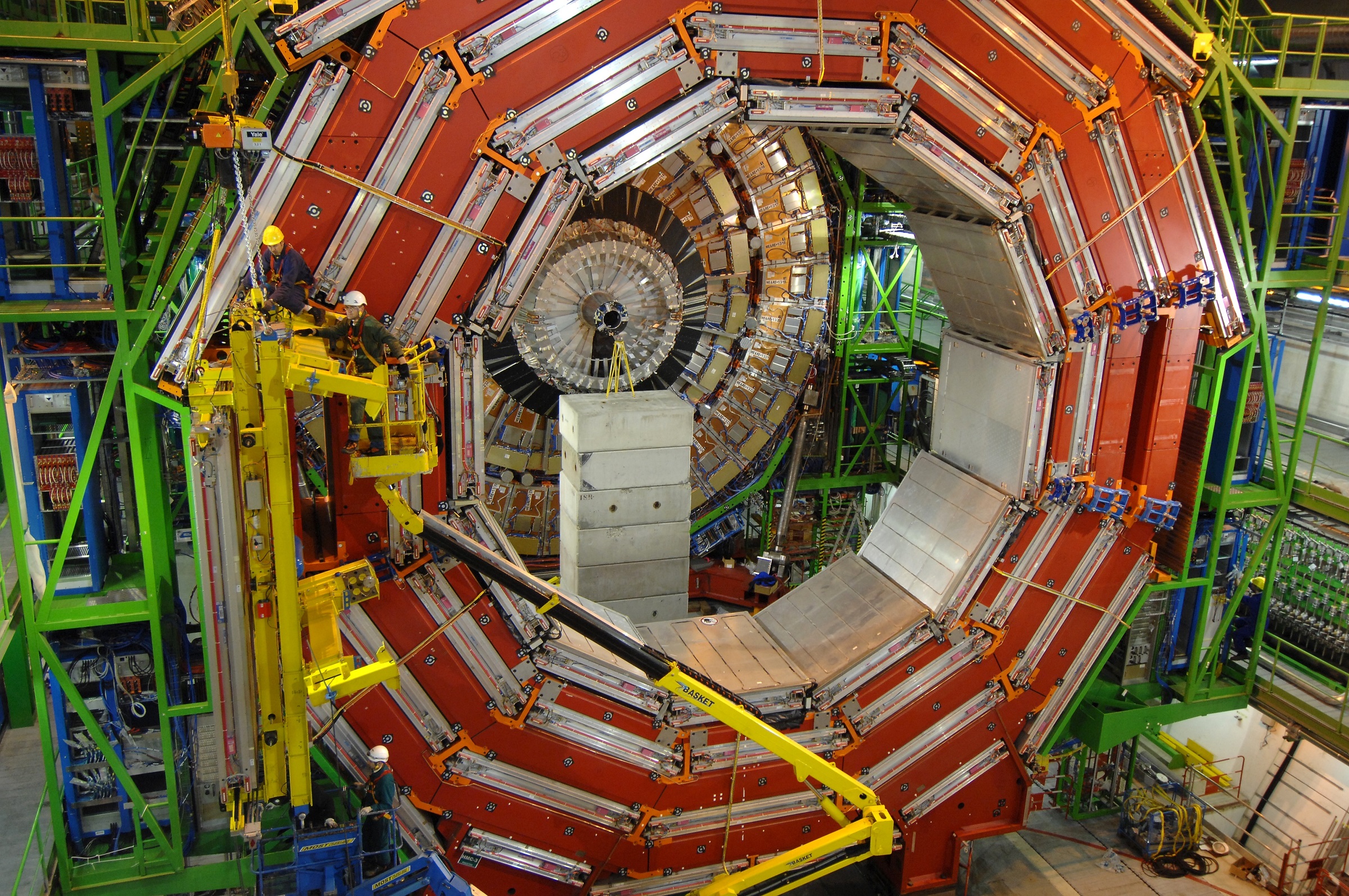
The Large Hadron Collider (LHC), one of the most significant scientific instruments in history, will undergo a major upgrade, resulting in a prolonged shutdown set to begin in June 2024. This upgrade aims to enhance the collider’s capabilities, allowing it to conduct ten times the number of particle collisions currently possible. While this development is crucial for advancing particle physics, it will also mean the LHC will be offline until approximately mid-2030.
Located near the Swiss-French border, the LHC is a 16-mile ring-shaped tunnel that simulates the extreme conditions of the universe shortly after the Big Bang. It achieved a monumental breakthrough in 2012 by confirming the existence of the Higgs boson, a fundamental particle that explains how other particles acquire mass. As the LHC prepares for its upgrade, dubbed the high-luminosity LHC, engineers will focus on enhancing its design to facilitate a greater volume of experiments and data collection.
Anticipated Upgrades and Future Plans
CERN, the intergovernmental organization responsible for the LHC, anticipates that the high-luminosity upgrade will take approximately five years. During this period, physicists will have ample data to analyze from the collider’s current operations. Mark Thomson, the newly appointed Director General of CERN, expressed optimism about the ongoing research. He stated, “The machine is running brilliantly and we’re recording huge amounts of data. There’s going to be plenty to analyze over the period. The physics results will keep on coming.”
Thomson took over leadership on January 1, 2024, and will oversee the LHC’s transition into this new phase. He regards the upgrade as an exciting challenge rather than a setback. “It’s an incredibly exciting project,” he noted, emphasizing that the improvements will lead to more significant discoveries in the field of particle physics.
Future Circular Collider: A Long-Term Vision
In addition to the LHC upgrade, CERN is also planning for its successor, the Future Circular Collider (FCC). This ambitious project is proposed to have a circumference of 56 miles, dwarfing the LHC. The first phase of the FCC would focus on colliding electrons and positrons, with construction expected to begin in the late 2040s. A second phase would aim to accelerate protons to higher speeds by the 2070s.
Despite the high expectations surrounding the FCC, its estimated cost of $19 billion raises questions about funding and feasibility. There is ongoing debate within the scientific community regarding whether massive particle accelerators are the most effective means of exploring profound questions in physics, such as the nature of dark matter and dark energy.
Thomson remains steadfast in his belief in the importance of large-scale particle colliders for scientific advancement. “We’ve not got to the point where we have stopped making discoveries and the FCC is the natural progression. Our goal is to understand the universe at its most fundamental level,” he stated. “And this is absolutely not the time to give up.”
As the LHC prepares for its transformative upgrade, the scientific community stands ready to embrace the challenges and opportunities that lie ahead, ensuring that research in particle physics continues to thrive in the coming years.