Newly released documents reveal that the UK military actively sought to acquire extraterrestrial technology during the 1990s. Intelligence officers believed that innovations from unidentified aerial phenomena (UAP) could significantly enhance the nation’s defense capabilities. The files, now unsealed and available in the National Archives at Kew, London, provide insight into the UK’s Defence Intelligence Staff’s operating procedures at the time.
The investigation into UAPs was sparked by thousands of reported sightings over Belgium from November 1989 to April 1990. Internal communications from March 1997 highlight the urgency behind the inquiry. One memo noted, “Logic would indicate that if significant numbers are reporting seeing strange objects in the sky, then there may be a basis in fact.” The memo further emphasized the potential threat posed by these phenomena, stating, “We have no idea what they are.”
Unusual Sightings Prompt Serious Consideration
Throughout the early 1990s, there was a noticeable increase in reports of “large, silent, low-flying black triangles” that exhibited propulsion capabilities far beyond any technology known on Earth. According to a report cited by the Sunday Times, intelligence officials were compelled to evaluate the possibility of acquiring such advancements. The report asserted that UAPs did not appear to use conventional reaction propulsion systems, highlighting their ability to hover for extended periods and accelerate to supersonic speeds, outpacing military jets like the F-16.
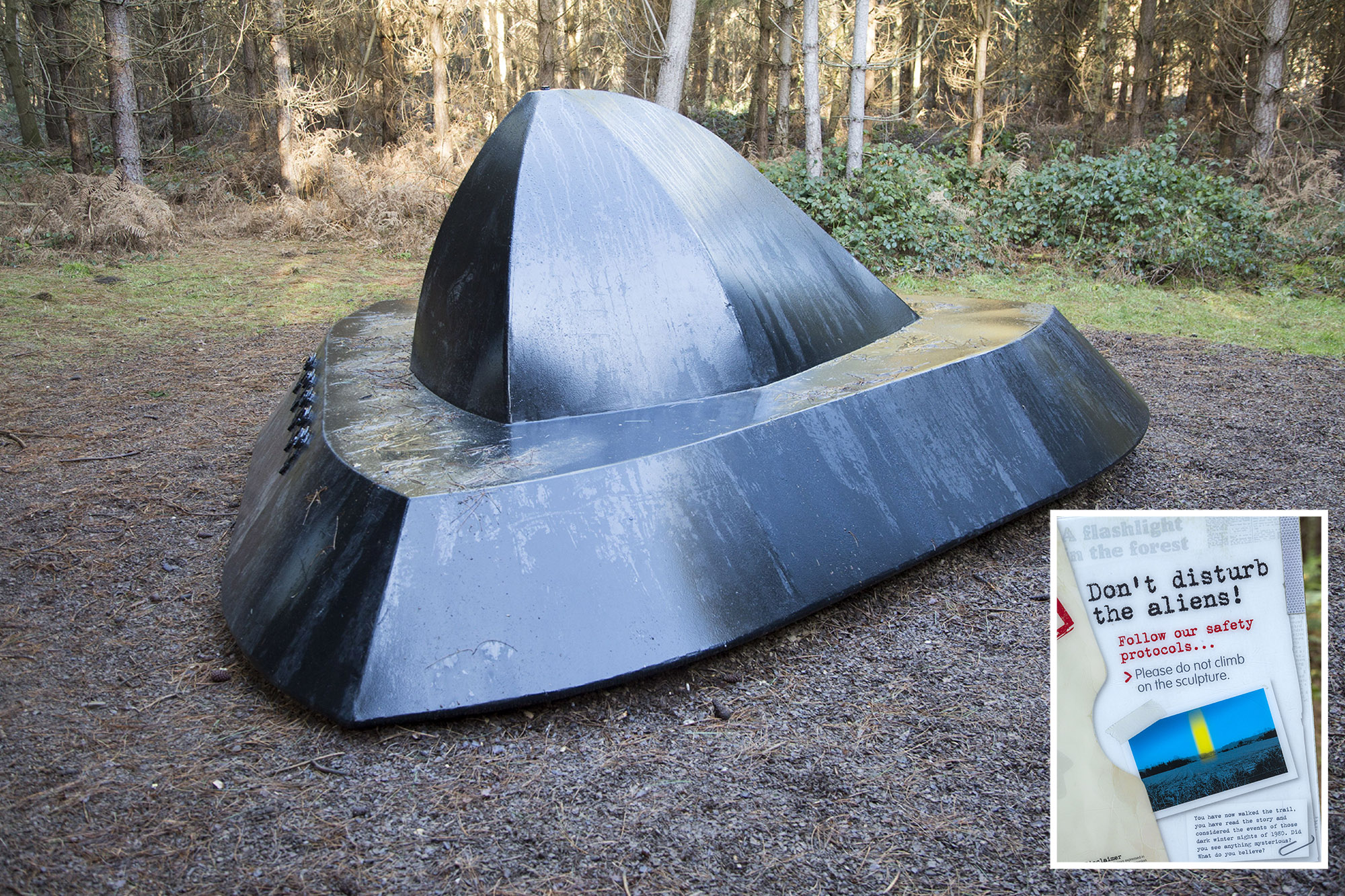
The documents also reference the infamous Rendlesham Forest incident of 1980, where a glowing object allegedly landed near a US Air Force base in Woodbridge, Suffolk. This event was reportedly confirmed by the unit commander and others present. The report noted, “In both [Belgian and Rendlesham Forest] cases, the UAP apparently did not use any conventional propulsion system and could hover as well as move at considerable speed.”
International Interest in UFO Technology
The unsealed documents indicate that the UK was not alone in its interest in UAP technology. The correspondence acknowledged that countries like France were also exploring the topic. It mentioned an informal intelligence coalition in the United States focused on similar phenomena.
Despite considering the technological implications of UAPs, the correspondence also recognized that most reported sightings were likely not credible. Nonetheless, a small number of incidents could not be explained by conventional scientific understanding. The documents stated, “Some reports described objects in terms of maneuver, speed and shape which lie beyond our engineering knowledge.”
The reports expressed concern about the challenges faced in assessing these sightings swiftly enough to provide a timely response. They pointed out that any future issues, whether terrestrial or extraterrestrial in nature, would likely require collaboration within national or international security alliances.
The files further acknowledged that researching UAPs could lead to skepticism among intelligence officials. One document noted, “Mention of UAPs is guaranteed to generate mirth and a range of Little Green Men jokes,” highlighting the stigma attached to the subject.
The Ministry of Defence’s current stance was articulated by Luke Pollard, the UK’s minister for defense readiness, who stated in December 2024 that the Ministry had ceased investigations into UFOs or UAPs in 2009, with no plans to resume such efforts.
The unearthing of these files sheds light on the UK’s approach to UAPs during the 1990s, revealing a serious commitment to exploring the implications of these phenomena for national security.