
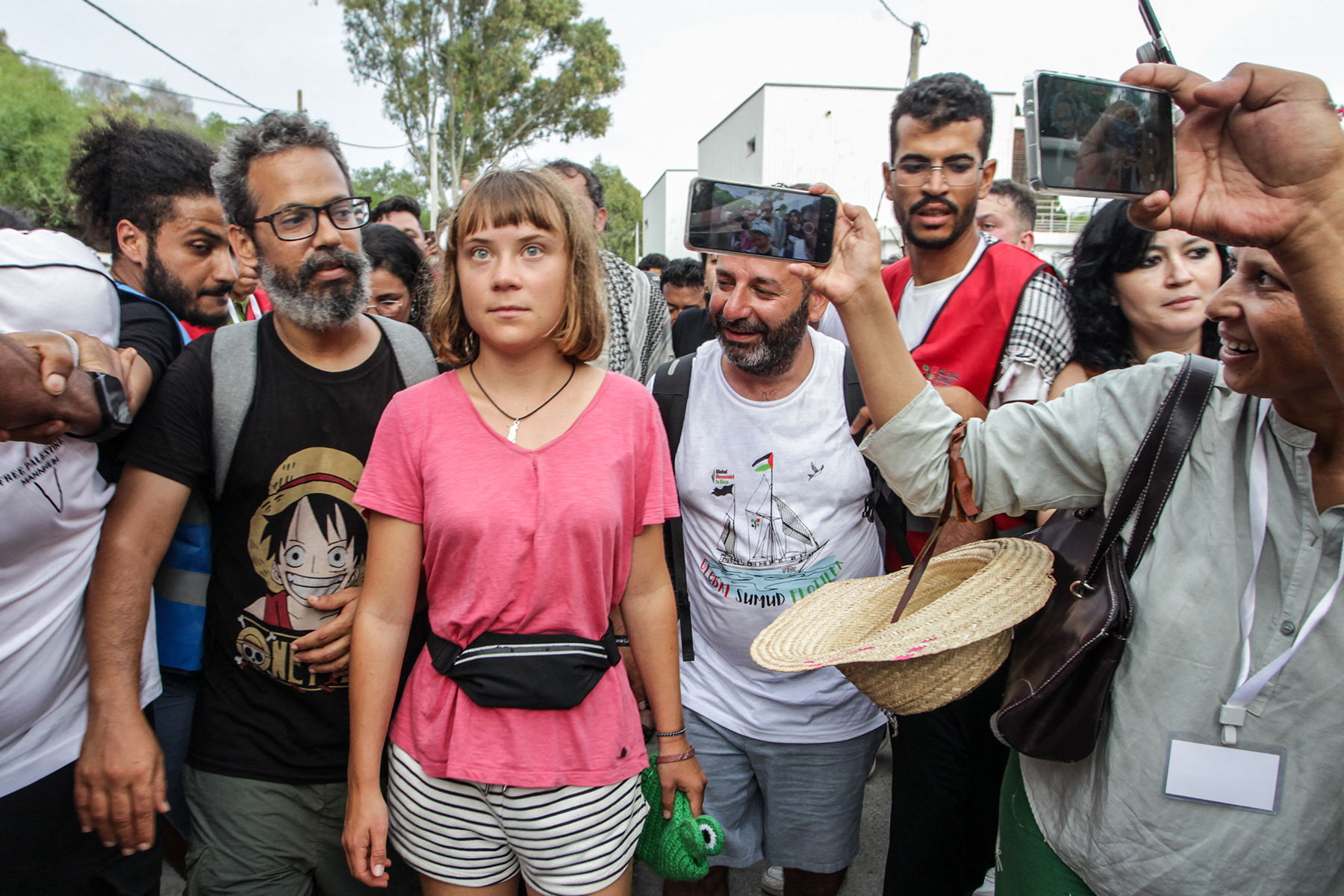
Greta Thunberg, the well-known climate activist, is under scrutiny for her recent actions and statements that many perceive as straying from her original mission of securing a sustainable future for youth. Her involvement in controversial demonstrations and support for groups with ties to terrorism have raised significant concerns among critics, who argue that she is increasingly disconnected from the values she once championed.
In October 2023, Thunberg publicly supported Palestine Action, a group controversially designated as a terrorist organization by the British government. During a demonstration in London, she held a sign proclaiming, “I support Palestine Action prisoners. I oppose genocide.” Critics argue that her actions legitimize a group associated with violence, undermining the ideals of human rights she has long advocated.
Thunberg’s recent activities have sparked outrage, particularly following the October 7 Hamas attacks in Israel that resulted in the deaths of over 1,200 individuals. Many view her subsequent actions as an attempt to silence discussions surrounding these atrocities. In an open letter co-signed by over 300 writers, activists, and politicians, including Rashida Tlaib and Sally Rooney, Thunberg joined calls to boycott The New York Times over its coverage of the violence perpetrated by Hamas. The letter criticized the publication for allegedly exhibiting “anti-Palestinian bias” and demanded the retraction of a piece detailing the systematic sexual violence committed during the attacks.
This response to the Times’ reporting has raised alarms about attempts to erase or downplay the suffering of victims, particularly Jewish women and families affected by the violence. Critics question how Thunberg can reconcile her claims of supporting youth and human rights while simultaneously dismissing the atrocities that have occurred.
Thunberg’s activism has also included her participation in a so-called freedom flotilla to Gaza in June 2023, which was intercepted by Israeli forces. During this event, she and her colleagues reportedly refused to watch footage of the October 7 attacks, further distancing themselves from the reality of the situation. This refusal to acknowledge the gravity of the attacks has led to accusations that she is aligning with narratives that downplay or deny the violence.
While Thunberg has built her persona as a champion for justice, some argue that her approach lacks nuance and understanding of complex geopolitical issues. Critics suggest that her strict vegan diet, which she has adhered to since the age of ten, may contribute to a narrow worldview. Research indicates that certain dietary restrictions can impact cognitive functions, and for someone like Thunberg, who identifies as autistic, this may further complicate her capacity to engage with multifaceted issues.
Thunberg’s actions have sparked a broader conversation about the responsibilities of young activists and the potential consequences of ideological extremism. Some commentators draw parallels between her activism and other extreme movements, noting that a rigid adherence to ideology can lead to a lack of critical thinking and an inability to engage with differing viewpoints.
As Thunberg continues to attract both fervent support and staunch opposition, many are left wondering about the implications of her actions for the future of activism. The question arises: how can young people navigate their convictions without becoming pawns in larger ideological battles?
Thunberg’s journey serves as a cautionary tale for parents and educators about the potential dangers of ideological capture. Raised in an environment that often reinforced her views without challenge, her experiences highlight the importance of fostering critical thinking and open dialogue in discussions surrounding complex issues.
The ongoing debate surrounding Thunberg’s actions underscores the challenges faced by activists who strive for meaningful change in a world fraught with division. How she navigates this scrutiny may shape not only her future but also the landscape of youth activism as a whole.


