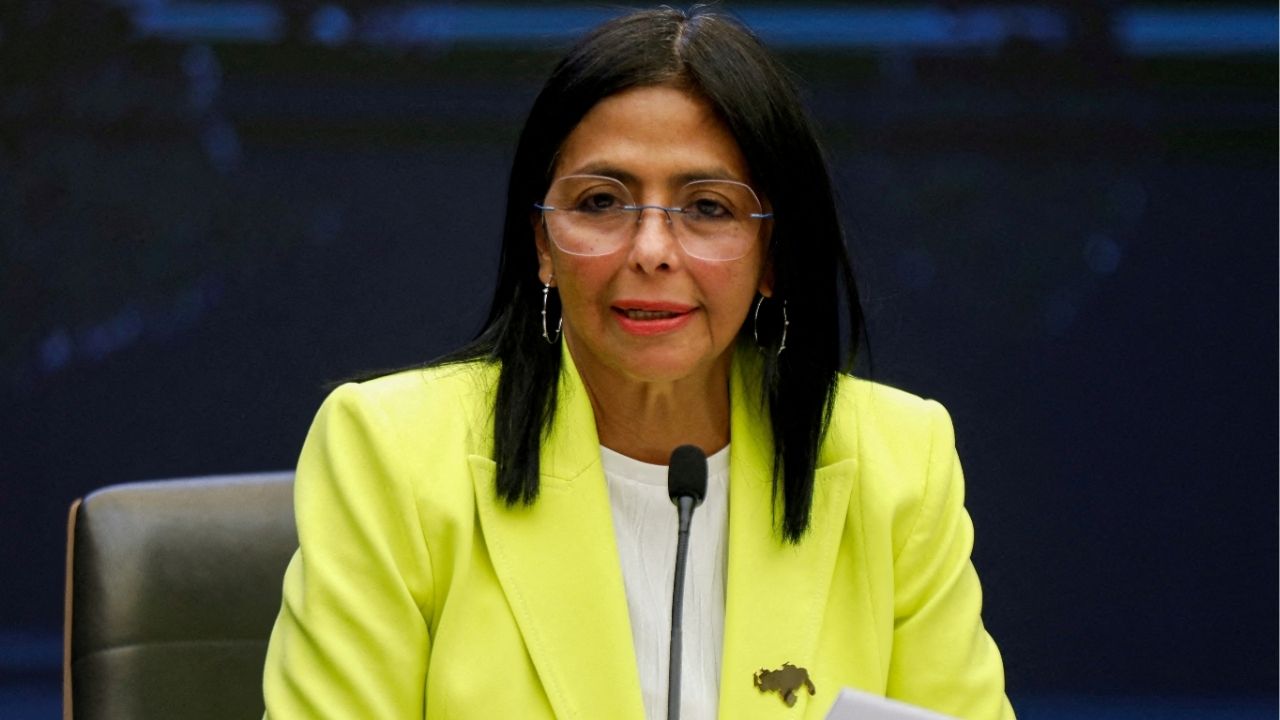
On January 5, 2025, Venezuela’s Vice President and Oil Minister, Delcy Rodriguez, was officially sworn in as the country’s interim president. This event coincided with a significant moment in international relations, as the U.S.-deposed President Nicolas Maduro appeared in a New York court facing serious drug charges.
Delcy Rodriguez, a 56-year-old labor lawyer with strong ties to the private sector, took her oath of office during a ceremony led by her brother Jorge Rodriguez, who serves as the head of the National Assembly. The swearing-in ceremony also included 283 lawmakers who were elected in May 2024, although a notable majority of opposition members chose to boycott the election.
While the current political climate is fraught with tension, Cilia Flores, the first lady and a prominent figure in Maduro’s administration, was absent from the event. Reports indicate that she is currently in U.S. custody, which adds another layer of complexity to the ongoing political crisis in Venezuela.
Political Landscape and Future Challenges
The swearing-in of Delcy Rodriguez marks a pivotal shift in Venezuela’s governance. Her appointment comes after a dramatic weekend event that saw the U.S. government remove Nicolas Maduro from power through military action. This maneuver was part of a broader strategy by the Trump administration, which has sought to destabilize Maduro’s regime amid allegations of corruption and human rights abuses.
Rodriguez is expected to face significant challenges as she assumes leadership. The political landscape remains divided, with many opposition factions, particularly those aligned with Nobel Prize winner María Corina Machado, remaining skeptical of the current government. The absence of these opposition lawmakers from the assembly raises questions about the legitimacy and functionality of the legislative body.
International Reaction and Implications
The international community is closely monitoring the situation in Venezuela, particularly the implications of Rodriguez’s presidency for regional stability and U.S.-Venezuela relations. Analysts suggest that her leadership style and policies will significantly influence not only Venezuela’s domestic policies but also its international alliances.
As Delcy Rodriguez navigates the complexities of her new role, the eyes of the world remain focused on Venezuela. The outcome of Maduro’s legal battles in the United States could further impact the political dynamics within the country, as well as its standing on the global stage.
In summary, the swearing-in of Delcy Rodriguez as interim president represents both a continuity of the ruling party’s influence and a potential turning point in Venezuela’s turbulent political history. The coming weeks and months will undoubtedly reveal the true extent of her leadership and the direction in which Venezuela will head.