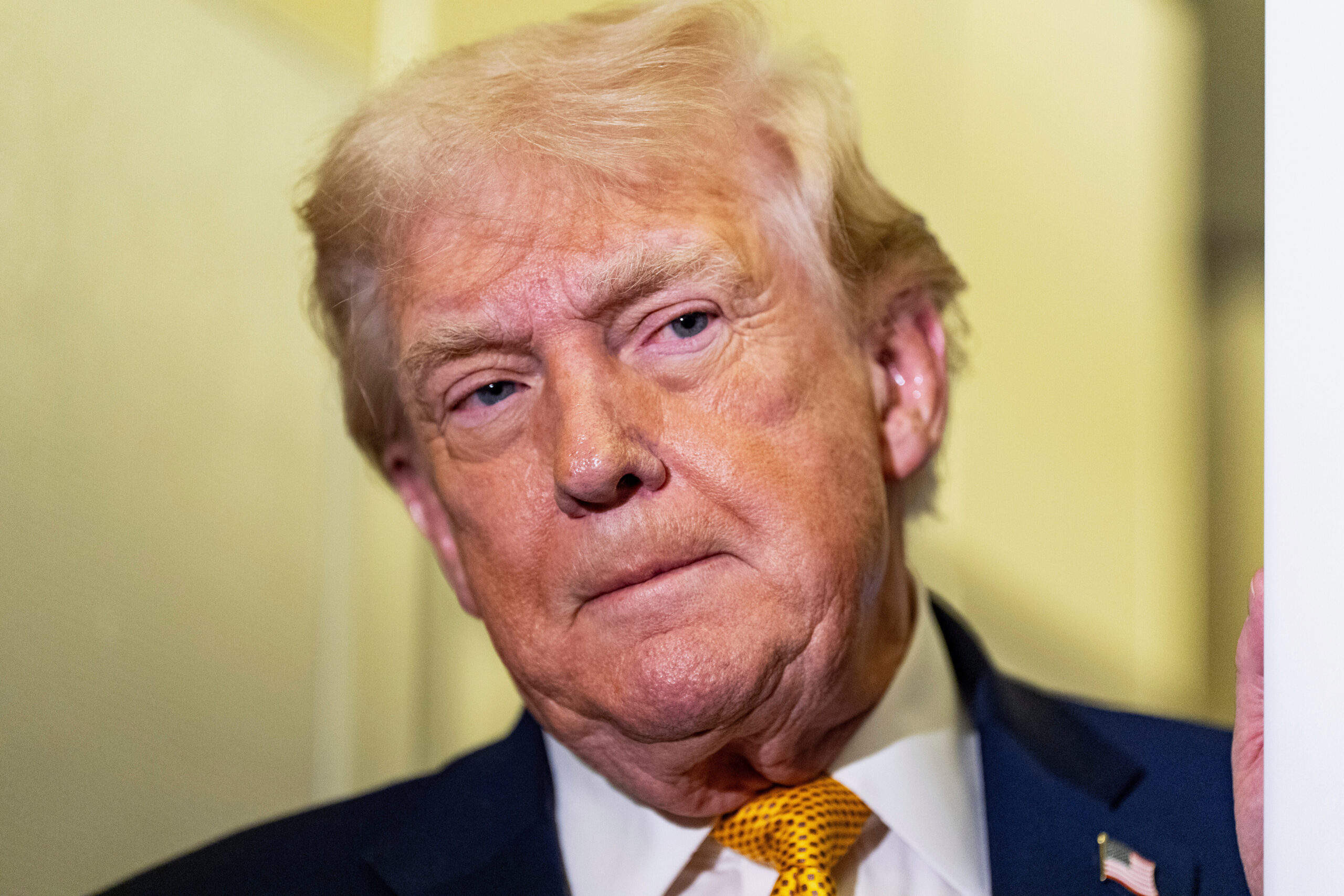
The recent capture of Nicolás Maduro by U.S. military forces has prompted a bold declaration from President Donald Trump, emphasizing a renewed commitment to American dominance in the Western Hemisphere. Following the operation, which sought to bring the deposed Venezuelan leader and his wife to the United States to face federal drug trafficking charges, Trump stated that “American dominance in the Western Hemisphere will never be questioned again.” His comments reflect a significant shift towards a more assertive U.S. foreign policy.
Trump’s rhetoric has intensified in the days following the military operation. He has signaled to Latin American neighbors the necessity of aligning with U.S. interests or facing potential repercussions. This approach draws parallels to the imperialistic strategies of the late 19th and early 20th centuries, when American leaders frequently used military force to expand territorial and economic influence across the region. Edward Frantz, a historian at the University of Indianapolis, noted, “The way Trump is talking about it is something we haven’t seen in a very long time.”
Regional Reactions and Historical Context
The implications of Trump’s statements extend beyond Venezuela. In his remarks, Trump suggested that Mexico must “get their act together” in combating drug cartels, while he has ominously warned that Cuba is “going down” now that Maduro is no longer in power. Both countries have historically been intertwined in U.S. foreign policy. His comments about a potential military operation in Colombia, a country central to global cocaine production, further heighten concerns about escalating tensions in the region.
Trump’s revival of the Monroe Doctrine—historically used to deter European intervention in the Americas—serves as a justification for U.S. actions in Venezuela. The president’s rhetoric has been described as reminiscent of the age of “gunboat diplomacy,” a term associated with former President Theodore Roosevelt’s interventions in Central America and the Caribbean. Frantz remarked, “Trump’s rhetoric conjures up images of Teddy Roosevelt and gunboat diplomacy.”
The capture of Maduro has divided Latin American leaders. Those aligned with Trump have praised the removal of Maduro, while others have condemned the U.S. actions on the grounds of national sovereignty. Danish Prime Minister Mette Frederiksen cautioned that Trump’s aspirations regarding Greenland could jeopardize the transatlantic military alliance, NATO. She emphasized that any U.S. military action against another NATO member would have serious consequences.
Global Implications and Future Considerations
The U.S. military incursion into Venezuela has prompted a strong reaction from various international actors. At an emergency U.N. Security Council meeting, Colombian Ambassador Leonor Zalabata Torres characterized the raid as reminiscent of “the worst interference in our area in the past.” She asserted that democracy cannot be defended through violence or coercion, emphasizing the need for dialogue over military intervention.
Concerns are also emerging regarding the potential implications of Trump’s actions for other global leaders. Some Democrats are questioning whether his approach has effectively granted a “permission structure” to leaders like Russian President Vladimir Putin and Chinese President Xi Jinping to pursue aggressive territorial ambitions. Senator Angus King of Maine remarked that Trump’s actions have given these leaders a “hall pass” for their own geopolitical maneuvers.
As the situation unfolds, Trump’s administration appears committed to a policy of assertive intervention in the Western Hemisphere. In a recent interview, Secretary of State Marco Rubio reiterated the administration’s stance, stating, “We’re not going to allow the Western Hemisphere to be a base of operation for adversaries, competitors and rivals of the United States.”
The aftermath of Maduro’s capture could be pivotal for international relations in the coming years. The administration’s approach raises questions about the future of U.S. involvement in Latin America and the broader implications for global security dynamics. As world leaders observe these developments, the impact of Trump’s rhetoric and actions will likely shape international relations throughout his presidency.