UPDATE: North Dakota’s oil industry is on high alert following the unprecedented arrest of Venezuelan President Nicolas Maduro and his wife during a raid on January 3, 2023. This shocking development comes as President Donald Trump vows to take control of Venezuela’s vast oil reserves, which are estimated at 300 billion barrels.
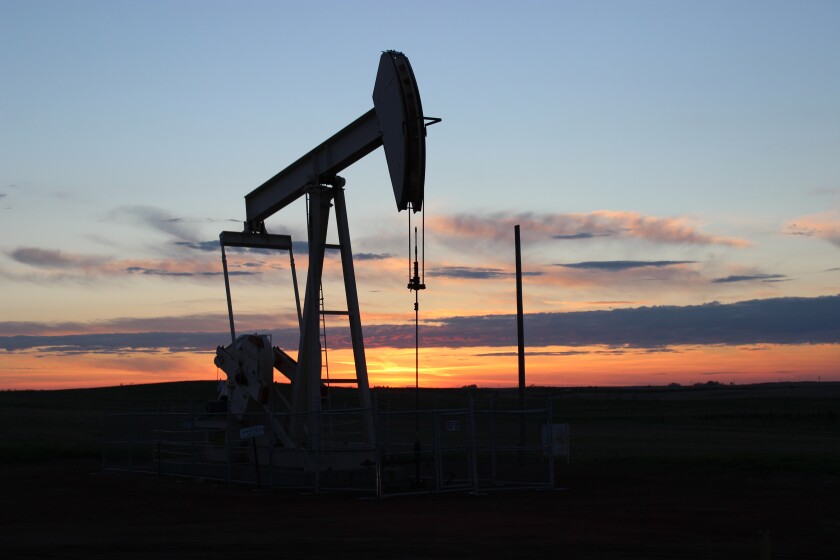
The stakes are high for North Dakota, which ranks as the third-largest oil producer in the U.S., generating approximately 1.15 million barrels daily, surpassing Venezuela’s 900,000 barrels. The state’s economy heavily relies on oil tax revenues, contributing about $8 million per day toward critical infrastructure, education, and property tax relief.
Industry experts, including Nathan Anderson, the director of the North Dakota Department of Mineral Resources, express cautious optimism. Anderson stated that the price of oil has remained stable despite the upheaval in Venezuela, indicating that the global supply currently exceeds demand by 2 to 3 million barrels daily. “You can just kind of tell, based on the market’s reaction… that’s how much they value the geopolitical risk there,” he remarked.
However, the long-term implications of Venezuela’s oil reserves could significantly impact North Dakota. Ron Ness, president of the North Dakota Petroleum Council, voiced concern over who will control Venezuela’s oil wealth, emphasizing the risk of China moving in. “I think ensuring that China doesn’t move in and control Venezuela’s reserves is probably the biggest discussion point for me,” Ness said.
With former North Dakota Governor Doug Burgum now serving as U.S. Interior Secretary and overseeing the U.S. Geological Survey, Ness suspects that teams are already evaluating the Venezuelan oil landscape. “I suspect that they’ve got their teams now digging into… what are the reserves in Venezuela,” he added.
The differences in oil types also play a crucial role; North Dakota primarily produces light sweet crude, ideal for gasoline and diesel, while Venezuela’s heavy sour crude is suited for various U.S. refineries. The unique characteristics of these oils could influence any future U.S. investments in Venezuelan infrastructure, which would require significant capital and time to develop.
“It’s not like tomorrow we just go open the faucet and oil starts flowing. It’s going to take probably several years of capital investment to increase output from Venezuela,” Anderson explained.
The implications for North Dakota are profound, as more than 50% of state tax revenues stem from oil and gas production. These funds are critical for public services, including a recently approved $1,600 property tax credit and contributions to the state’s $13 billion Legacy Fund.
In anticipation of potential volatility in oil prices, North Dakota has proactively adjusted its budget to mitigate future decreases in revenue. Anderson stated that the state is also embracing innovation to stimulate drilling in formations beyond the Bakken region. Companies are adapting to “softer” oil prices through advanced technologies that enhance capital efficiency, allowing them to reach expansive oil deposits more effectively.
As the situation unfolds, North Dakota’s reaction to developments in Venezuela will be closely monitored, with officials and industry leaders poised to navigate the complexities of global oil dynamics. The outcome could redefine the state’s economic landscape in the years to come, making it imperative for residents and stakeholders to stay informed and engaged.