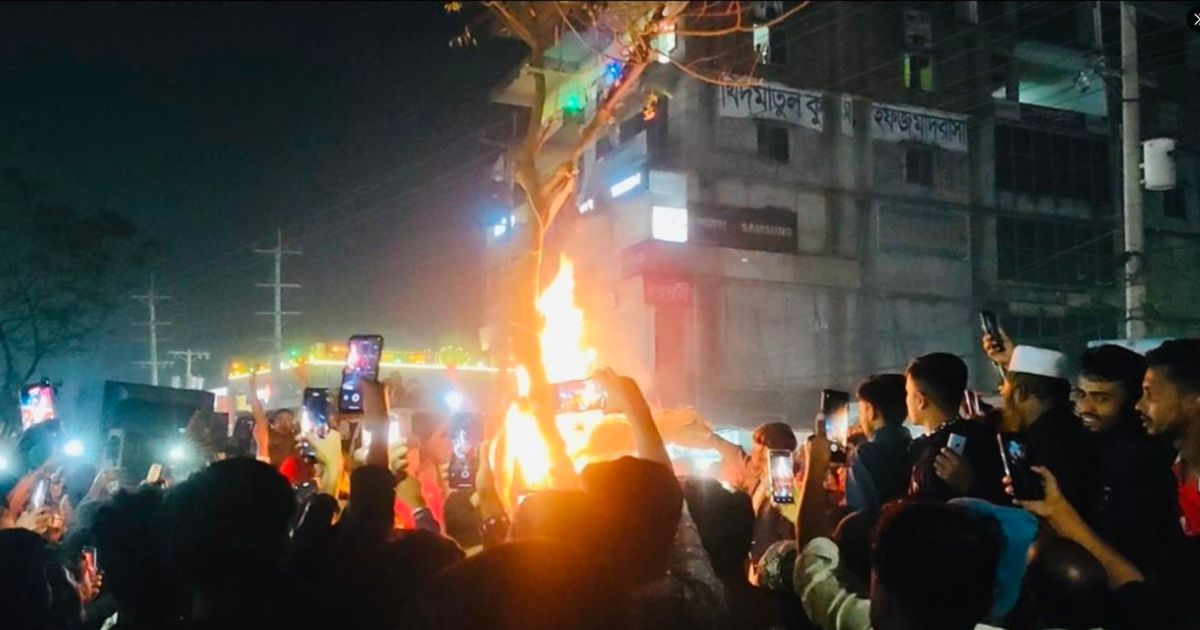
BREAKING: The brutal lynching and murder of Dipu Chandra Das, a 25-year-old Hindu garment worker, has ignited widespread outrage in Bangladesh. Just days later, fellow Hindu Amrit Mondal was also killed, marking a disturbing trend of violence against religious minorities in the country. These incidents have raised urgent concerns about the state’s failure to protect vulnerable citizens amid escalating communal tensions.
On December 18, 2023, rumors circulated that Dipu had made derogatory comments about Islam, leading to a horrific mob attack. Eyewitness accounts reveal he was stripped, beaten, and burned alive along the Dhaka-Mymensingh highway, with police reportedly failing to intervene. This shocking violence underscores a significant shift in Bangladesh’s socio-political landscape where accusations can lead to lethal consequences without due process.
Authorities have attempted to downplay the communal motives behind these killings, but the pattern is alarming. Two Hindus, two public executions, and two failures of the state to uphold the law signal a deepening crisis for Bangladesh’s secular identity. Observers note that such violence is characteristic of Islamist mob actions, where fear and hatred overshadow justice.
The historical context is grim. Bangladesh’s past is marred by violence against Hindus, notably during the 1971 genocide when millions were killed. This legacy resurfaces whenever political power wanes, allowing extremist groups to exploit the situation. The recent return of Tarique Rahman from exile, following years of political turmoil, raises fears of a resurgence of radical elements and the potential rise of the extremist party Jamaat-e-Islami.
With elections looming, the situation is precarious. Political fragmentation and the resurgence of street violence pose a threat to the democratic process. Prime Minister Sheikh Hasina, facing increasing unrest, has expressed regret over her departure amid chaos, emphasizing the need for constitutional governance and the protection of all citizens regardless of faith.
The U.S. State Department has condemned the killings, urging Bangladesh to safeguard religious minorities and uphold the rule of law. This call for action highlights the international community’s responsibility to monitor the situation closely. The implications are far-reaching, especially for neighboring India, which is concerned about instability spilling across borders, particularly in regions already vulnerable to extremist influences.
As the nation grapples with these violent acts, the message from extremist groups is clear: they will not be held accountable. The normalization of such violence against minorities poses a severe threat not only to Bangladesh’s stability but also to regional security.
What to watch next: As political dynamics shift and upcoming elections approach, the international community and local advocates are watching closely. Will the Bangladeshi government take decisive action to protect its citizens? The world waits with bated breath, as the repercussions of these events unfold, potentially reshaping Bangladesh’s future and its role in the region.
The brutal deaths of Dipu Chandra Das and Amrit Mondal are not mere statistics; they are stark reminders of the fragility of democracy and the urgent need for protection of human rights. As the crisis develops, the eyes of the world remain fixated on Bangladesh, where the line between law and chaos grows dangerously thin.