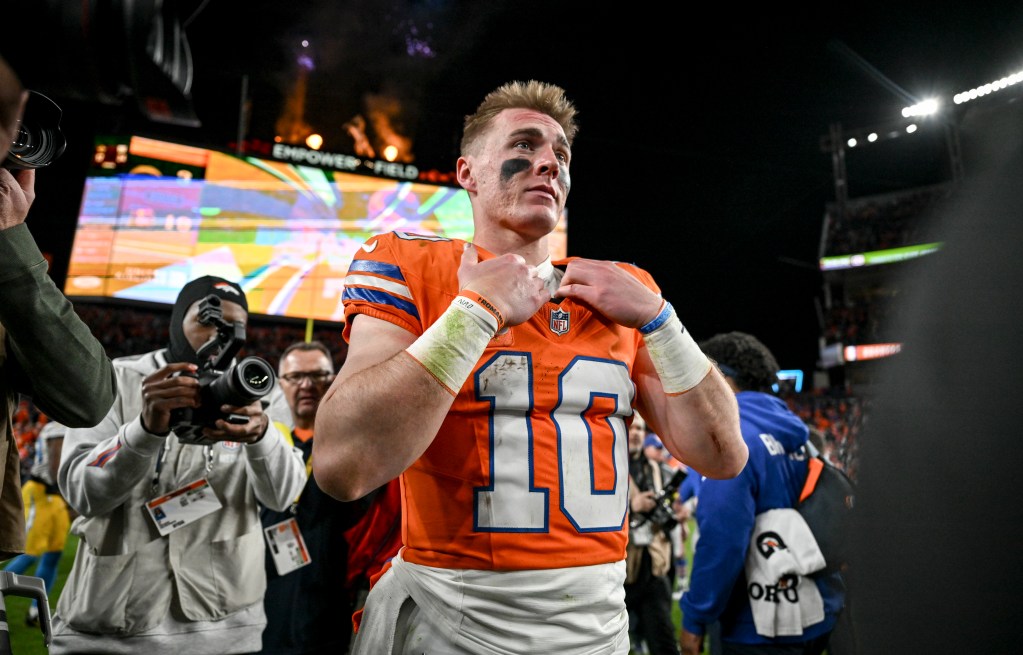
The Denver Broncos have secured the top seed in the AFC, marking a significant achievement for the franchise. As they prepare for the playoffs, all eyes are on quarterback Bo Nix, who has emerged as a pivotal player in his second season. Despite boasting a record of 24 wins and leading the league in passing attempts and game-winning drives, Nix faces relentless scrutiny reminiscent of the pressure experienced by former Broncos great Peyton Manning.
Former St. Louis Rams coach Mike Martz praised the selection of Nix, stating, “I told Sean Payton I thought it was the best selection in the draft at quarterback.” With the Broncos now positioned as strong contenders, the narrative surrounding Nix has shifted, with critics demanding a Super Bowl victory as the only measure of success.
As the playoffs approach, it is essential to contextualize Nix’s performance. Over the past two games, the Broncos have shown signs of vulnerability, making it unreasonable to expect an undefeated postseason run. The standards imposed on Nix often seem excessively high, equating his journey to that of sports legends like Derek Jeter, where anything less than a championship is deemed a failure.
Looking back, the historical context reveals that winning the Super Bowl is a challenge, especially for a second-year quarterback. In the history of the NFL, only four second-year starters have claimed the title: Kurt Warner in 1999, Tom Brady in 2011, Ben Roethlisberger in 2005, and Russell Wilson in 2013. This yields a mere success rate of 6.7% among 59 attempts.
Nix’s performance has been commendable, demonstrating poise under pressure and earning the trust of his teammates. However, the expectations for him to win a Super Bowl this season seem misaligned with the reality of the challenges he faces. Unlike those previous champions, Nix lacks a standout running back, having relied on players like R.J. Harvey and Jaleel McLaughlin, who do not possess the same pedigree as Hall of Famers.
The absence of J.K. Dobbins, who was on track for a 1,000-yard season before injury, further complicates Nix’s situation. Should Dobbins return, it would be fair to expect more from Nix in the Super Bowl. Yet, it is crucial to recognize that only eight second-year quarterbacks have even reached the Super Bowl, with many, including Dan Marino and Joe Burrow, ultimately falling short.
The current Broncos team, while impressive with a record of 14 wins, does not mirror the championship caliber of past teams from 1997, 1998, and 2015. The roster lacks the offensive power that defined those eras, and Nix’s experience pales in comparison to legends like Manning and John Elway.
Despite the challenges, Nix has managed to maintain confidence in the locker room. His ability to perform under pressure has not gone unnoticed, and Martz himself expressed admiration, stating, “I would love to coach that kid.”
With the playoffs upon them, Broncos fans remain hopeful yet realistic. The team has shown resilience, but the road to the Super Bowl will require not just Nix’s talent but also a more formidable supporting cast.
Ultimately, while the pressure mounts, the narrative surrounding Bo Nix should be framed with a broader perspective. A Super Bowl victory would certainly elevate his status, but his journey thus far cannot be dismissed as a failure without one. As the Broncos gear up for this next chapter, the focus should be on the growth and progress of a quarterback who is still carving out his legacy in the NFL.