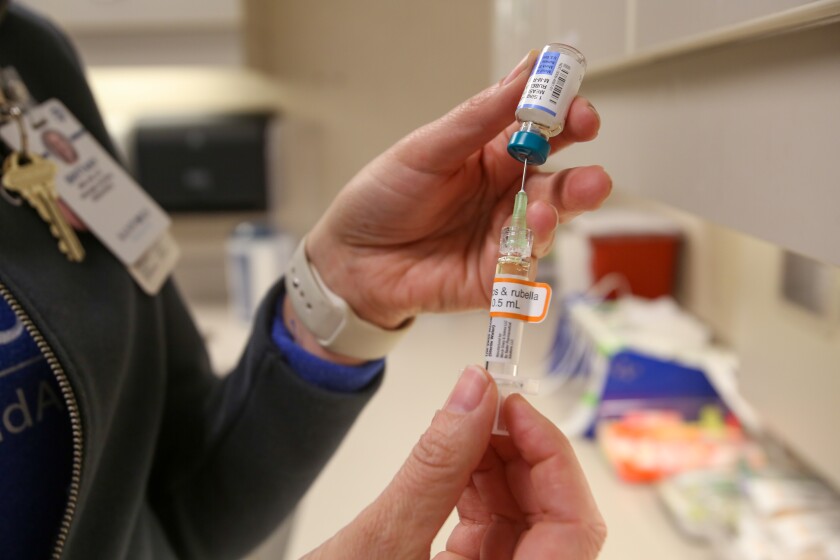
Health experts in Fargo-Moorhead are reaffirming their commitment to existing childhood vaccination protocols, despite a recent revision by the U.S. government that alters its vaccination recommendations for children. On January 5, 2024, the U.S. Centers for Disease Control and Prevention (CDC) announced that it no longer routinely recommends vaccinations against several viruses, such as RSV, rotavirus, seasonal influenza, COVID-19, meningitis, hepatitis A, and hepatitis B for all children. Instead, these vaccinations will be recommended primarily for those at high risk or following a consultation with a health care provider, a process termed “shared clinical decision-making.”
Dr. Stephanie Hanson, a pediatrician at Sanford Health, stated that she and her colleagues will continue to adhere to the vaccination schedule outlined by the American Academy of Pediatrics, which remains unchanged. “We’re not beholden to follow the new schedule. Families will still be able to access all of the vaccines in the same way that they had before,” she emphasized. Dr. Hanson also noted that federal and commercial payers would maintain their coverage for these vaccinations.
Many health officials believe the current childhood vaccination schedule is essential for preventing infectious diseases at critical times in a child’s development. “It really is designed to prevent infectious disease for kids at the time that they are vulnerable and at the time that their immune system is primed to respond well to vaccines,” Dr. Hanson explained.
Local Health Agencies Align with National Recommendations
In Moorhead, Clay County Public Health has also committed to following the vaccination schedule endorsed by the Minnesota Department of Health. Family Health Supervisor Elizabeth Bjur stated that the agency relies on consistent messaging based on scientific evidence. “We’ve relied on consistent messaging for families, and also based on science, as far as what the current recommendations would be,” she said. The agency offers vaccines at reduced costs for patients who are underinsured or uninsured.
Concerns have been raised within the public health community regarding the potential implications of the vaccination rollback. Dr. Michael Osterholm, director of the University of Minnesota Center for Infectious Disease Research and Policy, has cautioned that reducing vaccination recommendations could endanger children’s health. He expressed the need for public discussion on the risks and benefits of such changes, indicating that the decision should not be taken lightly.
Dr. Hanson highlighted that infections like RSV and rotavirus are prevalent and can lead to severe illness in young children, often requiring hospitalization. “Not every child that gets these infections ends up with those more severe complications but, as a parent, I certainly would like to prevent that, if I could,” she added.
Policy Changes and International Comparisons
The CDC’s decision comes after directives from former President Donald Trump to revamp the U.S. childhood vaccine schedule, considering practices in 20 other developed countries. One frequently referenced comparison is with Denmark, known for recommending fewer childhood vaccinations than the U.S. Dr. Hanson pointed out that there are significant differences between the two countries, including Denmark’s universal health care and comprehensive safety net for children. Additionally, she noted that mothers in Denmark are universally screened for hepatitis B, reducing the risk of transmission to their unborn children. The country also has extensive parental leave policies that help prevent early exposure to infectious diseases in daycare settings.
As the conversation around vaccination continues, Dr. Hanson anticipates that the change in recommendations may lead to increased dialogue between parents and healthcare providers, which she views positively. The ongoing commitment to established vaccination practices underscores a shared priority among local health experts to ensure the well-being of children in the community.