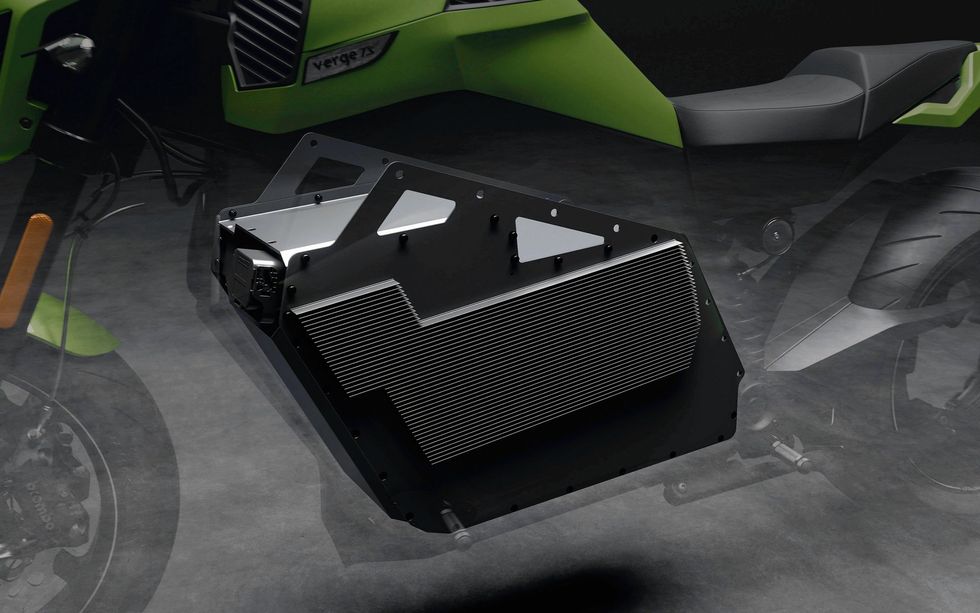
At CES 2026 in Las Vegas, the spotlight has shifted to two small companies from Estonia, Verge Motorcycles and its tech offshoot, Donut Lab. They have made a significant announcement: the Verge TS Pro motorcycle will be the world’s first solid-state vehicle, equipped with innovative batteries slated to begin shipping in the first quarter of this year. This development marks a potential leap in electric vehicle technology, a sector where giants like Tesla and BYD have yet to achieve similar breakthroughs.
The Verge TS Pro promises to tackle some of the primary challenges faced by electric motorcycles. Riders have long complained about limited range and prolonged charging times. In a bid to address these concerns, the TS Pro will feature solid-state batteries that eliminate the need for lithium or liquid electrolytes, opting instead for ceramics. This change not only reduces weight but enhances safety and charging performance. With options for a 20.2-kilowatt-hour or a 33.3-kilowatt-hour battery pack, the motorcycle boasts an impressive energy density of 400 watt-hours per kilogram, a significant improvement over traditional lithium-ion batteries, which generally offer about 200-300 watt-hours per kilogram.
The larger battery version of the TS Pro is designed to deliver a range of up to 600 kilometers (approximately 370 miles), effectively doubling the range of typical electric motorcycles. Additionally, its charging capability is remarkable, with the ability to go from 20 percent to nearly full in under ten minutes. Retail prices for the TS Pro start at $29,900 in the United States, with the larger battery option adding an additional $5,000.
Despite the excitement surrounding the launch, skepticism persists within the industry. Experts, including Kurt Kelty, former battery chief at General Motors, have expressed concerns that solid-state technology may still be years away from widespread commercial use. Ville Piippo, co-founder and CTO of Donut Lab, acknowledges this skepticism but argues that their approach is fundamentally different from that of larger companies. He emphasizes that substantial investments in solid-state technology should yield results soon, questioning why established companies have not yet succeeded where they aim to.
The TS Pro’s design features a unique hubless rear wheel, a hallmark of Verge Motorcycles that adds to its visual appeal. The latest in-wheel motor from Donut Lab, weighing just 21 kilograms, produces 102 kilowatts (137 horsepower) and generates an impressive 1,000 Newton-meters of torque. This enables a swift acceleration to 60 miles per hour (approximately 102 kilometers per hour) in just 3.5 seconds, a competitive figure within the electric motorcycle market.
Marko Lehtimäki, co-founder and CTO of Verge Motorcycles, has pledged transparency regarding the technology. He stated, “All the claims made by other companies have made it hard for us to be believable, but the reality is that solid-state has arrived.” The companies are open to offering media rides and in-depth technical discussions as the production process progresses.
Beyond motorcycles, Verge and Donut Lab are exploring various joint ventures, including a tactical buggy and drone platform in collaboration with ESOX Group. They aim to develop new types of vehicles previously deemed unattainable, a goal Lehtimäki describes as a “Holy Grail.”
Looking ahead, the two companies also plan to venture into the electric sports car market, addressing the industry-wide challenge of lightweight electric vehicles. Currently, options for two-seat electric sports cars are limited, with models like the $2.5 million Rimac Nevera and the heavy MG Cyberster failing to capture widespread market interest.
At CES, the energy and innovation from these Baltic companies suggest a promising future for electric vehicles. With plans to power a limited-production sports car through Donut’s in-wheel motors, the industry may be on the brink of a transformation driven by the desire for lighter, more efficient electric vehicles. As the Verge TS Pro prepares for its launch, it stands as a testament to the potential of solid-state technology and the resilience of smaller players in a competitive market.