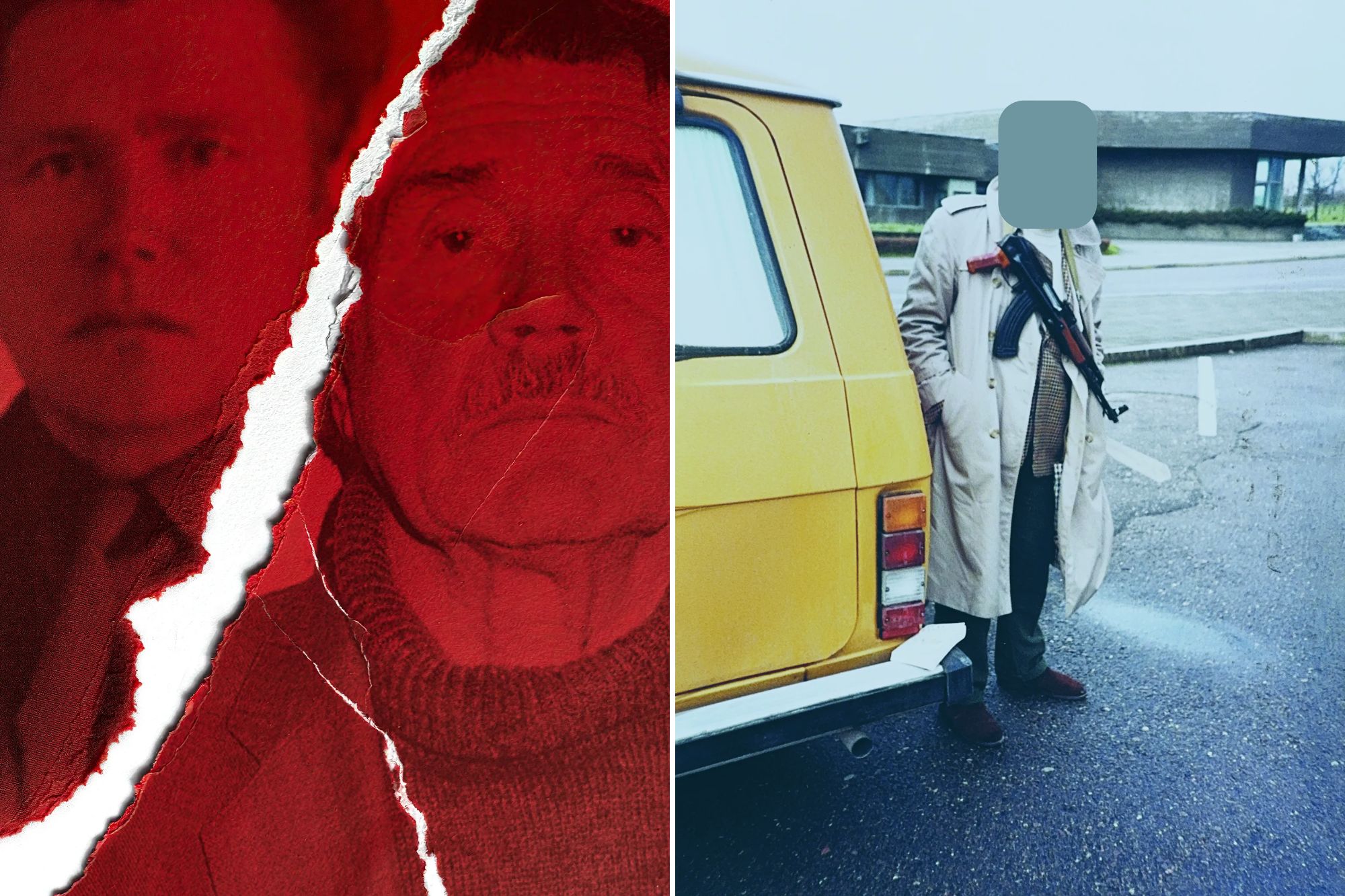
On November 7, 1992, exactly 75 years after the Bolshevik Revolution, a significant event unfolded at the docks of Klaipėda, a port city in Lithuania. A yellow minibus marked “Baltic Tours” arrived, carrying a group that included two British intelligence officers, an elderly woman with a cane, and a man in a wheelchair. Unbeknownst to the latter, this was not a simple medical trip but a daring defection orchestrated by his father, Vasili Mitrokhin, a former KGB archivist. With him, Mitrokhin carried a treasure trove of Soviet intelligence secrets.
The atmosphere at the docks was tense, as armed men watched from the shadows, indicative of the lingering Cold War anxieties. Gordon Corera, in his book, The Spy in the Archive: How One Man Tried to Kill the KGB, recounts the moment when young Vladimir Mitrokhin realized the truth. He confronted his father, exclaiming, “You’re a spy,” followed by the accusation of being a “traitor.” As time pressed on and the threat of KGB agents loomed, British operative James urged his partner Robert to force Vladimir onto the escape boat. With a swift action, Vladimir was lifted aboard, and Vasili followed without a glance back, adhering to the old superstition that looking back would invite misfortune.
Vasili Mitrokhin’s journey to that moment began decades earlier at the Lubyanka, the infamous headquarters of the KGB in Moscow. Born in 1922, he joined Soviet intelligence post-World War II, initially thriving as a prosecutor in Ukraine during a brutal crackdown under Joseph Stalin. However, his career took a downturn due to failed missions, leading to his reassignment to the archives in 1956, a position often seen as a dead-end for KGB operatives.
As he processed invaluable documents during the KGB’s move to new headquarters in Yasenevo in 1972, Vasili uncovered the extensive operations of Soviet intelligence: espionage, suppression of dissent, and infiltration tactics against Western governments. He described the files as revealing a “trail of filth,” showcasing betrayals and violence used to maintain Communist power. This realization sparked a secret rebellion within him.
In the depths of the KGB’s archives, Vasili meticulously compiled notes in a personal code, later transcribing them on a typewriter he named “Erika.” He buried these documents in his dacha outside Moscow, keeping them hidden from his wife Nina, a respected doctor, and others. For over a decade, he built his archive in silence, uncertain of its future. The phrase “writing for the drawer” symbolized his hope that one day the situation would change.
The collapse of the Soviet Union in 1991 marked a turning point. In March 1992, equipped with a duffel bag containing his secrets, Vasili approached the British Embassy in Vilnius. A young diplomat recognized the significance of the documents and initiated a series of events that would lead to one of the most substantial intelligence disclosures of the Cold War.
The archive Vasili brought to Britain identified numerous KGB agents and operations spanning decades. The CIA later described it as the “biggest CI (counter-intelligence) bonanza of the postwar period,” revealing intricate details from the Cambridge spy ring to ongoing espionage efforts in America.
Despite the potential risks, Vasili insisted that his entire family — including Nina and Vladimir — accompany him to the West. British intelligence devised a complex plan to extract them under the guise of a medical trip. Unfortunately, Vladimir and his grandmother remained unaware of their true mission until they reached the docks in Klaipėda.
Following a harrowing 33-hour boat journey through a tumultuous Baltic storm, the Mitrokhin family arrived in Britain. Over time, Vladimir came to terms with his father’s actions, while Nina passed away from motor neurone disease in 1999, coinciding with the publication of Vasili’s archive.
Vasili spent his later years in quiet exile near London, continuing to work on his notes and hoping that Russians would one day understand their past. In a 1999 warning, he stated, “They are still there. It is the same people, the same organizations, the same aims,” referring to the agencies that succeeded the KGB and the rising political figure of Vladimir Putin, a former KGB officer.
Vasili Mitrokhin died in 2004, leaving behind a significant legacy. His archive serves as both an historical record and a cautionary tale, highlighting how the issues he faced have not disappeared but transformed. As Russia’s political landscape continues to evolve, the warnings of the old archivist resonate with profound relevance.