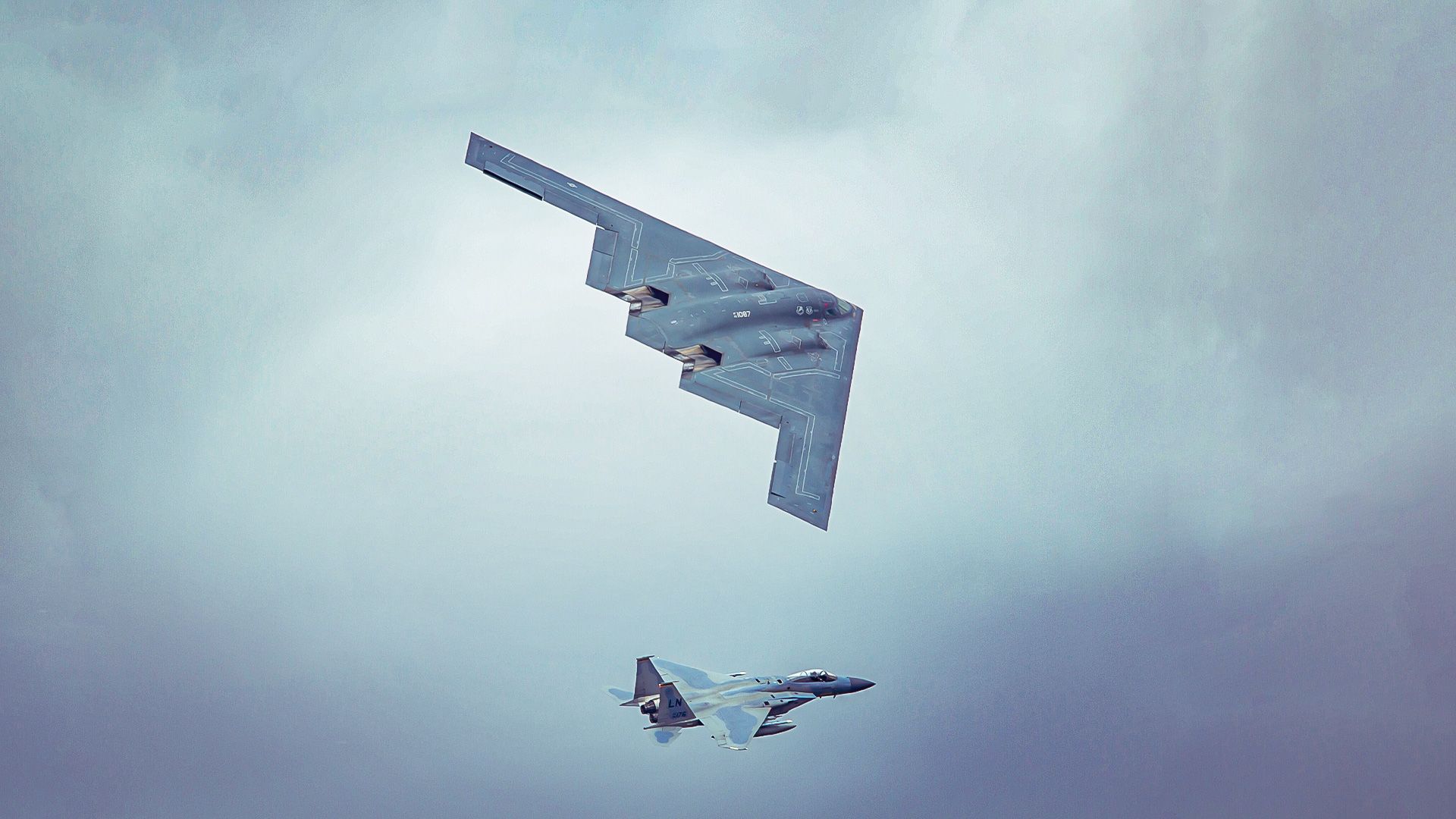
The future of the Northrop B-2 Spirit bomber appears secure for the foreseeable future. While discussions about its retirement have been ongoing, the United States Air Force (USAF) is currently focused on mid-life upgrades for the aircraft, ensuring it remains operational until at least the 2030s or 2040s. The B-2 is unlikely to be retired until after the B-1 Lancers are phased out and a sufficient number of B-21 Raiders are available to take over the bomber role.
In 2018, the USAF suggested that the B-2s could retire as early as the late 2020s. However, plans have since shifted. The B-2 remains the world’s most advanced bomber until the B-21 enters service, yet its limited numbers and high operational costs pose challenges. Currently, the Air Force operates just 21 B-2s, a stark reminder of the aircraft’s significant expense and the diminishing fleet size due to mishaps.
The B-21 Raider’s Arrival
The USAF received its second flying B-21 Raider prototype in 2025 and anticipates more deliveries by 2026. The B-21 is expected to enter service in 2027, alongside the B-52 Superfortress, B-1 Lancer, and the B-2 Spirit. While the B-52, built in the 1950s and 1960s, is projected to remain operational until the 2050s, both the B-2 and B-21 are designed for penetrating contested airspace.
As the B-21 is set to replace the B-1 Lancer and, eventually, the B-2, retirement schedules remain flexible. The pace at which the B-21 is integrated into service will significantly influence when older models are phased out. The B-21 program is reportedly on track and within budget, suggesting a potential acceleration in retirement timelines for the B-1 and B-2.
The B-1 Lancer is the first aircraft earmarked for retirement. In 2021, the USAF announced plans to retire 17 B-1B Lancers, reducing an active fleet to 45 aircraft. Ongoing technical issues have led to a reduction in the fleet size, prompting the Air Force to retrieve airframes from storage to maintain operational readiness. Despite being newer than the B-52, the B-1s have experienced more rapid airframe wear, necessitating expensive repairs.
Challenges Facing the B-2 Fleet
While the B-2 Spirit is undergoing mid-life upgrades to enhance its capabilities, it is not immune to the challenges faced by aging aircraft. The fleet has already been impacted by mishaps, reducing its operational numbers. The USAF originally intended to acquire 132 B-2s but ultimately procured only 21 due to high costs and the end of the Cold War.
One significant incident involved the B-2 known as the Spirit of Hawaii, which was damaged beyond repair in 2022 at Whiteman Air Force Base. This incident further highlights the vulnerability of the limited B-2 fleet. As of early 2026, the B-2 fleet stands at 19 aircraft, with plans for modernization underway that include a substantial investment of approximately $7 billion.
The upgrades, set to be completed by 2029, encompass enhancements to sustainment and logistics, ensuring the B-2 remains a critical asset for years to come. Despite earlier forecasts of a 2032 retirement, the current trajectory suggests the B-2 may remain operational longer than initially anticipated. The USAF budget documents for fiscal years 2025 to 2027 do not indicate any planned retirements for the B-2.
The B-2’s payload capabilities also contribute to its continued relevance. While the official payload limit is stated at 40,000 lbs (18,000 kg), it is believed that the B-2 can carry more than this, including two GBU-57 Massive Ordnance Penetrators, each weighing 30,000 lbs (13,600 kg). This remarkable capacity enhances the bomber’s strategic value as a deterrent.
Looking ahead, the USAF’s plans for the B-21 Raider may affect the B-2’s longevity. The projected production rate of the B-21 could see deliveries ramping up to 7-10 aircraft per year, allowing the Air Force to replace the B-1 and B-2 fleets in a timely manner. However, until the B-21 reaches full operational capacity, the B-2 will continue to play a vital role in the USAF’s strategic bomber fleet.
The potential for the B-2 to remain in service well into the late 2030s hinges on the successful integration of the B-21 Raider and the operational needs of the USAF. As the landscape of aerial warfare evolves, the B-2’s advanced capabilities and recent investments in its upgrades underscore its importance within the United States’ defense architecture.