The airline industry is grappling with increased dissatisfaction among passengers, as air travel becomes increasingly challenging. While flying is statistically the safest mode of transportation, many travelers report that their experiences have deteriorated significantly over the years. Tight seating, stressful airport procedures, and frequent delays contribute to growing perceptions that flying has become nearly unbearable.
One significant factor impacting air travel is the experience at airports. Passengers are generally advised to arrive at least two hours before their flight, largely due to security protocols. The Transportation Security Administration (TSA) is often criticized for its long lines and inconsistent procedures. Although the TSA was established to enhance airport security after the September 11 attacks, its effectiveness remains debated. Staffing shortages frequently lead to congestion at major airports. In response to increasing traveler demand, programs like TSA PreCheck and CLEAR were introduced, but their popularity has diminished the time savings they initially offered.
In 2025, the TSA announced changes aimed at easing the security process, such as eliminating the requirement for passengers to remove their shoes. Additionally, new initiatives are being implemented to assist families navigating airport security. For international travelers, customs can also be a source of stress, with wait times at peak periods exceeding one hour at busy US airports. Programs such as Global Entry help streamline this process, significantly reducing wait times.
Flight delays and air traffic congestion add to the overall frustration. The US air traffic control system is often described as chronically understaffed, with controllers regularly working six days a week. A lack of available personnel can lead to reduced airport capacity, resulting in delays or cancellations. This issue became particularly evident in the fall of 2025 when a government shutdown prompted air traffic controllers to call out due to lack of pay, leading to widespread flight disruptions.
Many US airports, designed decades ago, face challenges accommodating current passenger volumes. The outdated infrastructure often results in crowded terminals and extended taxi times. Efforts are underway to modernize airport facilities, with new terminal buildings being constructed across the country. Airports like Newark, LaGuardia, and Myrtle Beach are seeing upgrades that feature more spacious interiors and increased gate availability, aiming to alleviate stress for travelers.
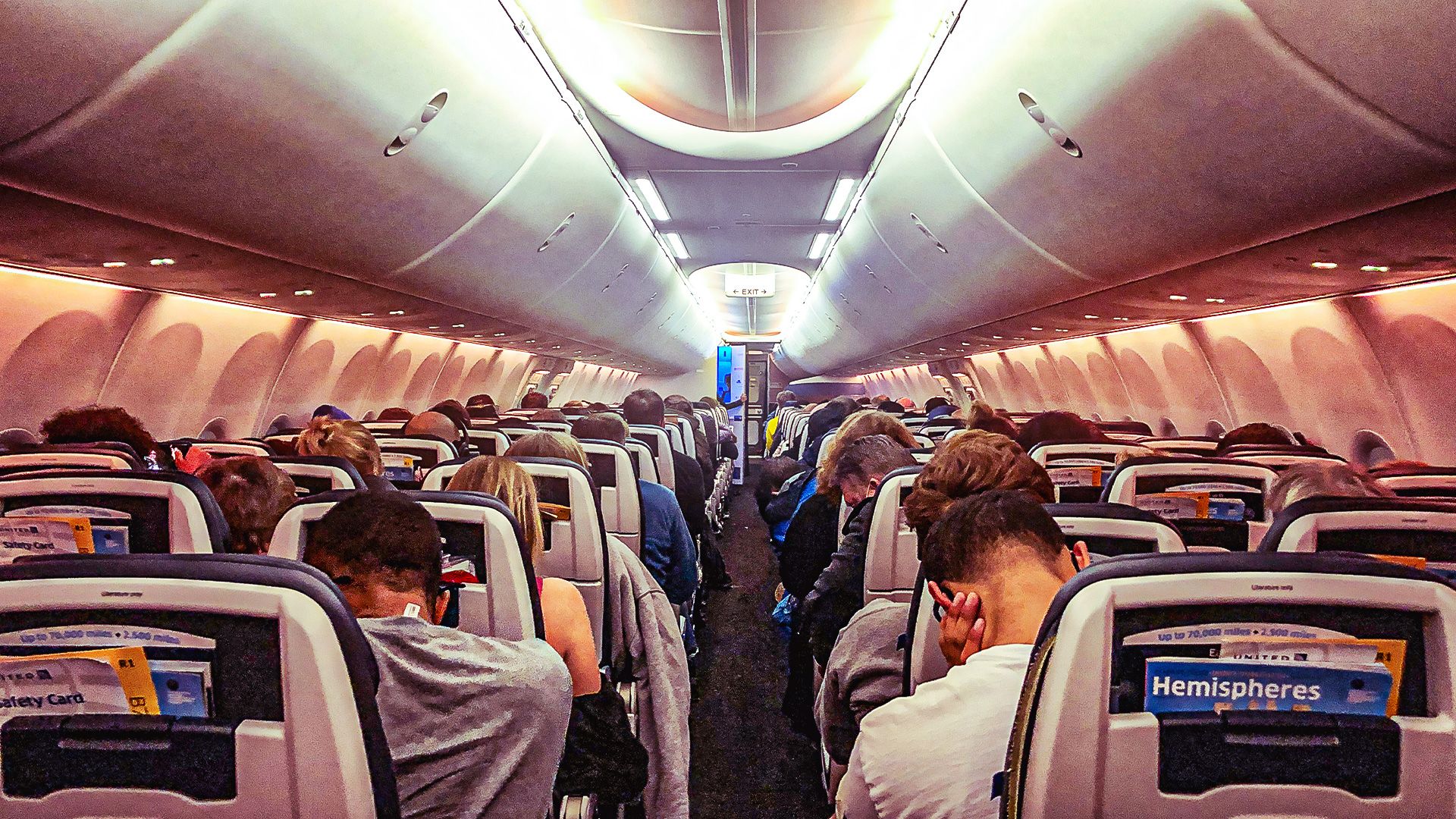
The evolution of airliner design has also contributed to passenger discomfort. Historically, economy seats offered a pitch of 35 to 38 inches (88.9 to 96.5 centimeters), but this measurement has gradually decreased since the Airline Deregulation Act was enacted in 1978. Today, the standard seat pitch ranges from 30 to 32 inches (76.2 to 81.3 centimeters), with some low-cost carriers offering as little as 28 inches (71.1 centimeters). Although the width of seats has remained relatively constant, the reduction in armrest size and aisle width has further cramped the flying experience.
The shift to denser seating configurations has had a notable impact, especially on larger passengers. As the average size of the American population has increased over the past few decades, many individuals now find airline seating increasingly uncomfortable. Airlines often market “extra legroom” seats that offer minimal additional space, but these do not represent a true premium product. The ability to charge for legroom is perceived as a symptom of a broader trend toward cost-cutting in the airline industry.
Despite these challenges, there are some positives to modern economy travel. Ticket prices have seen a significant decline compared to those of previous decades. For example, in the 1970s, flying was often prohibitively expensive, making air travel accessible only to a select few. According to the US Department of Transportation, fewer than 50% of adults had flown by 1971, with that number rising to just over 60% by 1977. Presently, nearly 90% of adults in the US have traveled by air at least once in their lives.
While modern economy seating may offer less space, advancements in aircraft design have improved overall travel efficiency. Ergonomic enhancements, such as seats that slide forward while reclining and increased knee room, aim to provide a more comfortable flying experience. In-flight entertainment options, including seatback screens and Wi-Fi access, have also become standard features on many airlines.
For travelers seeking a more luxurious experience, the airline industry has responded by expanding premium seating options. Airlines now provide larger sections of extra-legroom seating and premium economy classes, which offer a more comfortable travel experience without the exorbitant costs associated with first-class travel. Business and first-class cabins have also evolved, featuring lie-flat seats, direct aisle access, and improved catering options.
In summary, while flying may be more affordable today than in the past, it is often less comfortable. The challenges of air travel are evident in various aspects, including airport procedures and the seating experience. Nonetheless, airlines continue to adapt, providing more options for those willing to invest in a premium experience, as they strive to improve passenger satisfaction in an increasingly competitive market.