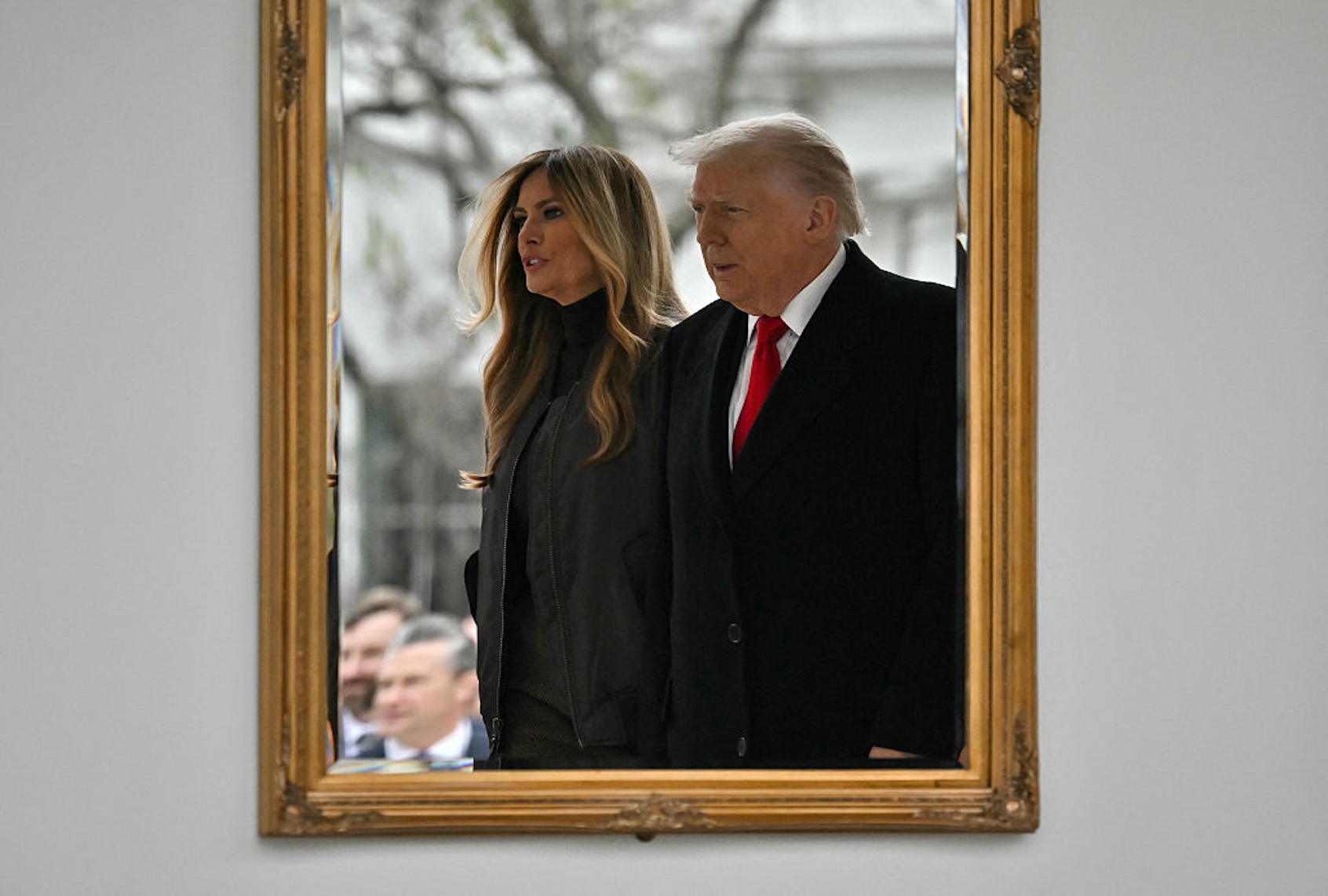
Donald Trump has established a political environment in the White House resembling a hall of mirrors, reflecting a distorted reality that serves his desires for power and greatness. This illusion not only comforts his supporters but also disorients those who adhere to factual representations of events, including centrists and mainstream liberals. The atmosphere created by Trumpism has become a powerful tool for binding his followers to his leadership.
The impact of this distortion is evident in several recent actions taken by the Trump administration. For instance, the Smithsonian’s National Portrait Gallery has removed text from Trump’s official portrait that referenced his two impeachments. Additionally, the White House has altered the narrative surrounding the events of January 6, 2021, characterizing them as “peaceful” until provoked by law enforcement. This portrayal sharply contrasts with documented accounts of the violent assault on the Capitol, raising concerns regarding the integrity of historical memory.
Creating a Cult of Personality
Cabinet meetings under Trump increasingly resemble loyalty ceremonies, where officials pay homage to his leadership. In a striking display of self-glorification, Trump has adorned several federal buildings with banners featuring his image and has even renamed the Kennedy Center to include his name. Plans are reportedly underway to construct a grand ballroom in the White House’s East Wing, further emphasizing his desire to reshape the political landscape around his persona.
According to a recent interview with the New York Times, Trump has expressed aspirations to elevate his legacy even further, eyeing proposals to feature his likeness on U.S. currency and potentially on Mount Rushmore. These ambitions illustrate a deeper trend toward what some analysts describe as a neo-royalist approach to governance, where the leader equates personal interests with national interests.
In the realm of foreign policy, Trump’s actions reflect a similar imperial logic. His administration’s recent military operations in Venezuela, including attempts to capture President Nicolás Maduro, have been framed under a revised version of the Monroe Doctrine. This new interpretation positions the Western Hemisphere as a domain for U.S. intervention, asserting that American power can be wielded at his discretion. The State Department has actively promoted this narrative, reinforcing Trump’s belief that he must protect the hemisphere against perceived threats.
The Implications for American Democracy
Historically, foreign policy driven by personal ego has often culminated in failure. Reports indicate that actions leading to military operations in Venezuela were influenced by personal grievances, including a viral video of Maduro that Trump found mockingly provocative. As he turns his attention to potential interventions in Cuba, Colombia, and even Greenland, his ambitions appear to align more with personal legacy than with established diplomatic protocols.
The Supreme Court’s ruling in Trump v. United States has further entrenched this dynamic, effectively granting presidents a significant degree of immunity, which could lead to unchecked authority in foreign affairs. This ruling underscores a troubling trend where the President’s actions may prioritize personal and political gain over adherence to legal standards.
The implications of this “hall of mirrors” extend beyond Trump’s presidency, posing challenges to the foundational principles of American democracy. The survival of democratic values depends on the ability to resist subjugation to Trump’s personal ambitions and ego. As the political landscape continues to evolve, the need for a return to a fact-based dialogue becomes increasingly urgent for the health of the nation and its institutions.
In conclusion, Trump’s presidency not only reflects a complex interplay of self-interest and political power but also raises critical questions about the future of governance in the United States. The pursuit of personal legacy at the expense of democratic integrity may have lasting impacts both domestically and internationally.