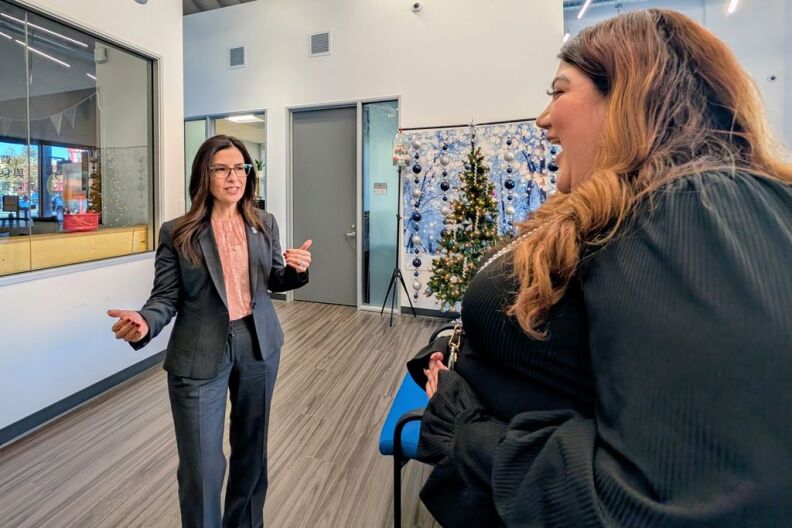
Martha Santana-Chin, the CEO of L.A. Care, has raised alarms about potential federal cuts to Medicaid, warning that such measures could lead to the loss of 650,000 enrollees by the end of 2028. L.A. Care, which administers the state’s Medi-Cal program, serves over 2.2 million individuals. Santana-Chin’s concerns are not merely professional; they are deeply personal, rooted in her own experiences as a child raised on Medi-Cal, California’s version of Medicaid.
As the largest publicly operated health plan in the United States, L.A. Care’s significant enrollment surpasses that of Medicaid and the Children’s Health Insurance Program in 41 states. Santana-Chin explained, “If it weren’t for safety nets like the Medi-Cal program, many people would be stuck in poverty without an ability to get out.” Her journey underscores the critical role that accessible health care can play in changing lives.
In her second year leading L.A. Care, Santana-Chin faces the daunting challenge of navigating federal and state budget cuts that threaten the support for low-income and medically vulnerable populations. The organization reported revenues of $11.7 billion in the last fiscal year. The recently enacted GOP’s One Big Beautiful Bill Act, also known as HR 1, is projected to slash more than $900 billion from Medicaid funding over the next decade, with California potentially losing over $30 billion, according to the state’s Department of Health Care Services.
Impact of Federal Cuts on Medi-Cal
The ramifications of HR 1 could be severe for L.A. Care. Santana-Chin anticipates that the funding cuts will destabilize the health care delivery system. She stated, “The state obviously isn’t going to be able to make up for the shortfalls in federal funding,” emphasizing that the number of people reliant on Medicaid will significantly decrease. This projected decline of 650,000 enrollees represents over a quarter of L.A. Care’s Medi-Cal population.
The repercussions extend beyond just numbers. Santana-Chin highlighted that reductions in payment and an increase in uncompensated care will exacerbate the strain on health care providers. “As the delivery system gets destabilized and hospitals and other health care providers are forced to close services or reduce the number of sites they have, it’s going to impact access,” she noted.
Efforts to Mitigate Challenges
In light of these challenges, L.A. Care is exploring ways to operate more efficiently. Santana-Chin mentioned the organization’s focus on leveraging technology to enhance operational capabilities, particularly in supporting call center agents. “We are looking at creative ways to use technology to empower our people to do higher-level work,” she explained, including automating claims payment processes.
When asked about the implications of HR 1 and its components, Santana-Chin expressed concern over potential unintended consequences, particularly around work requirements that could disqualify eligible individuals from receiving coverage. “It’s unfortunate, and that would be something that I would urge folks to reconsider,” she stated.
The recent decision by California to freeze Medi-Cal enrollment for immigrants without legal status is another area of concern. Santana-Chin argued that access to health care should not be contingent on immigration status, emphasizing that health care is a fundamental human right. The freezing of enrollments will strain the delivery system, particularly for those who are uninsured.
Santana-Chin’s leadership follows a tumultuous period for L.A. Care, including a $55 million fine from state regulators for violations that jeopardized member health and safety. The organization has since invested in infrastructure improvements and increased staffing to address these concerns.
In a candid reflection on her childhood, Santana-Chin recalled the difficulties her family faced and the importance of reliable transportation to access health care services. “Had I had that, had my mother had that, life would have been much easier,” she said, underscoring the need for continued improvements within the health care system.
The chilling effect of federal immigration raids has also had a noticeable impact on L.A. Care members, with families becoming increasingly reluctant to seek necessary medical care. Santana-Chin noted a decrease in vaccinations and emergency department visits, further highlighting the adverse effects of fear and uncertainty on community health.
In navigating the complexities of Medicaid and the broader health care landscape, Santana-Chin remains committed to advocating for policies that ensure access to care for all, emphasizing the importance of community and compassion in health care delivery.