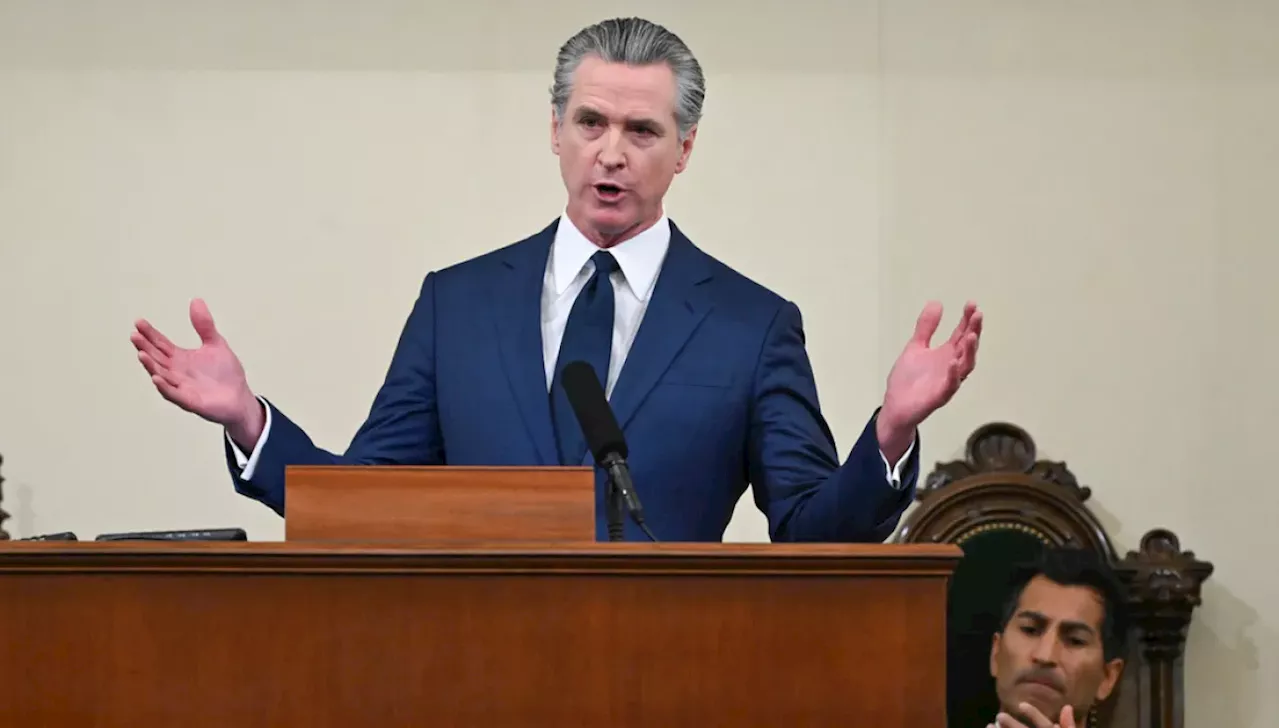
California Governor Gavin Newsom is facing criticism for adopting a dual approach in his political messaging as he prepares for a potential presidential run in 2028. While he positions himself as a moderate leader, his communications team has been promoting controversial and inflammatory rhetoric that raises questions about his true intentions.
Recently, Newsom described actions by U.S. Immigration and Customs Enforcement (ICE) as “state-sponsored terrorism,” a statement that has drawn significant backlash. This assertion follows an incident where an activist allegedly interfered with ICE operations, resulting in an officer being struck by a vehicle. Critics argue that such language endangers ICE agents and reflects a troubling trend in political discourse.
The governor’s communications strategy seems aimed at appealing to the more radical elements of the Democratic base, which often perceives ICE as a repressive force. In a notable contradiction, Newsom has publicly stated that he does not support the abolition of ICE, despite the prevailing sentiment among some progressive activists. This inconsistency highlights his attempt to navigate the complex landscape of Democratic politics, often altering his stance depending on his audience.
In a recent episode of his podcast, Newsom engaged in a conversation with conservative activist Charlie Kirk where he acknowledged concerns regarding the participation of transgender girls in women’s sports. He argued that allowing such participation could be unfair to biological female athletes, yet his administration has continued to advocate for policies that promote inclusion for transgender individuals. This duality in messaging raises questions about his commitment to specific policies versus political expediency.
Newsom has also faced scrutiny for his stance on parental rights in education. He has argued that parents should have a significant role in their children’s decisions regarding gender identity, yet he simultaneously defended California laws that do not require schools to inform parents if their children are exploring transgender identities. Such contradictions contribute to a perception that he is willing to reshape his public persona to gain favor among varying voter demographics.
Critics note that Newsom has previously condemned the divisive communication style exemplified by former President Donald Trump, only to allow his team to produce similarly provocative content. This has led to accusations that he is contributing to the toxic political environment he claims to oppose.
As Newsom continues to navigate this complex political terrain, his actions suggest a calculated effort to satisfy diverse factions within the Democratic Party. By adopting contrasting positions based on his audience, he raises concerns about the authenticity of his leadership and the potential implications for his presidential aspirations.
The governor’s approach illustrates a broader trend in contemporary politics where candidates may prioritize political gain over coherent messaging. As the political landscape evolves, observers will be watching closely to see how Gavin Newsom reconciles these conflicting aspects of his public persona in the lead-up to the 2028 presidential election.