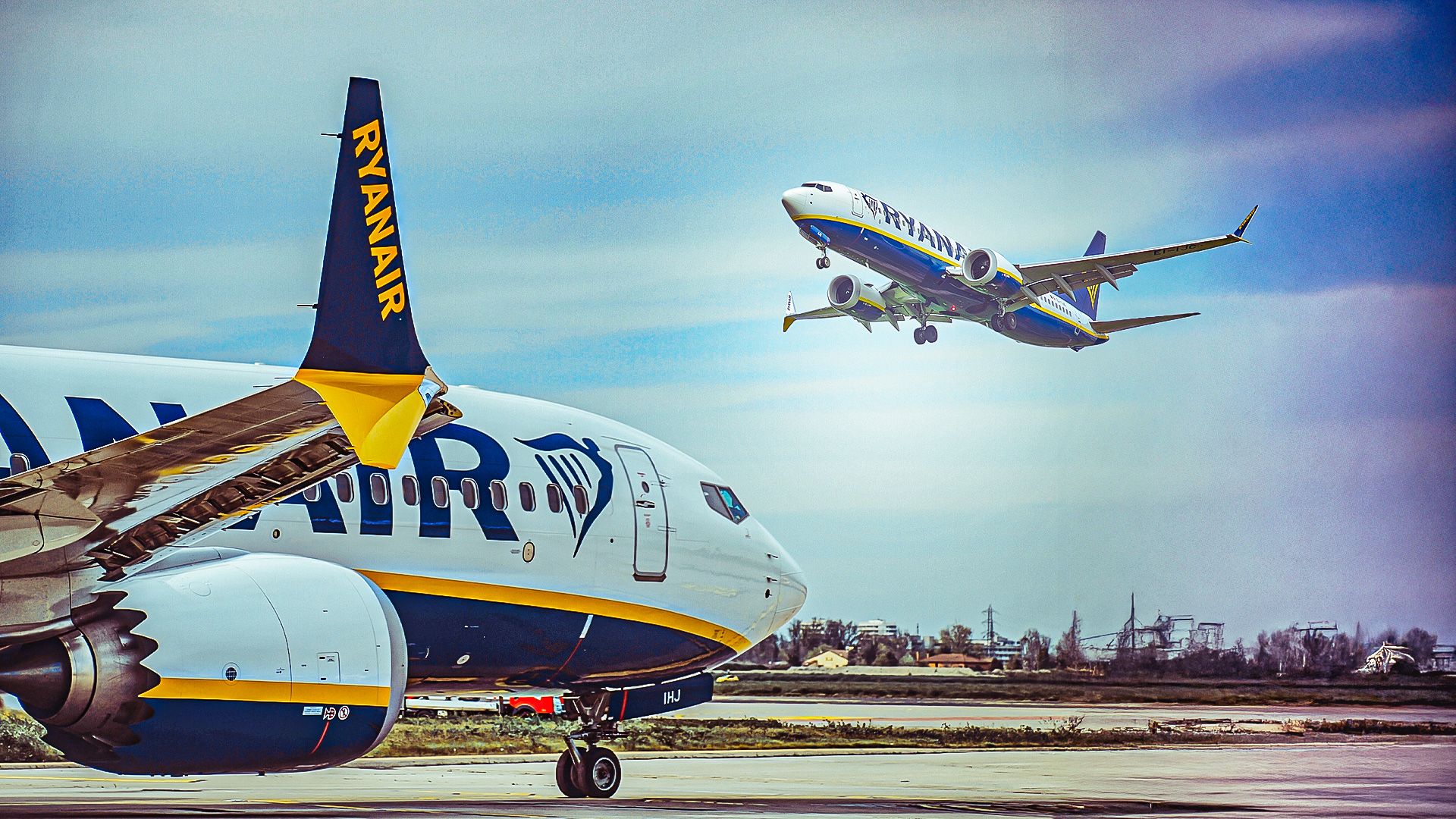
SpaceX founder Elon Musk has publicly criticized Ryanair CEO Michael O’Leary following the airline’s decision not to implement SpaceX’s Starlink satellite Wi-Fi across its fleet. O’Leary cited financial concerns regarding weight and drag penalties associated with Starlink’s hardware, which he claimed would result in a significant fuel cost increase. In response, Musk and O’Leary exchanged personal insults, escalating the dispute beyond a professional disagreement.
During a radio interview with Newstalk, O’Leary stated that he would “pay no attention whatsoever to Elon Musk,” describing him as “very wealthy, but still an idiot.” O’Leary claimed that equipping Ryanair aircraft with Starlink would incur additional costs of approximately €250 million annually, translating to around one extra euro per passenger. Musk countered these assertions on social media platform X, labeling O’Leary an “utter idiot” and suggesting that the Ryanair CEO should be dismissed.
Starlink’s Potential Impact on Airlines
The conflict began when O’Leary announced that Ryanair would not be investing in Starlink, citing a “two percent fuel penalty” due to the added weight and aerodynamic drag from the required hardware. Musk refuted this claim, stating that O’Leary was “misinformed.” Michael Nicolls, Vice President of Starlink Engineering, supported Musk’s position, asserting that the actual fuel penalty for a Boeing 737-800 would be no more than 0.3%.
O’Leary’s comments took a sharper turn during his radio interview, where he claimed that Musk lacked understanding of aviation dynamics. In response to the escalating feud, Musk jokingly suggested he might purchase Ryanair and replace O’Leary with someone named Ryan, further illustrating the contentious nature of the exchange.
Implementing Starlink on aircraft requires additional hardware, including an antenna and radome, which adds weight and can increase drag. While O’Leary maintained that these factors would lead to a two percent fuel penalty, Nicolls pointed out that Starlink’s newer designs significantly reduce aerodynamic drag compared to older systems. He emphasized that airlines often report better performance dynamics from Starlink than from competing technologies.
Market Trends and Consumer Preferences
The demand for in-flight Wi-Fi is growing, with many airlines offering it as a complimentary service. However, as an ultra-low-cost carrier (ULCC), Ryanair typically seeks to introduce ancillary fees for such services. O’Leary noted that while passengers are willing to use free Wi-Fi, they are unlikely to pay for it, especially on shorter flights. He stated, “Passengers won’t pay one euro each to use the internet.”
Despite Ryanair’s reluctance, Starlink has gained traction among other airlines. Recently, Lufthansa announced plans to equip its entire fleet of around 850 aircraft with Starlink technology. Over thirty airlines, including airBaltic, Alaska Airlines, Qatar Airways, and United Airlines, have either introduced or plan to introduce Starlink for onboard Wi-Fi, reflecting a broader industry trend toward enhanced connectivity.
As the debate between Musk and O’Leary continues, it underscores the competitive landscape of airline services and the increasing importance of reliable in-flight internet access in attracting customers.