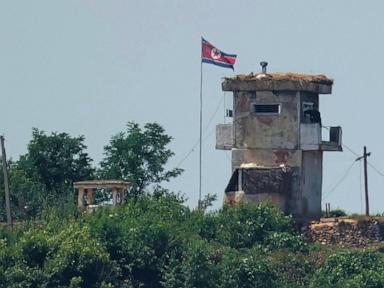
South Korea has enacted travel bans on three civilians as part of an investigation into alleged drone flights over North Korea. This decision, announced on March 15, 2024, follows North Korea’s accusations that South Korea conducted surveillance drone operations in September and January. The situation has escalated tensions between the two nations, prompting North Korea to threaten retaliation earlier this month.
The South Korean government denied conducting drone flights during the specified periods. Instead, it is investigating whether civilians were responsible for the alleged operations. The individuals affected by the travel bans include a man identified only by the surname Oh, who has claimed to have flown drones to monitor radiation levels at a North Korean uranium facility. This information was disclosed by a joint military and police investigation team, which has not provided further details on the other two civilians involved.
Reports indicate that the trio worked together for a drone manufacturing company and that both Oh and one other individual who was recently summoned for questioning were contract employees during the administration of former President Yoon Suk Yeol. The investigation team has not confirmed these reports.
Political Implications and Economic Concerns
South Korean President Lee Jae Myung has called for a thorough investigation into the incident. He emphasized that unnecessary tensions with North Korea could have detrimental effects on the economy. President Lee took office in June 2023 following a snap election that resulted from Yoon‘s early departure from office due to a controversial martial law imposition.
Analysts suggest that North Korea’s accusations may be part of a broader strategy to stoke anti-South Korean sentiment ahead of the upcoming congress of the ruling Workers’ Party, scheduled for late January or February 2024. During this congress, North Korea might solidify its stance on a hostile “two-state” system regarding the Korean Peninsula in its constitution, marking the first such congress in five years.
Public discussions between North and South Korea have been non-existent since 2019, and military maneuvers involving drones have consistently heightened animosities. In October 2024, North Korea accused South Korea of flying drones over its capital, Pyongyang, to distribute propaganda leaflets. Conversely, South Korea has accused North Korea of conducting occasional drone flights over the border.
In December 2022, South Korean military forces responded to North Korea’s alleged drone incursions with warning shots, scrambling fighter jets and deploying surveillance drones over North Korean territory. These actions have contributed to a cycle of tension and distrust between the two nations.
As the investigation unfolds, the implications of the travel bans and the allegations of drone flights continue to reverberate within the complex dynamics of inter-Korean relations. Both governments face the challenge of navigating this escalating situation while managing internal and external pressures.