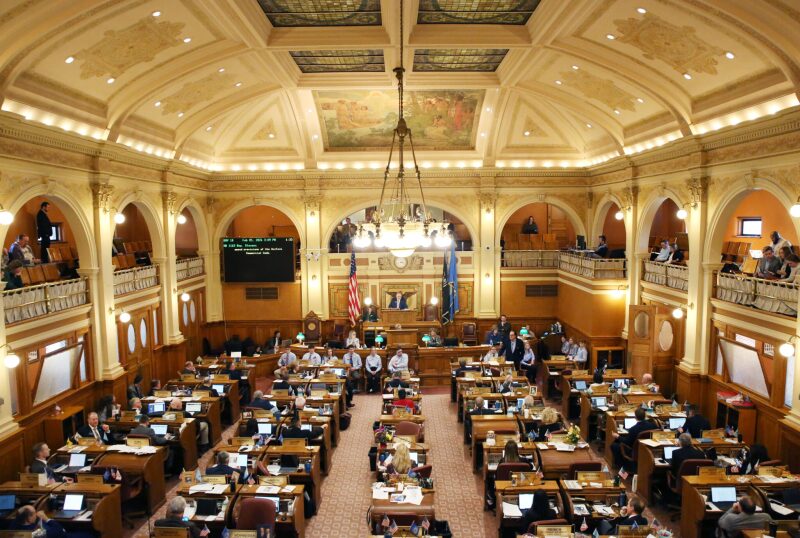
UPDATE: South Dakota lawmakers have introduced a staggering 28 bills aimed at addressing the escalating property tax crisis as the legislative session intensifies. Just weeks into the session, which runs until March 2024, the urgency to find solutions is palpable, with more proposals expected to emerge.
The property tax burden has surged nearly 70% over the past decade, prompting significant pressure on elected officials to take action. Governor Larry Rhoden has advocated for a bill that would permit counties to levy a half-percent sales tax specifically for property tax relief, a move that could impact every household in South Dakota.
Democratic leaders are preparing to unveil their own relief proposals shortly, adding to the growing dialogue on this pressing issue. Senate Assistant Majority Leader Carl Perry likened the challenge of achieving consensus on property tax reform to a game of Whack-A-Mole, stating, “It’s going to be tough to get things exactly right, but we’re going to work at it.”
The state government, which relies heavily on sales tax revenue, has no direct income from property taxes. This situation places increased reliance on counties and schools, whose funding is closely tied to property taxes. One of the more controversial proposals comes from U.S. Representative Dusty Johnson, suggesting that revenue from an upcoming sales tax increase be redirected to alleviate property taxes.
Senate President Pro Tempore Chris Karr urged caution, noting that raising sales taxes to fund property tax relief could unfairly burden those who do not own property. “No matter how bad we want property tax relief, that’s not right,” Karr stated, emphasizing the need for a fair approach to taxation.
Legislators are also examining the implications of previous reforms. A major property tax relief law enacted last year capped residential assessment growth for five years and exempted certain home improvements from assessments. However, concerns linger about the limitations imposed on communities. Senator Randy Deibert has introduced a bill to increase the cap on new construction and growth from 3% to 5%, a move aimed at allowing rapidly growing areas like Harrisburg to sustain their development.
Harrisburg’s Deputy City Administrator, Heath VonEye, testified that the current cap could result in nearly $3 million in lost revenue over the next few years, impacting essential services and infrastructure. “The costs of paying for infrastructure get pushed onto existing homeowners,” VonEye warned.
As the session progresses, many property tax bills are still under consideration, including:
– **Senate Bill 85**: Mandates elections for schools to exceed property tax limits.
– **House Bill 1168**: Offers a property tax credit for private school and homeschool expenses.
– **Senate Bill 12**: Proposes refunds for missed property taxes for veterans and their spouses.
– **Senate Bill 96**: Favors Governor Rhoden’s initiative to allow counties to impose a half-percent sales tax for property tax relief.
Meanwhile, some proposals have faced rejection. For instance, Senate Bill 99, which sought to shift public education funding from property taxes to sales taxes, failed to pass through committee with a 6-1 vote.
As South Dakota’s lawmakers continue to tackle this urgent issue, the outcome of these proposals could significantly reshape the financial landscape for homeowners and communities across the state. The next few weeks will be critical as more bills are debated and voted on, with citizens anxiously awaiting the decisions that will affect their property tax obligations.
Stay tuned for updates on this developing story as South Dakota works toward potential solutions for its mounting property tax challenges.