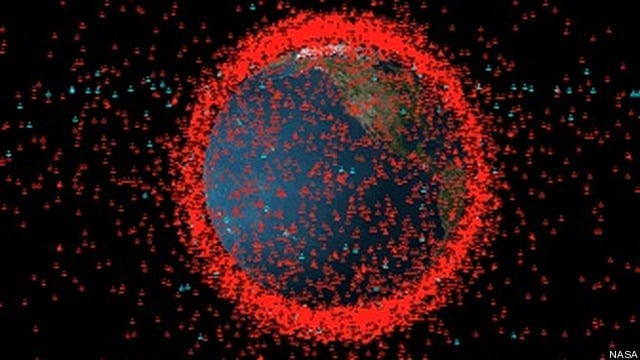
A new United Nations initiative aims to enhance global cooperation in managing the increasing risks associated with space traffic. The Expert Group on Space Situational Awareness (EG SSA) convened in Vienna, Austria, from February 2 to 13, 2025, to discuss practical measures for information sharing among nations as the number of satellites in orbit grows significantly.
The EG SSA was established under the Science and Technical Subcommittee of the Committee on the Peaceful Uses of Outer Space (COPUOS) in July 2024, with the United Arab Emirates serving as the chair. This meeting marks the first in-person gathering of the group, following two virtual sessions that initiated discussions on space safety.
Ryan Guglietta, the representative of the US State Department at the meeting, expressed strong support for the EG SSA. In a statement released on February 6, he described the forum as “an unprecedented opportunity for Member States to convene their government and private sector technical experts to have substantive discussions on how to improve spaceflight safety.” He emphasized the hope that the group could produce practical outcomes leading to better communication among various space actors to reduce the risk of collisions.
The US delegation, led by NASA and the State Department’s Permanent Mission to International Organizations in Vienna, has been actively involved in supporting the UAE’s initiative to establish the SSA Expert Group. A spokesperson noted that the goal is to enhance data sharing related to space situational awareness, which is increasingly vital as more countries engage in space activities.
The US has sought to improve communications with China regarding space safety, particularly concerning potential collisions involving satellites. The Pentagon has previously notified Beijing about possible on-orbit conjunctions through the US Space Command’s Space Surveillance Network. These notifications are sent to the Beijing Institute of Telecommunications and Tracking Technology (BITTT), the official Chinese government contact for space safety issues.
Historically, communications from the US to BITTT received minimal response. For instance, in February 2022, a SPACECOM spokesperson lamented the lack of direct communication from Beijing regarding safety concerns. However, recent developments indicate a shift in this dynamic. In October 2024, the China National Space Agency initiated contact with NASA concerning potential satellite collisions and even proposed to adjust the trajectory of its satellite to prevent a crash.
This change in communication has been facilitated by efforts from the US government to create clearer guidelines for inter-agency communications about space safety issues. A senior US official indicated that these guidelines have streamlined interactions, reducing confusion caused by multiple points of contact.
The growing dialogue between the US and China on space safety may positively influence the UN negotiations. The working group’s agenda includes discussions on enhancing global operational coordination on space situational awareness data systems and harmonizing data formats across international systems. Such efforts aim to establish regular forums for information exchange, which could lead to improved safety protocols in space.
Ian Christensen, senior director of private sector programs at the Secure World Foundation, commented on the potential impact of the EG SSA. He noted that Chinese stakeholders have expressed a need for a more structured government policy to facilitate direct engagement on space safety issues. While the Expert Group represents a multilateral initiative, Christensen remains hopeful that it will foster better information sharing between the US and China.
The EG SSA is expected to hold a series of meetings, both virtual and in person, leading up to the COPUOS plenary meeting scheduled for 2028, where the group will present its findings. The annual plenaries typically occur in May or June, providing a platform for further discussions on crucial space safety measures.
As the world navigates the complexities of an increasingly crowded space environment, ongoing dialogue and cooperation will be vital in ensuring the safety of both government and commercial space operations.