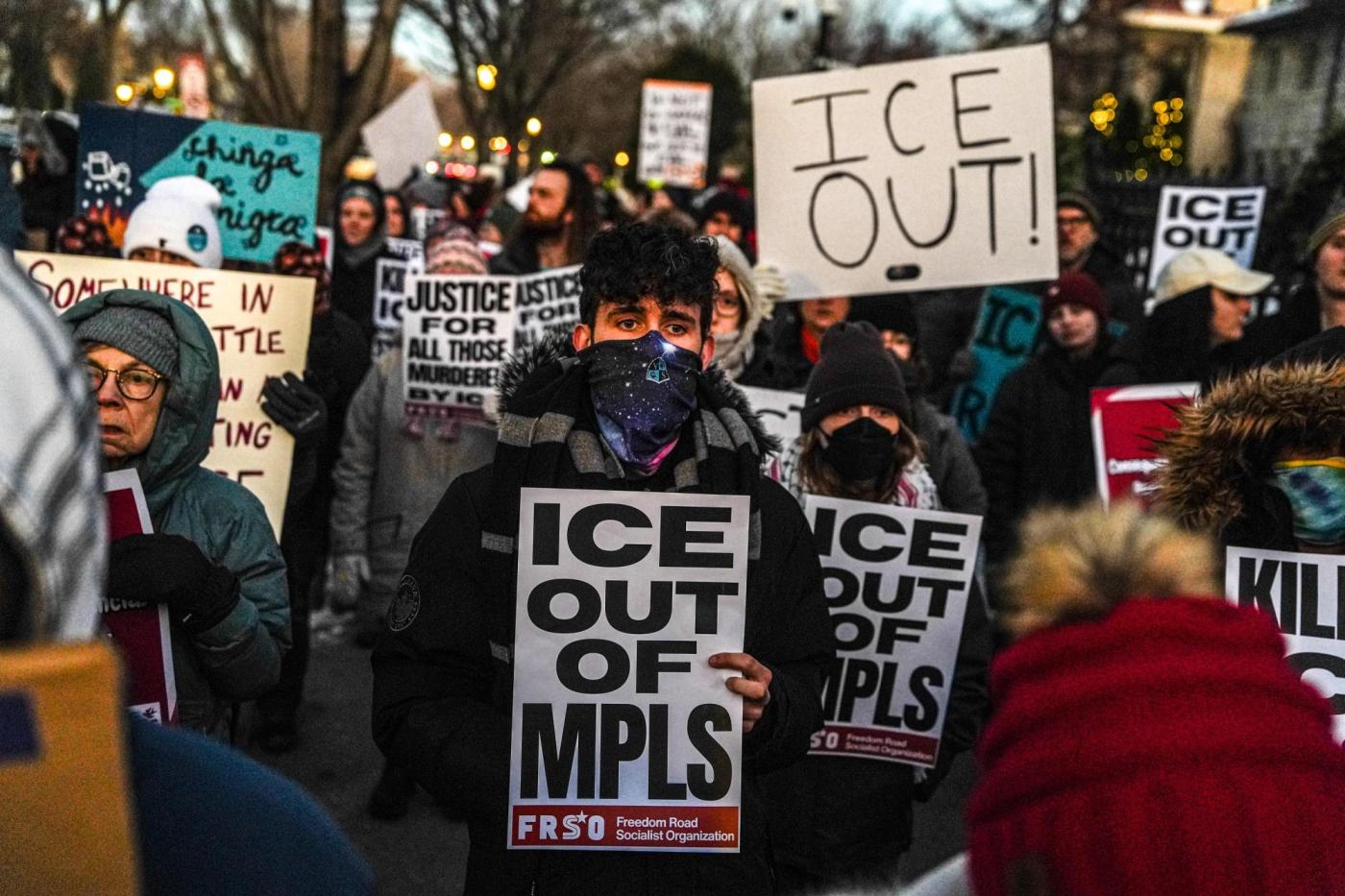
President Donald Trump recently suggested a shift in tone regarding federal immigration enforcement in Minnesota, indicating a desire for a “softer touch.” During an interview with NBC Nightly News, Trump discussed the aggressive operations conducted by federal agents in the state, stating, “I learned that maybe we could use a little bit of a softer touch. But you still have to be tough.” This statement raises questions about the intentions behind these operations, which have sparked significant backlash.
Despite Trump’s remarks, critics argue that his administration’s actions do not align with the promised approach. Federal agents, including those from ICE and the Border Patrol, have been involved in numerous arrests, often targeting undocumented immigrants. According to estimates, approximately one in ten arrests during the Department of Homeland Security’s “Operation Metro Surge” involved individuals with prior criminal convictions. Furthermore, the Cato Institute reports that around 73% of those arrested have no previous criminal records, while only 5% have been convicted of violent crimes. This data challenges the narrative that federal agents are primarily focused on apprehending dangerous criminals.
Reports from social media indicate that ICE and Border Patrol have continued aggressive tactics, including pulling firearms on citizen observers and making arrests of those documenting operations. Such actions have drawn condemnation from Minnesota’s political leaders. Governor Tim Walz and Minneapolis Mayor Jacob Frey, both Democrats, have urged Trump to de-escalate these efforts, reflecting concerns over the climate of fear and intimidation that has emerged.
The true motivations behind these aggressive tactics may be further illuminated by a letter from U.S. Attorney General Pam Bondi to Governor Walz. Following the shooting death of protester Alex Pretti in Minneapolis, Bondi suggested that Walz could “bring an end to the chaos” by turning over state voter data to the Justice Department. This connection between voter data and immigration enforcement raises alarm among observers, as it reflects a broader strategy by the Trump administration to investigate alleged voter fraud.
Since taking office, Trump has aggressively pursued state voter information, filing lawsuits against at least 24 states and territories to acquire such data. Eleven states have complied, while others, including Minnesota, have resisted due to legal concerns. The push for voter data appears linked to Trump’s unfounded claims that the 2020 presidential election was marred by fraud. Despite more than 60 lawsuits alleging irregularities, only one minor case in Pennsylvania succeeded.
The implications of these actions extend beyond immigration enforcement. Trump views the upcoming midterm elections in 2026 as critical for his political future. Losing control of either house of Congress could result in significant challenges, including investigations and potential impeachment. This urgency may explain Trump’s recent declaration that he might not accept midterm election results, aiming to “nationalize” voting and exert greater control over the electoral process.
As public opinion shifts against Trump’s hardline immigration strategies, the violence associated with his administration’s operations has eroded support among significant voter demographics. The administration’s attempts to intimidate dissenters, including the recent indictment of journalists Don Lemon and Georgia Fort, reflect a broader pattern of using government power to silence criticism. Lemon has characterized the indictment as an infringement on First Amendment rights.
The ongoing confrontations in Minnesota and beyond highlight a troubling trend where citizens find themselves in opposition to federal policies. The risks taken by ordinary Americans to protect their constitutional rights underscore a deepening national crisis. As tensions escalate, the potential for further conflict between citizens and government authorities remains a pressing concern, raising fundamental questions about the state of democracy in the United States.