UPDATE: The Trump administration is poised to initiate a significant military assault on Iran as the Pentagon mobilizes an extensive strike force in the Middle East. Reports confirm that the aircraft carrier USS Gerald R. Ford is on its way to join the growing U.S. military presence, creating a tense atmosphere in the region.
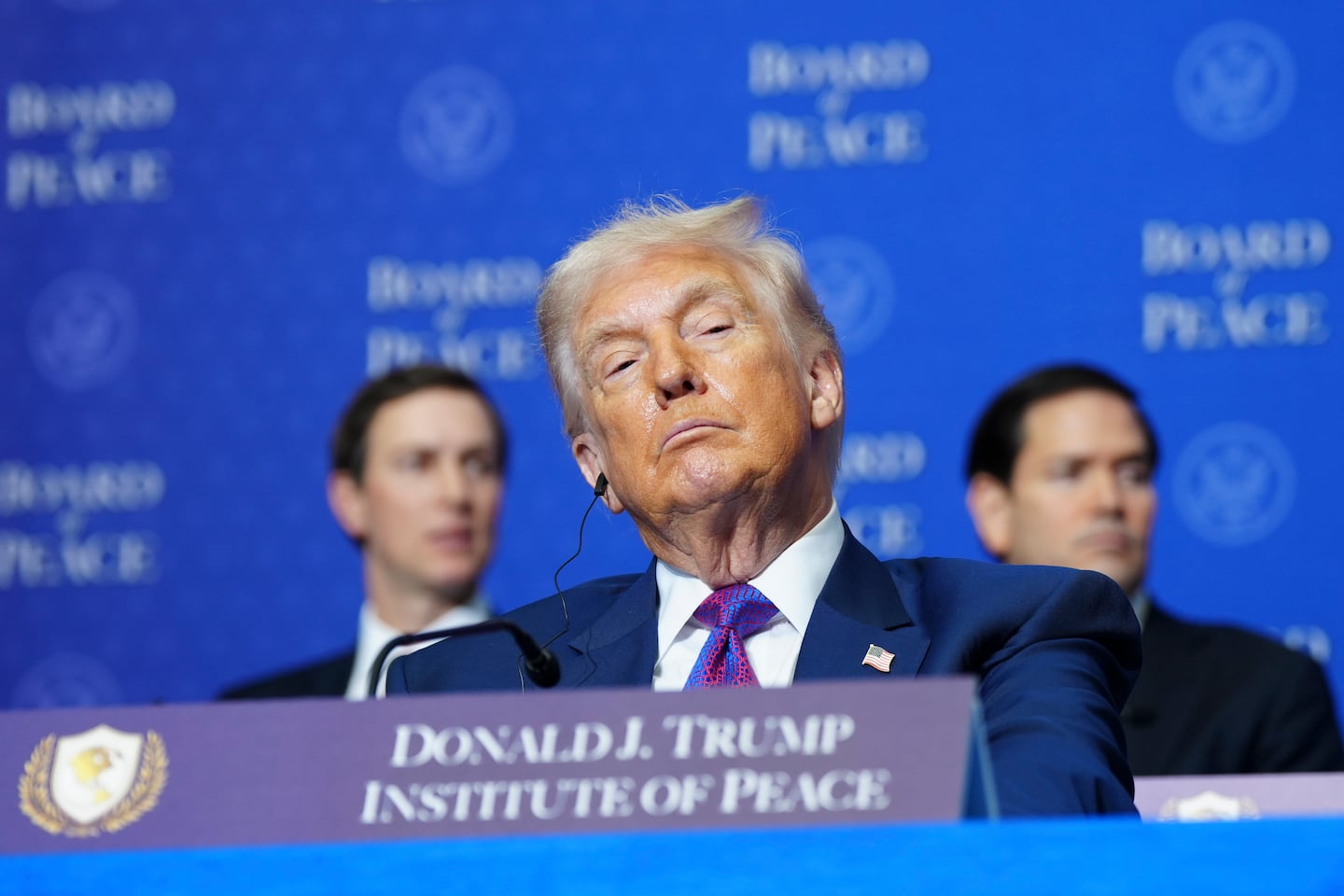
Military leaders have extended the deployment of warships, which are approaching the Strait of Gibraltar and could be in position for action within days. This buildup follows President Donald Trump’s ambiguous comments earlier today, where he hinted at potential negotiations but did not rule out military action. “You’re going to be finding out over the next, maybe, 10 days,” he stated at a peace meeting in Washington.
The implications of this military escalation are profound, as it signals a readiness for prolonged conflict, which could lead to significant U.S. combat casualties. The U.S. military already has a formidable presence in the region, including dozens of fighter jets and advanced air-defense systems. Experts warn that an extended conflict with Iran could spiral out of control, with the risk of retaliatory strikes against U.S. forces.
Iranian officials, led by Ayatollah Ali Khamenei, have reacted defiantly to the U.S. military buildup, asserting their right to maintain a robust missile program and challenging the U.S. to act. Khamenei mocked U.S. military posturing in a recent social media post, stating, “A warship is a dangerous piece of military hardware. However, more dangerous than that warship is the weapon that can send that warship to the bottom of the sea.”
As tensions rise, Secretary of State Marco Rubio is scheduled to visit Israel on February 28, 2025, to discuss the situation with Israeli Prime Minister Benjamin Netanyahu. This meeting underscores the close alignment between U.S. and Israeli interests in countering Iran, but it also raises concerns about the potential for a preemptive strike ahead of any diplomatic resolution.
The backdrop of the ongoing Winter Olympics in Italy adds another layer of complexity to the situation. Speculation mounts over whether the Trump administration will act before the games conclude, as military officials weigh the options available to them.
While U.S. officials hope that military pressure will compel Iran to negotiate in good faith over its nuclear program, recent talks have shown little progress. Iranian diplomats remain firm on key issues, including their right to enrich uranium, complicating any potential negotiation efforts.
As the situation unfolds, the world watches closely. Military experts caution that while the U.S. and Israel may hold a tactical advantage, an extended conflict could have devastating consequences, potentially drawing in multiple nations and escalating into a broader war.
The Trump administration’s military strategy appears to be a departure from previous engagements in the region, which had focused on limited, short-term operations. Current assessments indicate that this conflict could mark a pivotal moment in U.S.-Iran relations, with long-lasting impacts on regional stability and international security.
Stay tuned for the latest updates as this situation develops, and what it could mean for global peace and security.