
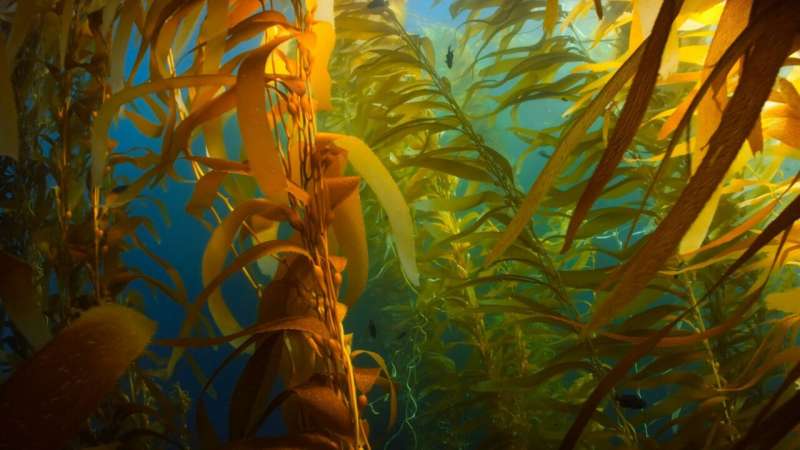
The decline of kelp forests, particularly along the coast of California, poses a significant environmental crisis. Since the marine heat wave between 2013 and 2017, these vital underwater ecosystems have struggled to recover despite extensive restoration efforts from scientists, fishermen, coastal tribes, and conservationists. The situation extends beyond localized areas, as the ongoing loss of kelp forests mirrors the broader implications of climate change, evidenced by the rise of mega-wildfires from Los Angeles to Siberia and beyond.
Kelp forests, covering approximately 2.8 million square miles—more area than the Amazon rainforest—generate an estimated $500 billion annually. They provide essential resources, including edible marine species, thickeners and emulsifiers for food and cosmetics, and crucial protection against coastal erosion. A 2023 report in *Nature Communications* highlighted that photosynthesizing kelp produces more oxygen and sequesters more carbon dioxide than the Amazon basin, emphasizing their ecological importance.
These underwater ecosystems are home to diverse marine life, including orange garibaldi, wolf eels, and leopard sharks. For divers exploring areas like Monterey in Northern California or Catalina Island, kelp forests resemble vibrant cathedrals of life. Yet, the threats they face are mounting, with historical issues like overfishing and pollution now compounded by the impact of marine heat waves.
A recent study conducted by the National Oceanic and Atmospheric Administration (NOAA) and over 30 international institutions revealed that the ocean absorbed unprecedented levels of heat in 2025. This dramatic heat increase has triggered a record number of marine heat waves, elevating regional water temperatures by 5 to 10 degrees Celsius, drastically altering ocean conditions and threatening kelp’s survival.
The implications of declining kelp forests are profound. Species such as salmon, cod, and abalone, which depend on these habitats for food and shelter, face uncertain futures. Coastal communities, including Fort Bragg in California, have already felt the economic repercussions, with a staggering 95% loss of kelp forests leading to an estimated annual loss of $25 million due to the closure of recreational abalone diving.
The global issue of kelp disappearance isn’t confined to the United States; regions in Tasmania, Australia, Norway, Mexico, and southern Maine have reported similar losses of up to 80%. Despite these alarming trends, there is a glimmer of hope. Kelp is known for its resilience and rapid growth, capable of extending up to 2 feet per day under optimal conditions.
In places like the Azores, Chile, and Argentina, community-led initiatives have established large marine parks that protect wild kelp. South Korea’s fisheries agency has invested $29 million annually in restoring wild kelp forests, successfully reinstating 50,000 acres of marine habitat to date. These efforts demonstrate the potential for positive action, even amid dire circumstances.
Nevertheless, experts caution that without a swift transition away from fossil fuels, the future of kelp remains precarious. This reality necessitates urgent intervention to preserve what remains of these vital ecosystems. Proposed legislation, such as the “Help Our Kelp” initiative in Congress, aims to channel funding into essential research and restoration projects.
As the world grapples with the escalating effects of climate change, the survival of kelp forests hinges on proactive measures. Restoring damaged habitats and ensuring the continuation of these underwater forests is crucial for both human communities and the diverse marine life that relies on them. The fate of kelp forests encapsulates a broader environmental narrative, highlighting the interconnectedness of all life within our planet’s ecosystems.


