The North Dakota Republican Party is grappling with a significant departure of its statewide candidates ahead of the upcoming state convention scheduled for March 28-29, 2026 in Minot. In a striking move, every Republican incumbent in statewide office has decided to forgo participation in the convention, citing a lack of alignment with the party’s current direction. Their unified stance is clear: the party no longer represents the interests of the average Republican voter.
The decision to bypass the convention stems from concerns over the party’s internal processes, which many candidates describe as corrupt and opaque. Each district committee operates under its own set of bylaws, often not disclosed to potential candidates, creating a confusing landscape that undermines transparency. This issue has been exacerbated by legislation, championed by Rep. Jim Kasper of Fargo-area District 46, which prevents the state party from exerting control over local committees. This lack of uniform rules has allowed a faction of populists to seize control of many district chair positions and dominate the party’s governing State Committee.
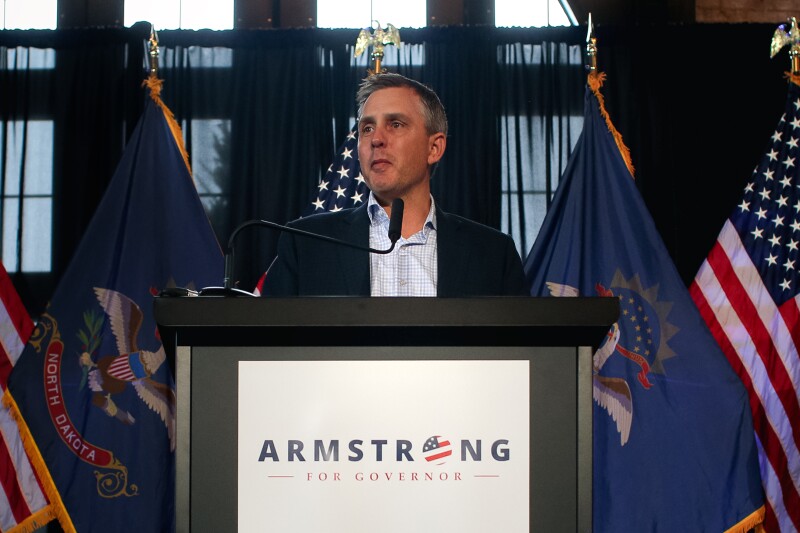
Matthew Simon, the newly elected party chair from this populist faction, exemplifies the group’s assertiveness. They have publicly censured Governor Kelly Armstrong for vetoing a controversial book ban bill while supporting property tax legislation. Armstrong’s response was dismissive: “I don’t care.” The populists are also contemplating imposing fines of up to $100,000 on Republican candidates who defy party resolutions, further illustrating the faction’s determination to enforce loyalty.
In stark contrast, the incumbent candidates argue that they represent the true essence of the Republican Party. They contend that their nominations are rooted in the grassroots support of thousands of voters who have chosen them in past elections. According to these candidates, the party’s leadership does not create the brand; rather, it is the elected officials who shape the party’s identity.
In a recent interview on the Plain Talk podcast, Armstrong stated, “If the party does as much to try to defeat me as they’ve done to help me since 2018, I think I’ll be just fine.” His sentiment underscores a growing disconnection between the party’s leadership and its elected representatives.
The impending NDGOP state convention serves as a critical barometer of this rift. Traditionally, the event attracts over a thousand delegates, bolstered by the support of candidates and their backers. In 2024, over 1,700 delegates attended the convention in Fargo, and in 2022, attendance peaked at over 2,300 in Bismarck. Yet, as of now, only 928 delegate names have been submitted for the 2026 convention, with one district still to report. This marks a notable decline and raises questions about the convention’s relevance and effectiveness.
To attend the convention, potential delegates must pay party dues by March 14, and many will face additional costs for travel and accommodation. Observers predict that actual attendance may dwindle to around half of the registered delegates, placing the NDGOP’s numbers in line with the recent Democratic-NPL state convention, which also faced challenges in attracting participants.
The absence of incumbent candidates poses a unique challenge for the NDGOP. The convention may proceed with delegates endorsing candidates to run against those who have chosen to boycott, but historical precedent suggests that such endorsements are unlikely to lead to success in elections. For instance, during the 2024 Fargo convention, a populist candidate named Alex Balazs secured the nomination but garnered only 4% of the primary vote. Similarly, in 2022, state Rep. Rick Becker failed to unseat incumbent John Hoeven, receiving less than 19% of the vote.
The ongoing internal struggle raises important questions about the identity of the Republican Party in North Dakota. Many believe that the party should reflect the will of its voters rather than the agendas of a select group of insiders and activists. The populist faction may claim to represent the party, but it is the rank-and-file voters who have consistently supported popular candidates like Armstrong, Hoeven, and Julie Fedorchak that truly embody the party’s spirit.
As North Dakota approaches the 2026 elections, the implications of this internal conflict will become increasingly evident. The upcoming convention, devoid of its prominent candidates, may provide insights into the party’s future direction and the potential ramifications of the current leadership’s strategies. The outcome could reshape the political landscape for the NDGOP and its relationship with its constituents.