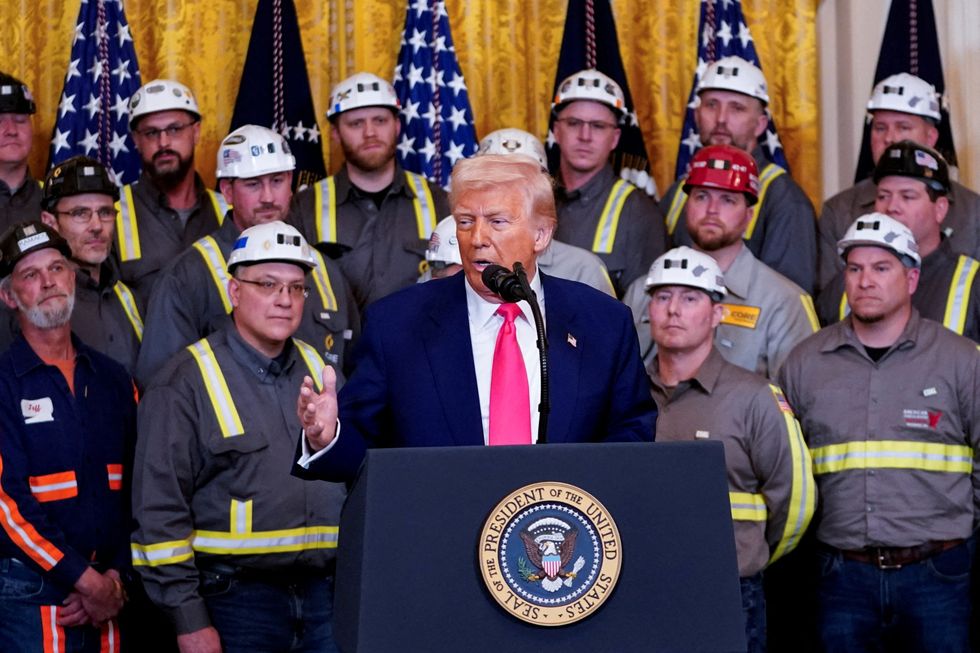
New reports confirm that President Donald Trump’s aggressive push to revive the coal industry is exposing miners to deadly health risks, with experts warning that thousands are suffering and dying from preventable black lung disease.
Despite championing what he calls “beautiful, clean coal” during his second term, Trump’s policies have undercut vital safety measures designed to protect miners from hazardous silica dust, a leading cause of black lung disease. This disease, caused by inhaling fine crystalline silica particles, has surged as miners “cut through much more rock with high levels of quartz,” greatly increasing their risk.
Miners in Trump-Stronghold States Face Growing Dangers
The heart of this crisis lies in the Appalachian Plateau, covering parts of Ohio, Tennessee, Virginia, and Kentucky—regions where coal mining is a major employer and where Trump secured strong voter support in last year’s election. Notably, southwestern Virginia, a bastion of Republican support and coal mining, is witnessing the brunt of these deteriorating health conditions.
“If the Trump administration actually cared about protecting coal miners from black lung, we’d have a strong silica rule in place right now,” said Rebecca Shelton, director of policy at the Appalachian Citizen’s Law Center, in an interview with Mother Jones published Sunday.
Instead, Shelton explains, the administration is “hiding behind a ridiculous legal process to delay action while miners get sick and die.” Upon his return to office last year, President Trump slashed the budget and staff of the Mine Safety and Health Administration (MSHA), the federal body responsible for enforcing mining safety regulations.
Coal Industry Pressure Delays Critical Safety Measures
Following intense lobbying from coal industry groups, enforcement of a new silica protection rule was postponed shortly after Trump took office. This delay has left miners exposed to increasingly dangerous working conditions without adequate regulatory safeguards.
The human toll is stark. Justin Smarsh, a former coal miner from Cherry Tree, Pennsylvania, was diagnosed with progressive massive fibrosis, the most severe form of black lung disease. At just 42 years old, doctors have told him he “won’t live to see 50.”
“All they’re worried about is ‘you better have that black gold,’” Smarsh told Mother Jones. “They say they care about miners, but you go underground, you’re taking the risk, for you to get nothing but sick, and to fill their pockets full.”
This grim reality highlights a growing tension: many of the miners contracting black lung are staunch supporters of the president whose policies are now linked to increased health risks in their communities.
What’s Next?
Advocates like Shelton are pushing for immediate federal enforcement of silica dust exposure limits to protect miners’ lungs. However, with the coal industry’s lobbying power and the current administration’s hesitancy, delays are likely to continue, placing miners at ongoing risk.
For readers in Alabama and across the US, this developing story underscores the human consequences behind energy and labor policies affecting millions in coal-reliant regions. The health and safety of these workers demand urgent attention as the debate over America’s energy future intensifies.