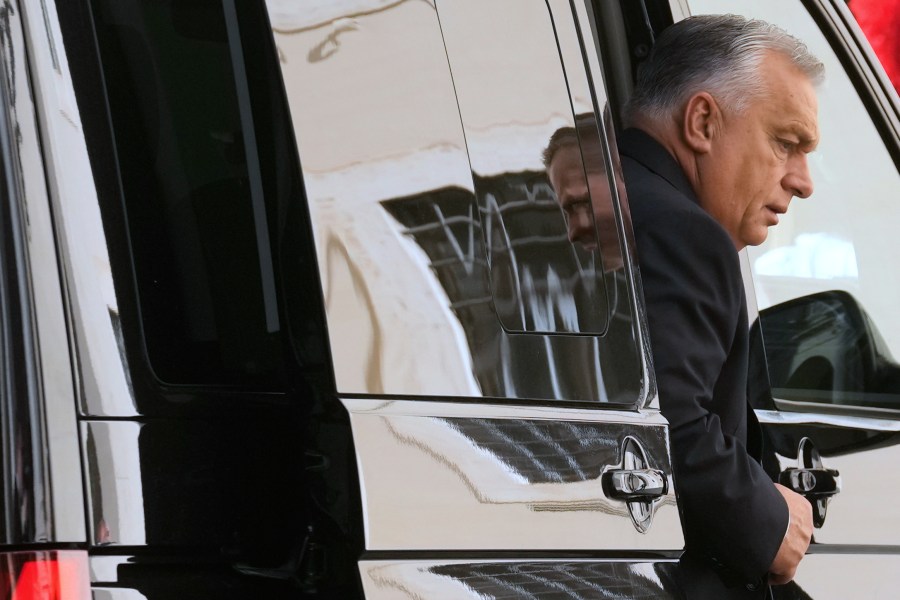
Hungarian Prime Minister Viktor Orban is set to meet with Donald Trump at the White House on March 15, 2024, aiming to secure U.S. support for Hungary’s continued purchase of Russian oil. This visit comes as Orban faces increasing pressure from both the European Union and the United States to reduce Hungary’s reliance on Russian energy, which is viewed as vital for financing Russia’s ongoing war in Ukraine.
Over the past decade, Orban has shifted from being a vocal critic of Russian influence to becoming one of Russian President Vladimir Putin‘s most reliable advocates within the EU. Despite the conflict in Ukraine, Orban has maintained close ties with Moscow. His relationship with Trump has flourished as both leaders share a vision of conservative nationalism, although critics highlight the erosion of democratic institutions in Hungary.
As Russia’s full-scale invasion of Ukraine nears its fourth anniversary, the stakes for Hungary are high. The Biden administration has imposed sanctions on Russian energy companies, including Lukoil and Rosneft, which could result in secondary sanctions for countries like Hungary that continue to buy Russian oil. Orban hopes to leverage his personal rapport with Trump to persuade the U.S. administration to provide an exemption for Hungary’s energy needs.
Orban’s Claims and Regional Responses
At the core of Orban’s request is his assertion that Hungary, being landlocked in Central Europe, has no viable alternatives to Russian crude oil. He warns that replacing these supplies could lead to severe economic consequences. Critics, however, challenge this narrative. Daniel Fried, a fellow at the Atlantic Council and former U.S. ambassador to Poland, argues that Hungary has failed to explore alternative energy sources, unlike neighboring Poland, which has actively sought to diversify its energy supplies.
While the majority of EU nations have significantly reduced or halted imports of Russian fossil fuels since the invasion began on February 24, 2022, Hungary and Slovakia have continued to receive oil through existing pipelines. Reports indicate that Hungary has increased the proportion of Russian oil in its energy mix from 61% to approximately 86% during this period.
Peter Rough, a senior fellow at the Hudson Institute, notes that Orban’s reluctance to diversify Hungary’s energy sources has drawn attention to the country’s unique position. “Clearly, President Trump’s decision to wield the sanctions hammer against Russian oil has gotten Hungary’s attention,” he stated.
In October 2023, Trump announced plans to meet with Putin in Budapest to discuss the war in Ukraine, a move seen as a political win for Orban. Although that meeting was later canceled, Hungarian officials remain optimistic about future discussions.
Future Prospects and International Relations
During the upcoming meeting, Hungarian Foreign Minister Péter Szijjártó indicated that discussions would include the potential for making peace in Ukraine, signaling Hungary’s willingness to host a peace summit if U.S.-Russian negotiations progress positively. As a NATO member, Hungary has refrained from sending military aid to Ukraine and has opposed certain EU sanctions against Russia.
Orban’s stance has drawn criticism from within the EU, where many view Hungary’s position as favoring Russia and undermining European unity against its aggression. With limited allies in Europe, Orban is banking on maintaining a favorable relationship with Trump, particularly as he navigates a challenging political landscape ahead of elections set for April 2024.
As Orban attempts to secure a favorable outcome in his discussions with Trump, the implications for Hungary’s energy policy and its relationship with both the U.S. and EU remain critical areas to watch. Fried suggests that Orban’s investment in Trump’s political ecosystem may reveal its worth during this pivotal meeting.