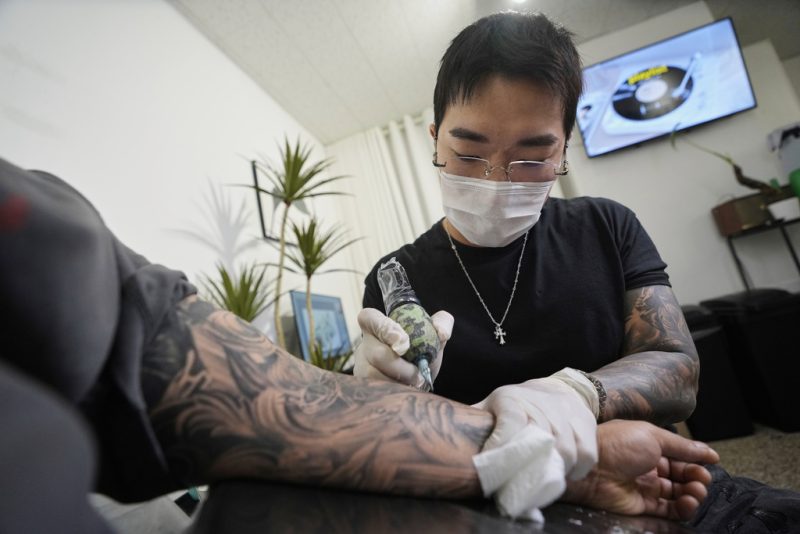
UPDATE: A growing number of tattoo recipients are reporting symptoms associated with what is being termed “tattoo flu.” This phenomenon, often experienced after larger or prolonged tattoo sessions, manifests as a range of flu-like symptoms including body aches, fever, chills, and nausea.
Experts confirm that this condition is not an actual virus, but rather the body’s immune response to the trauma of tattooing. “This absolutely happens,” says Mary Lupo, M.D., a board-certified dermatologist and faculty member at Tulane University. “The bigger the tattoo, the greater the assault on the immune system.”
In Brooklyn, tattoo artist Timothy Lebron reports seeing many first-time tattoo recipients experience this malaise. “Plenty of people feel that foggy, feverish sensation after getting inked,” he shared. Symptoms can include feelings of exhaustion akin to a hangover, as inflammation and stress hormones fluctuate.
Recent posts on Reddit illustrate the severity of the experience, with users describing feelings of nausea and exhaustion. One wrote, “[I’m] feeling so nauseous, hot, and exhausted,” while another expressed they felt “like I got hit by a truck.”
Tattoo removal expert Jeff Garnett of InkLess Tattoo Removal in New York City also weighed in, recalling his own bout with tattoo flu after two intense 10-hour sessions. He noted that some individuals may mistakenly attribute their symptoms to tattoo flu when they could be battling common viruses, as the body’s immune system diverts resources to heal the tattoo.
As tattooing becomes increasingly popular, awareness of tattoo flu is critical. “Your body can only handle so much,” Garnett cautioned. He now refrains from scheduling overly lengthy removal sessions, emphasizing the importance of manageable procedures to avoid overwhelming clients’ immune systems.
To mitigate symptoms, experts recommend hydration and good nutrition before and after tattoo sessions. “Eat a good meal and consume electrolytes,” advises Lebron. Lupo suggests that taking anti-inflammatories post-session can also help.
“If it hits you, don’t panic,” Lebron added. “Rest, drink water, eat something with salt and carbs, and take a warm shower. You’ll usually feel fine by the next day.”
Interestingly, some tattoo enthusiasts report never experiencing tattoo flu, with one TikTok user humorously noting, “I didn’t even know tattoo flu was a thing lmao and I’m covered in them.”
As tattoo culture continues to thrive, understanding the implications of tattoo flu is essential for both artists and clients. Awareness can help mitigate fears and ensure a more comfortable experience for those seeking new ink. Stay informed about your body’s reactions, and prepare adequately to enjoy your next tattoo without the aftereffects.