Recent discoveries by astronomers have strengthened the notion that the building blocks of life may originate from space. Studies indicate a consistent detection of organic molecules in cosmic materials, suggesting that these compounds might hold clues to how life on Earth began.
The ongoing efforts of various space projects continue to yield significant findings. Among these, the **Search for Extraterrestrial Intelligence (SETI)** has been at the forefront for decades, striving to find evidence of extraterrestrial life. Inspired by real-life scientist **Jill Tarter**, the project has not yet made a breakthrough akin to what was depicted in the 1997 film “Contact,” where a radio astronomer discovers a signal from the star **Vega**.
Meanwhile, the **Galileo Project** is employing advanced technologies, including ground-based telescopes and artificial intelligence, to enhance its quest for alien life. This initiative complements other scientific endeavors aimed at examining ancient microbes, which may help establish links to potential extraterrestrial organisms.
Organic Molecules Found in Space
The presence of organic molecules—compounds that are essential for life on Earth—has been confirmed across various celestial bodies. Research indicates that these molecules have been detected in space rock samples, during comet flybys, and even in the debris from dying stars. The consistent appearance of carbon-containing compounds and amino acids in these environments underscores the possibility that such materials are abundant in the universe.
While these discoveries hint at the interconnectedness of planets, they do not conclusively demonstrate how life originated on Earth. The findings imply that space may contain the necessary ingredients for life; however, the specific conditions on a planet must facilitate the biochemical processes that lead to life. Our planet, **Earth**, appears to have been conducive for these organic molecules to evolve, sparking a transformation that eventually led to the emergence of living organisms.
The theoretical framework suggests that other planets may experience similar processes, potentially leading to the development of life in distant galaxies. Despite this, our understanding of life beyond Earth remains limited.
Potential Signs of Life on K2-18b
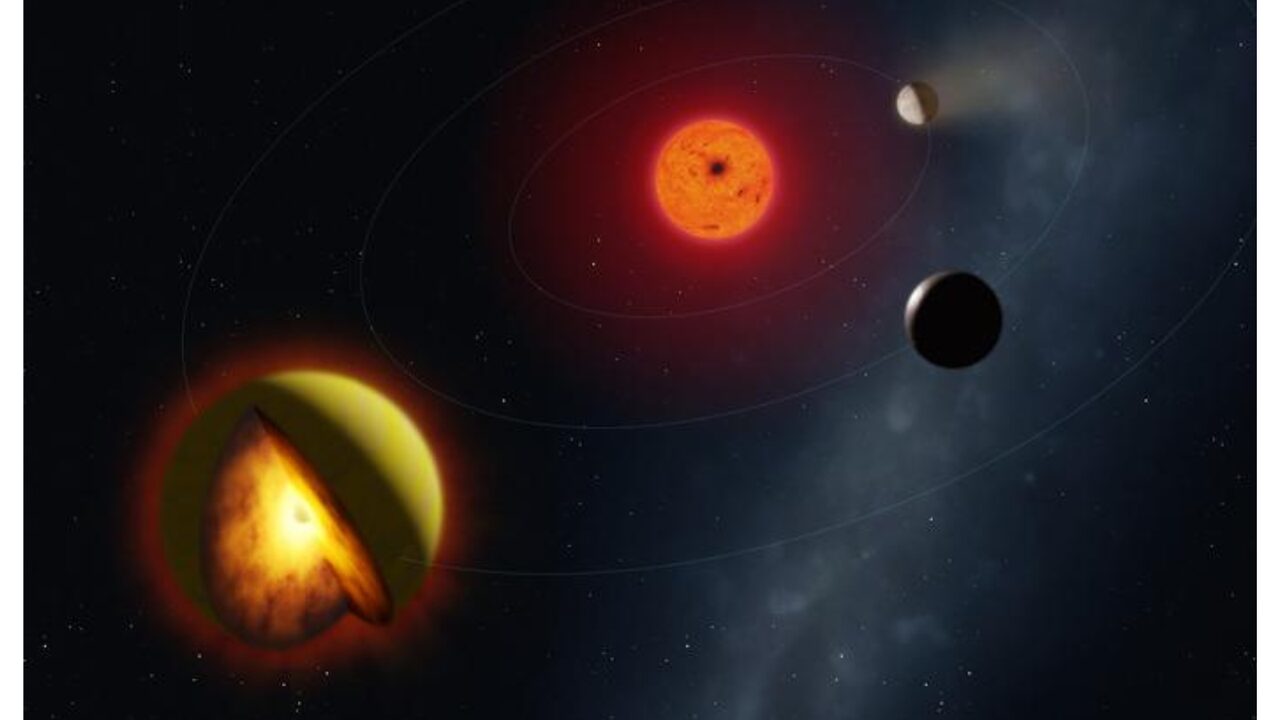
Current research has identified intriguing signs of biological activity on **K2-18b**, a planet located approximately **124 light-years** from Earth. Observations from **NASA’s James Webb Space Telescope** indicate the presence of two gases known to be produced exclusively by microbial organisms, such as phytoplankton. While these findings are compelling, they remain speculative, as scientists cannot confirm the existence of these organisms on K2-18b.
The ongoing exploration of organic molecules in space not only fuels curiosity about extraterrestrial life but also raises profound questions about our place in the universe. As research continues, astronomers remain hopeful that future missions will uncover more evidence that may one day answer whether life exists beyond our planet.