Recent solar storms have prompted astronauts aboard the International Space Station (ISS) to take precautionary measures against potential radiation exposure. As stunning auroras illuminated the skies on Earth, astronauts had to adapt their sleeping arrangements to ensure safety during this solar activity.
On the nights of November 11 and 12, 2023, powerful coronal mass ejections from sunspot group AR4274 resulted in widespread auroras across the Northern Hemisphere. These solar phenomena also brought the risk of increased radiation, which can be harmful to astronauts in orbit, necessitating a response from the ISS crew.
During a communication exchange, it was noted that the crew had entered an “energetic solar particle event.” NASA mission control informed astronaut Mike Fincke that they would experience higher-than-normal radiation levels. As a result, the three Russian cosmonauts onboard—Oleg Platonov, Sergey Ryzhikov, and Alexey Zubritsky—were instructed to sleep in the laboratory module of the ISS for the night as a precautionary measure.
According to Sandra Jones, a NASA public affairs official, the other crew members, including the U.S. astronauts, remained in their designated quarters. The crew was also provided with a list of areas aboard the ISS to avoid during the solar storm, highlighting the importance of safety protocols in space.
The current ISS crew, known as Expedition 73, consists of NASA astronauts Mike Fincke, Jonny Kim, and Zena Cardman, along with Kimiya Yui from Japan’s JAXA. These astronauts launched aboard a SpaceX Dragon spacecraft on August 1, 2023, and are expected to remain on the station for an additional three months.
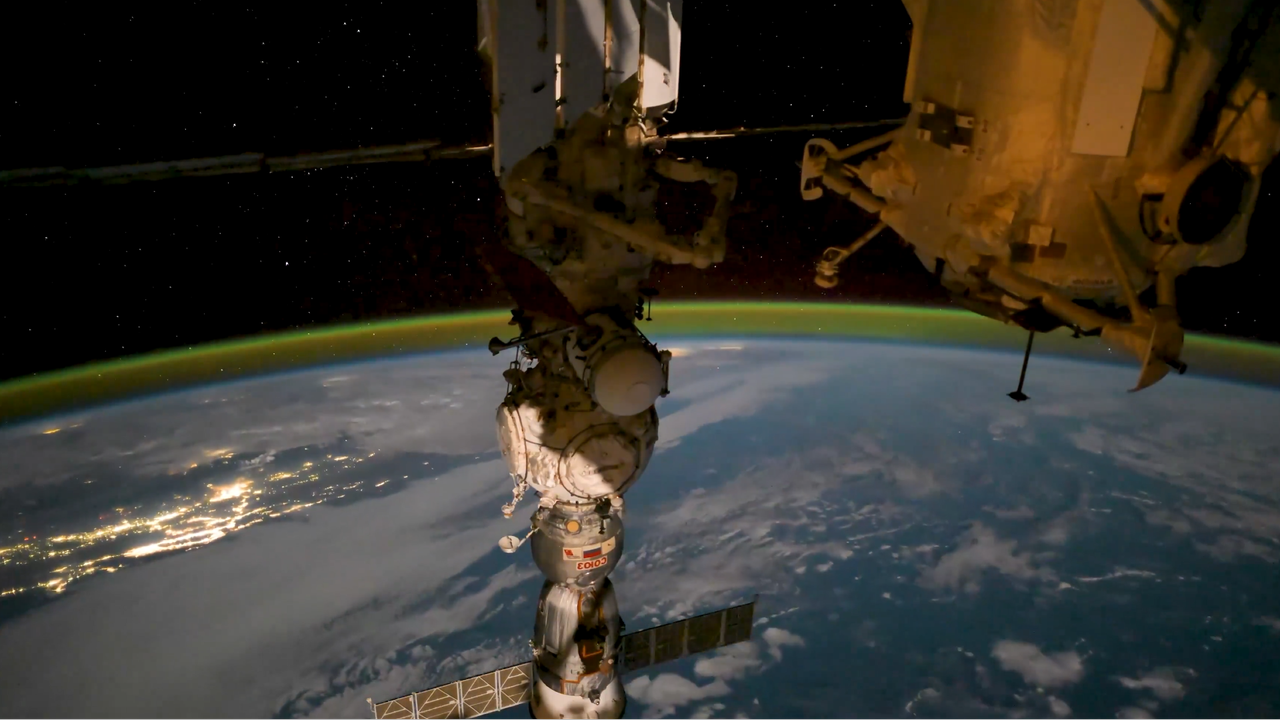
With the conclusion of the recent U.S. government shutdown, American astronauts on Earth and in space are resuming their online activities. Notably, Jonny Kim shared a video on social media showing auroras captured from space, marking a return to communication with the public.
While the breathtaking auroras create a visually stunning experience for those on Earth, the safety of astronauts in orbit remains a critical concern during such solar events. The ISS, equipped with various safety measures, continues to serve as a vital platform for scientific research and international cooperation in space exploration.