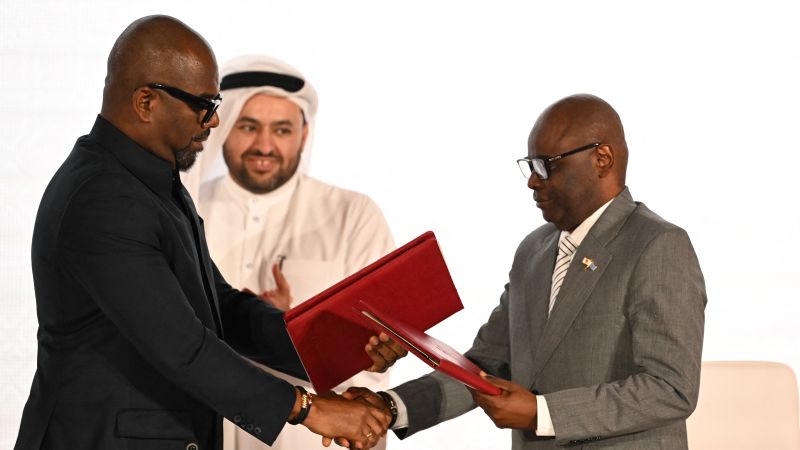
A framework agreement for a peace deal was signed on Saturday between the M23 rebel group, which is backed by Rwanda, and representatives from the Democratic Republic of Congo. This initiative marks another attempt to address the long-standing conflict in eastern Congo, which has been characterized by ongoing violence and instability for decades.
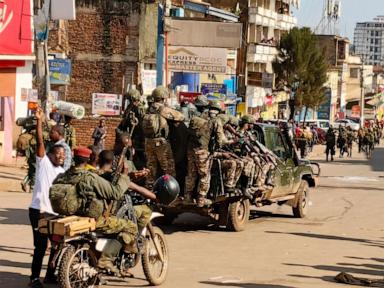
The M23 group recently escalated tensions by seizing control of Goma and Bukavu, two strategically important cities in eastern Congo. The ongoing conflict has led to the displacement of approximately 7 million people, making it one of the most severe humanitarian crises in the world, according to the United Nations.
The agreement, reached in Doha with mediation from Qatar and the United States, is not a final peace treaty. Instead, it outlines the essential measures needed to work towards a comprehensive agreement. Benjamin Mbonimpa, the head of the M23 delegation, emphasized that there would be no changes on the ground until the measures are thoroughly debated and a final agreement is established.
According to the Congolese government, the framework includes eight key measures that will serve as the foundation for a future peace deal. Notably, two of these measures—concerning the release of prisoners and the establishment of a ceasefire oversight body—were previously agreed upon in September and October. The remaining six measures address critical issues, including the restoration of state authority in areas controlled by rebels, ensuring humanitarian access, and facilitating the resettlement of refugees. Discussions on these remaining points are expected to take place over the next two weeks.
Qatar has hosted multiple rounds of negotiations since April, aiming to lay the groundwork for a peace deal and build confidence between the conflicting parties. Despite these efforts, both sides continue to accuse each other of violating terms of prior agreements, and fighting persists in the region. In July, a declaration of principles was signed in Qatar, which aimed to commit both parties to ending hostilities and finalizing a comprehensive peace agreement by August 18. The deadline was ultimately missed, with both parties blaming each other for the failures.
Massad Boulos, a senior adviser to US President Donald Trump, attended the signing ceremony in Doha and labeled the framework agreement as a “starting point.” He expressed optimism about the potential outcome, calling it a “historic” opportunity for lasting peace in the region. The Trump administration has actively participated in mediating discussions between Rwanda and Congo, which previously resulted in a peace deal signed in June.
As the situation evolves, the international community will be closely monitoring the implementation of the framework agreement and the upcoming negotiations to address the remaining measures. The hope is that this renewed commitment will pave the way for stability in a region severely affected by violence and displacement.