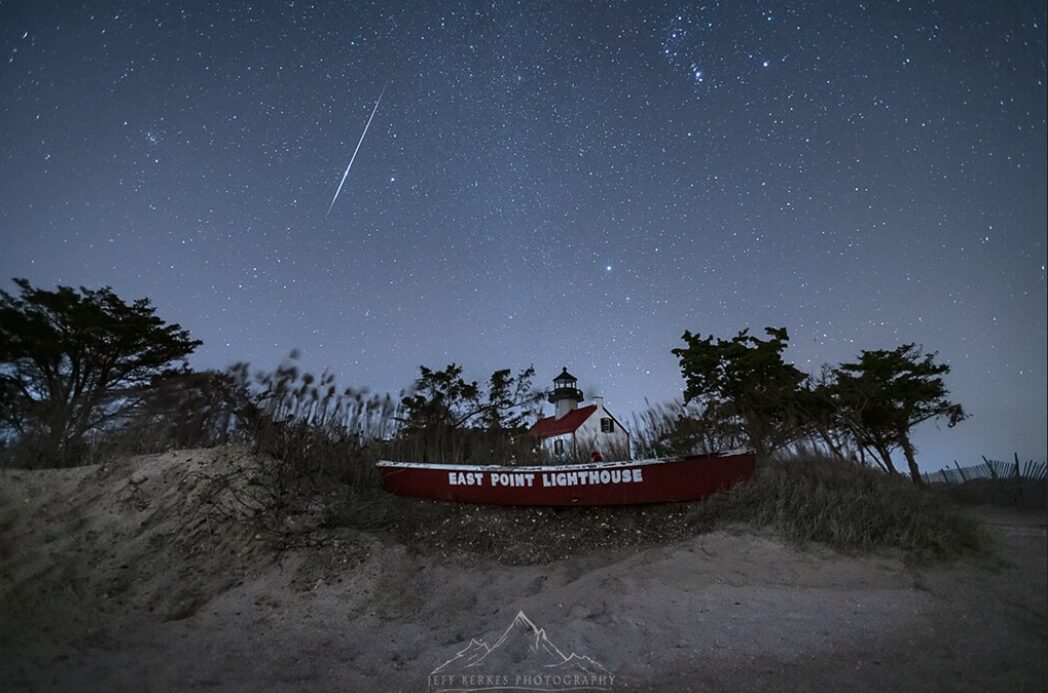
Early Monday morning, skywatchers can anticipate a spectacular display as the Leonid meteors light up the night. This year, the meteor shower coincides with the potential for a second auroral storm, making it a prime time for astronomy enthusiasts to observe the heavens.
Although 2025 is an off year for the Leonids, conditions are favorable. The Moon will be a slim 6% waning crescent, rising just two hours before sunrise. This means that the sky will be relatively dark, providing optimal viewing conditions for meteors. While the typical annual peak may not be reached this time, the anticipation remains high, especially given the history of the Leonid shower.
What to Expect from the Leonids
The Leonids originate from Comet 55P/Tempel-Tuttle, which has a 33-year orbit. This year, viewers in mid-northern latitudes can spot the meteor radiant rising in the northeast around 2:00 AM local time. The meteors are known for their quick, blue-white streaks across the sky, and while rates are expected to be lower than in peak years, the experience is still worthwhile if sky conditions are clear.
Historically, the Leonids have provided breathtaking displays. In the late 1990s, a notable increase in activity culminated in extraordinary shows in 1999 and 2000. Observers reported thousands of meteors per hour, reminiscent of the awe-inspiring sights witnessed in November 1998 in Kuwait, where fireballs illuminated the desert landscape before dawn.
The Leonids are not just a modern phenomenon; they have captivated observers for centuries. Notable events include the 1966 shower, when observers documented around 160,000 meteors per hour. Records of the Leonids date back to 902 AD, highlighting their long-standing impact on astronomy.
Potential for Aurora Activity
In addition to the meteors, there is a chance for auroras to grace the night sky. A significant sunspot region, AR 4274, recently produced an X-class flare, which could influence Earth’s space weather. The effects from this flare may lead to auroras visible as far south as Florida and Hawaii. The auroras observed on the night of November 11, 2025, by photographer Marion Haligowski, brought vibrant colors to the skies, raising excitement for similar displays.
As the Earth rotates, skywatchers should remain vigilant for possible auroral activity during the nights of November 16 and 17. Clear skies will enhance the chances of witnessing this celestial phenomenon, making for an unforgettable night of stargazing.
Astronomical events like the Leonids and auroras serve as reminders of the wonders of the universe. Observing meteor showers requires nothing more than patience and a clear view of the sky. Some enthusiasts even tune into radio frequencies to listen for the faint pings of meteors entering the atmosphere.
As the Leonids prepare to grace the skies once again, this weekend presents a remarkable opportunity for stargazers and astrophotographers alike. Will the roar of the Lion echo through the cosmos as we approach the next significant peak in 2033? The answer lies in the stars, so keep an eye on the sky this Sunday night into Monday morning.